Showing posts with label ebola. Show all posts

Sunday, June 14, 2015

The Irrational Rational Fear of Cancer, MERS, and Terrorism

At the time of this writing, there have been fourteen deaths that have been attributed to MERS.

As a result, thousands of schools have closed, despite cooler heads warning that this was unnecessary. More than 20,000 tourists called off visiting Korea since June 5th, costing Korean businesses millions in lost revenue. Subsequently, the Bank of Korea has cut interest rates to a record low of 1.5 percent amid fears of a sharp fall in consumer spending.

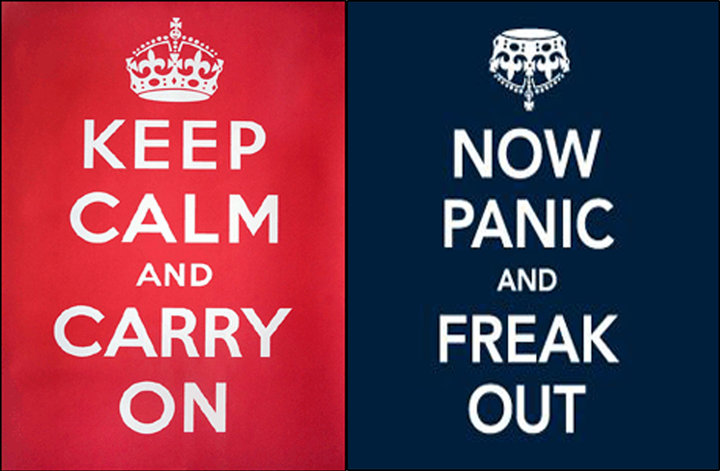
As I had said before, however, I think that the fear of this virus has spread faster than the virus itself and that this fear is irrational. After all, this is not the first time an unusually strong strain of the flu virus spread in Korea. Also, statistically speaking, people ought to be much more worried about cancer and hypertension than about influenza or SARS or MERS or Ebola.

Image Source

So why do people overreact to relatively less dangerous things such as MERS and react so coolly to much more dangerous things like cancer? After all, the smoking rate in Korea is 42 percent – and even after the new tax takes effect and helps suppress demand, 34 percent of Koreans will remain smokers.

For all intents and purposes, people react disproportionately to different things due to different reasons.

Firstly, there is a difference in timing. Of the fourteen people who have died after having contracted MERS, the time that it took for them to die was a matter of days. Cancer, on the other hand, is often perceived as something that will occur some day far in the future. Despite what people say, we are all afraid of death. However, the further away death is perceived to be, the more abstract it becomes and the less we fear it.

Secondly, it's a matter of how much control we have. When we think of cancer, many of us tend to think that we have some control over it. We can quit smoking, eat less junk food, drink less coffee, apply more sunscreen, go for annual checkups, etc. Of course, we might not necessarily choose to exercise our convictions. How many times have we made the same New Year's resolution to drink less and exercise more and quit smoking? The point is that we feel that we can exert some control over cancer if we choose to do so.

But what about MERS or Ebola? Unlike cancer, diseases like MERS and Ebola feel like they are beyond our control. What if the disease is airborne? What if the lady sitting next to me on the bus is one of those patients who was quarantined but chose to go out to play a round of golf? We cannot see a virus; nor can we taste it nor smell it. And when we cannot control something, well...

Image Source

Thirdly, we also cannot ignore the power of imagery.

Many years ago, I saw a family friend die of cancer. She wasted away in the hospital. She lost weight, her hair, her youthful vigor, the sparkle that used to twinkle in her eyes. And the screams...

But toward the end, there was a calmness to it. Her system had been filled with morphine and she was finally asleep, peacefully. Her family had gathered all around her to bid her farewell. There were tears, hugs, and prayers. And then she was gone. The death of a loved one is tragic, but when people are given time to prepare for death, sometimes death becomes a little easier to accept.

On the other hand, however, what is the imagery associated with MERS? Violent fits of coughing, increased body temperatures, isolation and quarantine from all those that you love. Doctors and nurses wearing hazmat suits? Death suddenly seems abrupt and lonely.

What is the imagery associated with terrorism? Google ISIS and you will see. Or don't Google ISIS and spare yourself the unpleasantness.

Seriously, don't Google ISIS.
Image Source

Consider that MERS has killed only fourteen people and that thousands of schools have shut down. Also, despite the fact that only one Korean teenager has so far volunteered to join ISIS, the media spent a disproportionate amount of time worrying about ISIS's influence among Koreans. Also, the government has created spyware for smartphones that will watch out for, among other things, mentions of “IS” and “terrorism.”

So, for various reasons, we fear the wrong things much more than we need to and we fear those things that we do need to fear less than we ought to.

The kicker, however, is that this messed up set of priorities is perfectly rational; so long as we define “rational” as “that which is based on or in accordance with reason or logic.” So, it's the reasoning that is faulty.

I am reminded of a phrase that I once learned in a computer science class I took in school a long time ago – Garbage In, Garbage Out (GIGO).

For good or for ill, humans have never achieved the status of homo economicus and probably never will.

Image Source

Thursday, August 28, 2014

Random Thoughts about the Free Market, JR Pub, Ebola, and Racism

1) Free Markets don't need no regulations

As a Free Market capitalist, the story that has unfolded around JR Pub's sign about not wanting to admit Africans into their establishment out of fear of transmitting the Ebola virus carries all the attributes of the Free Market that I love.

Despite the fact that Korea (thankfully) does not have an anti-discrimination law, when it was shown that a business owner behaved in a racist manner (whether or not this was actually racist will be discussed later), the public – whether they were actual or potential customers – decided to punish the business owners by doing the only thing that they could do, which is also the most powerful thing that they could do. They chose to spend their money elsewhere. Then the owners of JR Pub took immediate steps to resolve the issue to placate the angry public.

There was no need for an army of bureaucrats or business regulations or legal statutes. It is a great example of the way Free Markets work; or at least the way it ought to work.

Image Source


2) So an Ebola patient walks into a bar...

A lot of noise was made about the ignorance that surrounded JR Pub's decision to turn away Africans from their establishment out of fear of the Ebola virus. Some people also correctly claimed that Ebola is spread through the contact of bodily fluids, and is not, in fact, spread through the air or through food.

However, in a hypothetical example, assuming you were minding your own business while enjoying a drink in a bar, if someone whom you recognized as suffering from Ebola walked into the bar, would you still stay in the bar knowing how the virus spreads? Or would you at the very least step outside the building to call the Center for Disease Control and Prevention?

You don't have to tell me what you will do. But honestly ask yourself what you would do in the situation. Personally, even if I knew for a fact that there was no chance for me to contract the disease merely because of the presence of a patient near my vicinity, I would leave posthaste. But that's because I have seen first hand the ugliness and brutality that a crowd is capable of committing, especially after a few too many drinks have been imbibed.

Image Source


3) Sincere Apologies

According to The Korea Observer, the owner who instructed his staff to put up the sign took sole blame and apologized. He also said that he would give a 50 percent discount on all drinks and food to those coming to the bar on one particular evening and that all proceeds of the night would “go to a charity and those who are in need of help.”

(I have yet to hear anyone explain to me why giving to charity would make things under this present set of circumstances any better, but whatever floats their boat, I suppose.)

However, though this is certainly not a scientific survey by any stretch of the imagination, there was a simple poll that the website's readers could participate in. When asked “Should we boycott the bar over the ban on 'Africans,'” readers could choose between “Yes, screw that apology!” and “No, the apology is enough.”

As of this writing, 780 people were in favor of boycotting the bar and 660 people were in favor of not boycotting the establishment.

Though it is unclear if those who think that the apology is insufficient would have any lasting effect on the business' profit margins, I cannot help but wonder just how much more apologizing they could possibly want.

A part of me is reminded of the way so many Koreans demand a “sincere” apology from Japan over its war crimes. No, I am not comparing actual war crimes to perceived racism. What I am comparing is people's seemingly unquenchable thirst for “sincere” apologies, which all too frequently does nothing more than to allow people to hide behind the cover of perennial victimhood.

Image Source


4) On Political Correctness

Has fears over the Ebola virus been blown out of proportion? Even with a Liberian man who has come to Korea about a week ago having gone missing somewhere in Busan (assuming that the man is still even in Korea), a country where there has been a Ebola virus outbreak, it is likely that the fear of the virus is still very much greater than the actual threat of the virus.

But why should any government, university, or pub, or individual for that matter apologize for trying to ensure that they remain contagion-free? The fact remains that even if there is little danger of the virus spreading to Korea, I don't owe it to anybody to have myself exposed to diseases brought into this country, potential or otherwise, no matter what problems exist in other countries or whose feelings might get hurt! In today's overly politically correct culture, not nearly enough people seem to be willing to even entertain such a thought.

Image Source


5) Racism vs. Ignorance

But now that we have brought up the topic of racism, what is racism? It is the notion of ascribing moral, social, intellectual or political significance to a man’s genetic lineage. It is one of the most primitive forms of brutish collectivism.

Does anyone have any real evidence to make the claim that the owners of JR Pub are, indeed, racists? Does anyone have unimpeachable evidence that their intent was malicious? In other words, did they put up their sign in order to make some kind of statement about the inferiority/diseased nature/undesirability of Africans? Or was it a decision made out of innocent ignorance? Racism may be intolerable but isn't ignorance forgivable?

But either way, does it matter? If the owners are indeed racists, though they might not have changed their minds, they will most certainly think twice about giving voice to their racist thoughts in the future. If it was a result of ignorance, you can bet that these men, or at least the one who made his employees put up the sign, will have certainly learned a very valuable lesson about avoiding anything that can even be remotely considered to be racist.

And isn't that what is supposed to matter? On one hand, ignorance is rectified.  On the other hand, if they were, indeed, racists, even if we don't respect or like the way other people think, aren't we supposed to tolerate others so long as their actions do not lead to the harm of others?

Image Source


6) Predetermined Judgments

In the Asia Pundits article that was quoted earlier, a woman who is a white African was informed that whereas black Africans could not enter the establishment, she could. Others, including the woman in question, were quick to conclude that this was therefore a case of blatant racism. But does it really refute the claim of ignorance? Is it possible that those owners and employees of JR Pub were ignorant enough to have thought that black people were more prone to suffer from the virus than white people?

I was neither there nor have I spoken to anyone involved. So I cannot say one way or the other. But too many people, who were also neither there nor spoken to the involved parties, seem to have determined what had happened.

There are very few epithets that carry as much weight as “racist.” However, armed with nothing but moral assertions and unimpeachable political correctness, which would never be given any serious consideration in any respectable court of law, hundreds, if not thousands of people who have most likely never even met the owners have accused them of being racists.

During the Jim Crow laws in the United States, the idea that you can tell who is good and who is evil by the color of their skin was the law of the land. Since the laws were abolished, and not just in the United States but throughout the civilized world, that line of thinking has been rejected. However, in modern times, as soon as the perceived victims are black, that mentality comes roaring back. That is because the mentality has not really been rejected. It has only been put under new management.

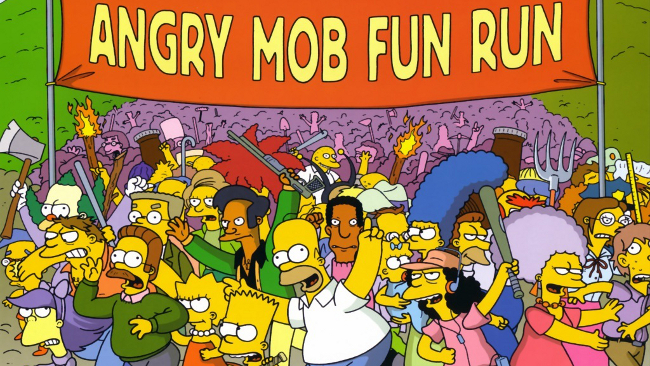
The way much of the public has responded, or at least those who have bothered to respond, has not given me much reason to rethink my position about mobs and their non-thinking tendencies.

Image Source