As
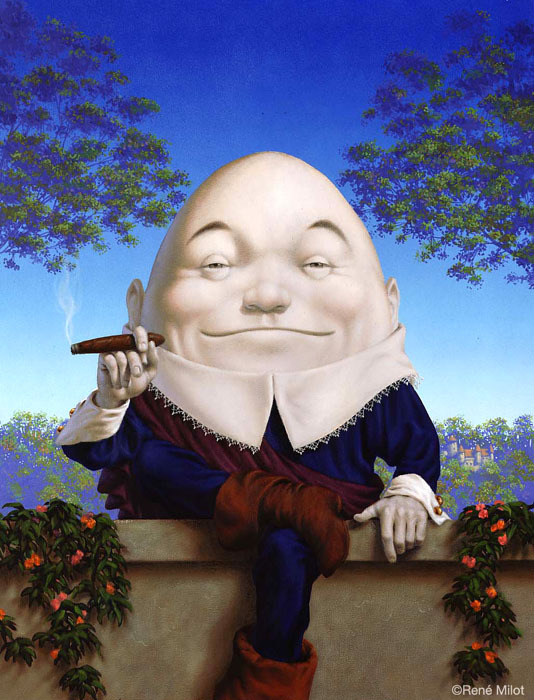
though the title wasn't enough to pique my curiosity, the cover of
the book showed a picture of what looks like a typical North Korean
propaganda poster – communist revolutionaries looking proudly
toward their bright future. However, instead of being represented by
a picture of Kim Il-sung or his son or his grandson, the bright
future is represented by the Sign of the Dollar.
I
had never heard of either the book or the author, Felix Abt, a Swiss
national who was appointed by ABB
as its director for North Korea, before. As soon as I saw the book,
I knew that I had to read it.
I
expected to read about bureaucratic red tape, the effects of
sanctions, the “culture shock” of introducing capitalism to a
citizenry that has known nothing but the Kim Dynasty's juche,
and the slow but sure growth of capitalism in North Korea. I
expected to get enlightenment. What I got was disappointment.
The
book is only 317 pages long. It should not take more than a couple
of days to finish reading such a book. It took me three weeks; and
what a painful three weeks it was as I had to figuratively flog
myself to finally finish it.
In
the first opening pages of the book, he mentions the 2010 sinking of
the ROKS Cheonan.
Despite the mountains of evidence that points to North Korea's
involvement in the sinking of the corvette (here,
here, here,
here,
and here),
Abt openly doubts North Korea's involvement
because
“a prominent Korean seismologist and and an Israeli geologist
suggested, based on an analysis of seismic and acoustic waves, that
the ship probably hit a South Korean mine.”
A
bitter taste in my mouth began to form before I even
began the first chapter. However, he then immediately says that “all
of it plays into a bigger picture of geopolitical bullying.”
The
last time I checked, it was the North Koreans who were firing
artillery, rockets, missiles, kidnapping foreign citizens, and
threatening war against its
neighbors.
The
book is not without its merits. There were the bits of information
that I had hoped for and expected. However, out of the book's 317
pages, relevant information could not have been printed on more than
twenty to thirty pages. The rest of it was utter rubbish.
Abt
seems to find
it funny as he acknowledges that others have called him North
Korea's “useful idiot.” But what he does not seem to know is that
he
also seems to have gone fully native after he had lived in North
Korea for so long. By that, I mean
that Abt seems to have fully adopted the North Korean method of being
as erratically contradictory
as often as possible.
For
example, Abt insists that North Koreans are not at all brainwashed.
In fact, he compares North Korean propaganda to advertisements that
people see in other countries. Specifically, he says “the world
businesses engage in another form of propaganda: advertising. The
only difference is that it advances a cause of consumerism rather
than politics.” To hammer home the point, he also rhetorically
asks if Americans “get brainwashed by cravings for McDonald's and
Starbucks seeing their logos smothered all over the country.”
Never
mind that McDonald's and Starbucks are merely corporations that do
not have the ability to arrest or gun down those who do not like
their products. But as far as Abt is concerned, they are both
morally equivalent.
But
I was willing to let it go. Perhaps we did have it all wrong about
the North Koreans being brainwashed. After all, he lived in North
Korea for seven years. Wouldn't he know better? However, even
before I could acclimate myself to believing what he said, he
contradicts himself by saying that the
patriotic songs that North Koreans sing are not about their love for
their country, but rather their love for their leaders. In fact,
North Korea's supposedly most popular melody is a catchy tune about
how North Koreans cannot exist without “General” Kim Jong-il who
has “extraordinary talents and virtues.”
But
it's just a song with a catchy tune. Who cares about that? It's
true. One song does not brainwash an entire country. But then Abt
later says that North Koreans “would jump into torrential floods at
the risk of their lives to save portraits of Kim Il-sung.”
He
then mentions that “around 40 percent of elementary school classes
are on the childhood of Kim Il-sung and Kim Jong-il” and that North
Koreans are “taught from an early age to be proud of being Koreans
rather than coming from a “less fortunate” race such as the
Japanese.” And during art festivals for schoolchildren, kindergartners make drawings titled “Let's cut the throat of US
imperialism!”
According
to Abt, North Koreans are so the-opposite-of-brainwashed that a
senior party cadre asked rhetorically why North Koreans should have
statistics about suicide. After all, “Our people are among the
happiest on earth,” the senior party cadre supposedly claimed.
It
is a sentiment that Abt seems to share as he adds, “Astoundingly, I
never came across people (North Koreans) who would have criticized or
even challenged the system, nor did I meet expatriates who had heard
about such cases.” Because your average North Korean, who has learned his whole life to be careful of what he says in front of even those that he loves and trusts, would then outwardly speak ill of the regime to a foreigner?
I
suppose Abt thinks that people ought to have their minds so broken
that they would become unwitting assassins a la “The Manchurian Candidate”
for Abt to consider someone to have become brainwashed.
Another
glaring contradiction in his book was about the way Christians are
treated in the country. He says:
“A true Christian believer in
today's North Korea would be branded as a traitor of the worst kind.
During the century before the DPRK was founded, white American
Protestants from the Bible belt promoted Christianity as the religion
of a superior foreign race, making it today antithetical to the
revolution.”
However,
a few pages later, he says:
“Despite stereotypes that North Korea
overwhelmingly represses the Christian religion, the government
usually doesn't see the Lord as a serious threat to its earthly
system. I once asked a senior security official if they did not feel
threatened by Moon's Unification Church, active in North Korea in the
hospitality and car manufacturing industries. He answered quite
candidly: “Well, you know, it's a cat-and-mouse game.” It's a
never-ending contest that the North Koreans will make sure the other
side can never win.”
So
which is it? Are North Korean Christians branded as traitors or does
the North Korean regime not see Christianity as a threat? As I said,
just like the regime itself, Abt appears to have embraced its
dual-personality disorder.
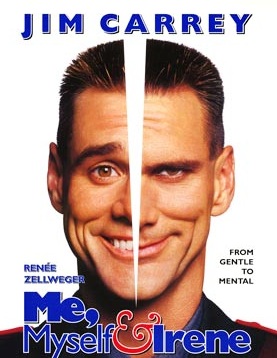
At least Jim Carrey tried to be funny Image Source
The
part where Abt appears to have accepted North Korean propaganda as
his own is when he complains on numerous occasions about the havoc
that international sanctions have had on North Korea's economy. He
mentions that if it just weren't for the sanctions, the North Koreans
would have access to state-of-the-art technology that they so richly
deserve.
However,
he never once mentions why North Korea is the most heavily sanctioned
nation in the world. He mentions North Korea's nuclear tests in
passing, but never once stops to ponder that the North Korean
leadership has no one to blame for the sanctions that have been
placed on it but itself.
The
only thing that he said that seemed to make any sense was how
ineffective the sanctions were. He claimed that, too often,
sanctions do not hurt criminals or government officials, but rather
ordinary citizens.
So
what does he say when sanctions are finally fine-tuned so that it will only
specifically hurt the North Korean leadership? He says:
“In
July 2012, the UN Security Council released a report on sanctions,
according to the AP news agency, which wrote: “No violations
involving nuclear, chemical, or biological weapons or ballistic
missiles were mentioned in the 74-page report to the Security Council
committee monitoring sanctions, published Friday.” On the other
hand, the document highlighted North Korea's responsibility for
illegally imported luxury goods including tobacco, bottles of sake,
secondhand pianos, and several secondhand Mercedes Benz cars. It is
stunning that these would be considered serious crimes which the
Security Council had to urgently address.”
So now that the Security Council has gotten it right, he thinks it's a waste of time. How very convenient.
However,
the most outrageous thing that he claims in the book is about the human rights violations in that country, which the world is
finally paying
some attention to.
Abt
admits that anywhere between 120,000 to 200,000 people are being held
in prison camps, but then brushes it all aside by saying that that
figure “represents less than 1 per cent of the total population.”
He further acts as a North Korea-apologist by comparing that figure
to American incarceration rates, because America is “home to the highest
documented percentage of prison inmates in the world.” Like as
though the conditions of imprisoned Americans could be compared to
the North Korean practice of imprisoning three generations of an
entire family in gulags for the “political crimes” of one person!
“While I clearly
disavow any human rights abuses in North Korea and anywhere else in
the world, I'm a businessman who has never visited any gulag or
prison. I am not a human rights expert.”
Seeing
how he admits that he is not a human rights expert, one would think
that he would remain silent about this topic from here on out.
However, he does not.
To
be specific, Abt has some choice words about North Korean defectors
who speak ill of North Korean human rights violations. He claims
that “as 70 percent of them (North
Korean defectors) remain jobless in South Korea, they can make a
living by selling dubious information.”
There
are approximately 27,000
North Korean defectors currently living in South Korea. And
there are thousands more who live elsewhere around the world. You
would think that if there was, indeed, a conspiracy among North Korean
defectors to sell a grand lie, it would be a matter of time before that
lie was punctured. But such logic seems to escape Abt.
Abt
also adds that “the intelligence services, academics, book authors,
journalists, and human rights and political activists who interview
these defectors almost ceaselessly after their arrival in South Korea
have an impact on their narrative, too. Those who know the North
Korean refugee resettlement process in South Korea are aware of how
easily individual accounts evolve over time from mild accounts of
hunger or seeking economic opportunities to romantic tales of escape
against all odds.”
To
add the cherry to his insult against North Korean defectors and their
testimony, he adds that “while it is a serious issue, North Korea's
foes are equally guilty of using rights rhetoric as a political tool
to further isolate and corner the regime.”
Like
as though the regime did not isolate and corner itself for decades
with its jucheand
songunpolicies.
In
a different but related issue, Abt also says that throughout his
seven years in North Korea, he had never seen a single starving
person. To be specific, he claims, “In the mid-2000s, I did not
come across starving people, though I did see scores of thin Koreans
who looked malnourished.”
I
suppose that it's possible that Abt had never seen this
young woman or others like her (see here, here, and here). But do they not exist because
he had never seen them? In his mind, it seems to be so.
And
what does Abt have to say about those videos of North Koreans who are
foraging for food? They're not starving! He claims that foraging
for food is a traditional pastime. To be specific, he says:
“What
many outside North Korea generally ignore is that the much-quoted
“foraging for food” is an age-old North and South Korean
tradition, a result of the absence of arable land in the North to
grow crops. For centuries, Koreans from all over the peninsula have
consumed wild mushrooms and edibles – long before the foundation of
the DPRK – and they still love to eat them.”
Of course. That must be why so many South Koreans also go out to forage for food everyday. Oh right. They don't.
But
just so that Abt makes it clear that there is hunger in North Korea
and that the North Korean government is doing its best to “take
care of its people,” Abt says “Amazingly, Kim Jong-il was, unlike
other Asian leaders, highly enthusiastic about potatoes and soybeans
and gave them a role in agricultural development.”
Abt
never mentions that it is likely that other Asian leaders were not
enthusiastic about potatoes or soybeans for their own countries'
agricultural development because they did not have to be.
There
are far too many other contradictions that he writes, as well as far
too many statements that cannot be taken as anything other than the
defense of the North Korean dictatorship. In fact, I dog-eared all
the pages that I felt contained such statements. If I mentioned
every single instance of this, however, I would have to scan and
upload the entire book!
Despite Abt's insistence that he is apolitical, this book is essentially a political book more than anything else; and it is excruciatingly awful. In Abt's narrative, North Korea is not evil
in the slightest bit. In fact, there are plenty of other evil
regimes in the world, which, therefore, naturally, exonerates North
Korea of all its sins. And if it has sinned, Abt never saw any of
it! He's just a businessman, for heaven's sake! Nobody is
either good or bad. Never mind reality! Truly “A Capitalist in
North Korea” can be called enlightening only by devaluing the
term.
Throughout
this entire book, it is amazing how Abt manages to sustain an oozy,
cynical tone, which is the book's most striking feature. Its sheer
stupidity is disgusting and without reprieve. Its sense of morality
is non-existent. From almost any page of the book, I could hear a
hollow, ghostly voice droning on repeatedly “There is no good or
evil – it just is.”
Well,
I saw evil in the pages of this book. And I saw that evil was
impotent, irrational, stupid, vain, and blind.
If
anyone chooses to fork over their hard-earned money for this book, I will
certainly not try to dissuade them. After all, who knows how to best
spend their own money than the individuals themselves? However, if
there is anyone who still wishes to purchase this book, might I suggest a cheaper and more practical
brand of toilet paper? Charmin, perhaps?
WARNING:
The following blog post contains a lot of spoilers. If you have not
yet seen Snowpiercer and wish to do so without having the plot
given away, then do not read this.
Snowpiercerhas
been called a sci-fi action film. It’s hardly sci-fi. If people
insist on referring to it as a sci-fi film, those people will have to
admit that it is based on awful sci-fi. The movie begins with the
premise that Mankind finds a way to combat global warming with a
man-made chemical that is used to cool Earth’s atmosphere. And
cool Earth’s atmosphere it does. So much so that the whole planet
undergoes a new Ice Age period, thus leading to a mass extinction of
life as we know it. At least until the very end of the movie when a
polar bear appears on-screen, thus throwing that whole “mass
extinction of life as we know it” plot right out the window.
That
the audience is expected to believe that scientists would not have
tested this Earth-altering chemical ad nauseam before it is unleashed
into the stratosphere is ludicrous. Even more laughable is the fact
that the audience is told to believe that the one thing that not only
survives but also supports what is left of humanity in this freezing
hell is a train that is running around the world non-stop.
Snowpiercer
is
a good sci-fi film just as much asAnimal
Farmis
a reliable farmer’s almanac. That being said, just like Animal
Farm
is a beautiful allegorical story, so is Snowpiercer.
Some might say that Snowpiercer
is a lousy allegory because it doesn’t resemble the real world that we
live in today. Those critics are not wrong. The movie doesn’t
match the world that we live in today. However, Animal
Farm
didn’t resemble real-life 1940s English society that the English
used to live in either.
I
watched Snowpiercer about two weeks ago, and when the movie
ended, two thoughts occurred to me. The first thought that happened
to me was that I had just witnessed a rare find – a film that
respected the audience’s intelligence. The second thought that
occurred to me was that most people are seldom ever
honest about what we know and almost always dishonest about what we
don’t know. In other words, most things that most people claim to
know, especially in regards to the social sciences (such as politics,
economics, and philosophy, themes that this movie touches on), are the pretense of knowledge.
As
such, because this movie operates on the assumption that the audience
is intelligent, and then proceeds to touch on themes that are,
unfortunately, subjected to mind-numbing subjectivity, the conclusion
that I reached was that there were going to be many people who were
going to watch this movie through the lens of very dumbed
down current event stories
that they might have watched on the news.
That
there are only a small
numberof
movie reviews for Snowpiercer
that claims that the central theme that the movie focuses on is class
warfare, a far too simplistic overview, is most likely due to
the fact that Snowpiercer
has yet to be shown in movie theaters outside of Korea just yet.
It’s only a matter of when before harebrained newspaper columnists
who see themselves as enlightened populists decide to hail this movie
as a rallying call for the Occupy Movement. Yes,
class warfare is undoubtedly one of the topics that the film explores
but there is so much more than what meets the eye.
Like
Animal Farm, what
Snowpiercer does is to challenge totalitarianism and all of
the little despotisms that exist within it. Taking on the position
of opposing authoritarianism while not living in a totalitarian state
hardly seems edgy. However, another more subtle criticism that the
movie deals with is the morality (or the lack thereof) of political
leadership regardless of what stripe it comes in. More on this
later.
Throughout
the whole movie, there isn’t a single element that has not been
somehow affected by the totalitarian nature of the train’s
leadership. From the very beginning of the movie, the audience is made to dive right into the deep end of the tense environment that surrounds the tail section of the train – the claustrophobic Dickensian world that is home to the train’s poorest
inhabitants. Crammed into a tight, squalid space, these individuals,
including the movie’s main protagonist, Curtis (played by Chris
Evans),
live, if it can be called that, a miserable existence.
Revolution
is boiling beneath the surface and it doesn’t take long for the
audience to sympathize with the tail-enders; as the audience’s
blood is churned and made to call out for bloody revenge when we see
an anonymous guard brutally smashing his rifle’s butt into the face
of an unarmed elderly woman. Considering the real-life events that
have unfolded around us, such as theArab Springand
the variousanti-austerity
proteststhat
we have seen throughout Europe and the United States, it becomes easy
for people to root for the tail-enders, while at the same time
jumping to the conclusion that the movie is about the oppressed 99
percent fighting for justice against the tyrannical 1 percent.
People
who claim that this movie is an allegorical indictment of the
inherent injustice that exists in capitalism are missing the point of
not just the film but the very nature of capitalism itself.
Many
anti-capitalists would jump to tell anyone who is willing to listen
that income mobility that is claimed to exist in a capitalist economic system is a myth – that one’s economic fate is
predetermined by the socioeconomic status that one is born into and
has no opportunity whatsoever to move up that proverbial ladder. The
fact that there are immigrants
who arrive in developed countries with
very little
money and very little knowledge of the local language, but
nevertheless, persevere and rise in those societies or that many of
their children excel
in school and go on to obtain professional careers and establish
businesses do not seem to detract those anti-capitalists from
their religion.
The
fact that economic classes exist in capitalist societies is
undeniable. However, the anti-capitalists’ insinuation that the
members who make up those classes are static is nothing less than
willful ignorance.
Whereas
the thing that anti-capitalists claim to fight against does not
actually exist in real life societies that practice capitalism, it
does exist in Snowpiecer’sworld.
In Snowpiecer’sworld,
one’s socioeconomic fate is preordained by the tickets that
everyone had purchased (or not purchased) before the train embarked
on its non-stop seventeen-year journey – fist class, economy, and
freeloaders. Even the children of those who are born on the train,
long after the events that initially took place for this story to be
set in motion, are forced to live in the stations that their parents
had first found themselves in. “The people at the front of the
train are the head, and those at the back of the train are the feet,”
claims Mason (played byTilda
Swinton),
one of the movie’s deliciously evil antagonists, who hisses with
authoritarian finality, “Know your place, keep your place!”
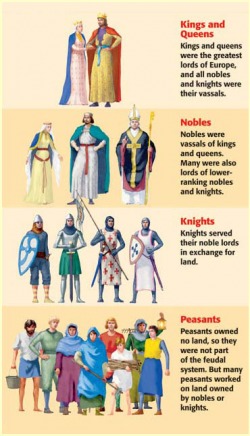
The social system that the train operates on is based on a medieval feudalistic system, which is enforced by brutal violence. This is hardly a
capitalist society.
When
people watch this movie without thinking more deeply into it, it
becomes easy to assume that it is about a war between the haves and
have-nots, a situation that capitalism purportedly permitted to
exist. However, that couldn’t be further from the truth.
Capitalism, by its very nature, requirespolitical
freedom, which includes, among other things, the opportunity for
socioeconomic mobility. Snowpiercer
was not an indictment of capitalism, but rather an indictment of
tyranny.
In
another sign that this movie’s challenge is toward tyranny rather
than capitalism, the audience is shown how the tail-enders receive
their food. During mealtime, the tail-enders who are constantly
hungry and malnourished are assembled by the guards and counted each
time so that they may be rationed the appropriate amount of food –
brown gelatinous bars, which are simply referred to as protein bars.
It is later revealed that none of the tail-enders was informed what
those protein bars were made of – mashed cockroaches (the movie
never explains where all those cockroaches came from).
In
the real world, since the mid-nineteenth century, the countries in
the world where famine occurred have been the countries that were run
by tyrannical regimes that attempted to control, distribute, and
ration food and farming based on political decisions. Robert
Mugabe’s Zimbabwe,
the Kim Dynasty’s North
Korea,
Mao Tse Tung’s China,
Mengistu
Haile Mariam’s Ethiopia,
Mohamed
Farrah Aidid’s Somalia.
In the past one hundred and fifty years, every single famine that
the world has witnessed has been the result of, to use a
euphemism, political mismanagement.
However,
toward the end of the movie, it is later revealed that the tail
enders’ diet did not consist of only these mashed cockroach bars.
When Curtis explains his motivation for wanting to take his
revolution all the way to the front of the train, he reveals that
there was a time when he was forced to eat human flesh.
In
the frantic early days when the train was about to begin its journey
as it raced against the oncoming Ice Age, the tail-enders who didn’t
buy a ticket but were fortunate enough to board the train were left
with no food to eat. As a result, when hunger set in, they began to
cannibalize each other. Curtis mentions that he knows what human
meat tastes like and that “babies taste the best.” He confesses
that when Edgar (played byJamie
Bell),
his second-in-command, was a baby, Curtis almost killed and ate him
but was prevented from doing so by Gilliam (played by John
Hurt),
the tail-enders’ elder leader and Curtis’ mentor and
father-figure, who cut off his own hand for the hungry tail-enders to
eat in exchange for letting Edgar live. It was only after many
people had been cannibalized and had voluntarily amputated their own
limbs to feed each other that they were provided rationed protein
bars.
In
Snowpiercer,
the train is the country, which is ruled by a tyrant; the people
forcefully imprisoned in their stations under the penalty of death.
The people’s malnourished state and their being forced to eat bugs and
each other is a story that we have seen far too many times on the
news (here,
here,
here,
here).
As Curtis recounts his past experience in having eaten human flesh,
he says that though it makes intellectual sense for the tail-enders
to show gratitude for being allowed to board the train and live,
considering the hell that they were forced to live through, it was
impossible to feel one iota of gratitude. It is impossible not to
sympathize with him.
Another theme that the movie touches on is how the train’s
leaders treat the tail-enders. Early
on in the film, a mysterious, plump looking woman who wears a bright
yellow coat, in stark contrast to the sooty grey that surrounds the tail end of the train, enters the scene with several armed guards.
Carrying a simple tape measure, she measures the height and width of
two small children and wordlessly whisks them away to the front of
the train. Before the woman can take the two children away, however,
one of the child’s parent throws his shoe at the woman, reminding
the audience of a similar event that occurred in real lifewhen
a desperate man hurled his shoe at the most powerful man in the world.
Such
lawlessness, of course, cannot go unpunished. The train’s inventor
and chief engineer andDear
Leader, the mysterious Wilford (played by Ed
Harris),
sends Mason to punish this act of rebellion. Before the
shoe thrower’s sentence can be carried out, a punishment which
appears to be a method that the Saudi government would have adopted
had the Arabian peninsula been covered in permafrost as opposed to
sun-scorched sand, Mason gives a speech, which the audience feels has
been given to the tail-enders many times before. In the first sign
of Wilford’s cult of personality, not unlike the kind of praisethat
is showered on North Korea’s Kim Dynasty, Mason offers glory to Wilford, stating that he is merciful and kind. Therefore,
any sort of rebellion against such mercy and kindness is that much
more magnified and thus cannot go unpunished. “Know
your place, keep your place.”
It
is later revealed toward the end of the movie that the woman in the
yellow coat took those children to the front of the train to
work as slaves. Wilford explains that in the train’s
seventeen-year journey, parts have needed to be repaired and replaced.
However, in that time, pieces that are required to keep the train
running have “gone extinct” and that, therefore, small children
are needed to crawl into tight spaces that no adult can squeeze into
to manually repair the train. In other words,
the tail-enders are treated no better than cattle. They’re fed
just enough to be kept alive, they are “disciplined” when the
need arises, and they are used as beasts of burden.
As
for Mason, she offers a microcosmic view of what abusive political
power can do to a human being. No one in the world is born evil. As
such, Mason must have, at one point in her life, been a sweet,
innocent, and good-natured child. Had Mason possessed any of these
characteristics, however, none of it was present by the time she
makes her first appearance in the movie. Mason is shown wearing
large spectacles that give her an insect-like appearance, sports a
thick Yorkshire accent, and her imperious lips
appear perfect just to issue orders.
Everything
about Mason – her looks, her dress, her mannerisms, her speech –
shows that she is the end product of having possessed despotic power
over the lives of others for an extended length of time. She is cruel,
mean, petty, and expects the people that she stomps on and treats
like trash to be grateful to her. It is the price that tyrants have
to pay – sacrificing their humanity for power, and reason for
delusions.
The movie could have offered just a simple solution – “The tail
enders succeed in their revolution and once the tyrant and the haves
have been taken out, all the tail-enders whose rights as human beings
had been stripped away live happily ever after.”
But
once again, the movie treats the audience like intelligent adults.
In a short scene, after Gilliam listens to Curtis’ plan on how he
plans to lead his ragtag group of revolutionaries to the front of the train,
he slowly and cryptically asks, “And then what?” It is a deep
philosophical question that has no easy answers. However, Curtis has
no time for all that. “We kill Wilford,” he says without
hesitation, as though somehow that is the solution to all of their
problems.
But
that is a question whose weight has been far too understated in this
movie – “And then what?” This same question is currently being
asked in Egypt and other Arab nations. So the mob finally fought
back and showed the world thatHosni Mubarakwas
nothing more than a paper tiger. And then what? So the mob got back
together and showed the world thatMohamed Morsiwasn’t
even half the paper tiger that Mubarak was. And then what? Judging
from what we see on thenews,
it hardly seems that the Egyptians have found their happily ever
after fairy tale ending.
As
Curtis and his ragtag team of revolutionaries fight their way into
one car after another, they begin to see whole new worlds that the
tail-enders had not even known to exist in their wildest dreams. And
with each progression they make, the more decadent the scenery
becomes. Initially, we see a whole train car that has been fitted to
serve as a horticultural orchard that grows fruits. In another car,
the entire car is used as an aquarium that the front enders harvest
twice a year that they may eat fresh fish while at the same time
making sure that the fish are culled in moderation to avoid
population crashes. This theme gets explored again later.
In
other cars, people enjoy Swedish saunas, and in others, they binge on
alcohol and drugs as they rave the night and day away. However, the most surreal car that the revolutionaries enter is the school car.
In this car, which is designed as a preppy grade school classroom, an
overly cheerful and hyper teacher (played byAlison Pill)
leads about a dozen or so students in their lessons. However, the
studies have less to do with maths or grammar but instead focuses on
singing adulatory praise for Wilford; again, not unlike the education
that we find in tyrannical regimes like in North Korea (here,
here,
here).
Although
this movie is undoubtedly an allegorical tale that criticizes tyranny,
and not capitalism as anti-capitalists would have people believe, it
is difficult to know for sure what kind of economic system exists on
this train. We never get to see a trade transaction. We see food
being rationed out, which implies that production is centrally
planned but the scene where the decadently rich binge excessively on
alcohol and drugs indicate that, assuming that production is centrally
planned, there is an underground economy of sorts that circumvents
the central planning authority, which seems impossible considering
the fact that they are all on a train which no one can get off of.
What
we do know for sure is what had been hinted to us earlier at the
aquarium scene and later spelled out toward the end of the movie –
population control is enforced and based on Malthusian
principles that would have madePaul R.
Ehrlich
proud.
What’s
important to remember about the aquarium scene is that the fish in
the aquarium is culled in moderation twice a year so that the upper
class may enjoy eating fish while avoiding crashing the aquarium’s
fish population. When Curtis finally meets Wilford for the very
first (and the very last) time at the engine room, whose design
looked like a minimalist version of a Plaza Hotel suite, Wilford
reveals that Curtis’ revolution had been planned and orchestrated
all along by him. Throughout the movie, Curtis receives notes from
an anonymous source from the front of the train, which goad him to
keep fighting on. It turned out that the person who sent Curtis those notes of encouragement was none other than Wilford
himself.
So
why would Wilford foment a violent revolution that is aimed at
himself? He explains that he did so to ensure that the
violent proletarian revolution would occur. This would compel both the
tail-enders and the upper class to kill off one another. That way, the population of the train, both the tail-enders and the elites of the upper-class section, would be kept in check. Wilford reveals to Curtis
that he had to make this choice because he could not wait for natural
selection to take its course; had he done so, the exponential
population growth would have outpaced the arithmetical level of food
production, which would have caused everyone to slowly starve to
death.
In
the real world, Malthus limited his apocalyptic prediction to limited
food production. However, even though those predictions
were proven to be false even within Malthus’ own lifetime, his
views never really went away. In fact, neo-Malthusianism has been
the rallying call for
many of the world’s modern-day environmentalists, such as the
aforementioned Paul
R. Ehrlich who
made a similar (debunked) prediction in his 1968 bestseller, The
Population Bomb.
In
his book, he predicted that hundreds of millions of deaths would occur per year throughout
the 1970s and he insisted that the only way to avert this catastrophe
was through mass population control “by compulsion if voluntary methods fail.”
However,
as we all know, instead of the global-scale famine and widespread
death that Ehrlich
predicted, the 1970s witnessed a modern
agricultural revolution,
which continues
to this day.
Despite a doubling of the world’s population, food production
continues to grow as technological innovation creates more and more
food on each acre of farmland. As mentioned earlier, the people in
the world who suffer from starvation and famine suffer not because of
a lack of food but because of, again with the euphemism, political
mismanagement.
In
the real world, Malthus, Ehrlich, and other similar-minded people
have been debunked. But what about aboard the Snowpiercer?
Does Malthus’ apocalyptic prediction bear any weight for the
train’s inhabitants? Sadly, yes. Firstly, food production can
only occur on the train, which, unlike fertile farmland, cannot be
expanded or tilled. Secondly, and more importantly, as the only
human beings left on the planet are all located inside the train,
trade with the outside world is impossible. What that means is that
food production is clearly limited and that the train’s inhabitants
have no choice but to be self-reliant.
In
some ways, the situation that the train’s inhabitants find
themselves in is similar to North Korea’s juchesystem,
an ideology which all but destroyed North Korea’s economy and
social systems. Considering the heavy security apparatus that
Wilford employs (which bears parallels to North Korea’s million-man
army)
who mostly carry rifles that have no ammo (which bears parallels to
North Korea’s ammunition
shortage)
whose job it is to pacify (which bears parallels to North Korean
soldiers being used to terrorize
the people into submission)
the hungry tail-enders (who bear parallels to North Korea’s hungry
citizens),
the fictional world of Snowpiercer
bears
striking resemblance to the Malthusian reality that is North Korea’s
juche ideology.
Under
such conditions, not only does the culling of people become possible,
it becomes necessary. It is the full blossoming of Jeremy
Bentham’sutilitarianism,
the philosophical school of thought that calls for “the greatest
good for the greatest number,” which when one thinks about it, one
begins to realize that it is one of the most vicious slogans ever
foisted on humanity. Utilitarianism is a horror because it never
defines “good” except that it is whatever is good for the
greatest number. Who, in any particular issue, decides what is good
for the greatest number? And why does numerical superiority
immediately mean that it is good? It is a horrific philosophy, but in North Korea and aboard the Snowpiercer,
its horrors take a backseat to its necessity.
The
difference between the leadership that oversees the Snowpiercer
and their real-life counterparts in North Korea is that the former
was forced into its predicament by a rapidly changing climate that
was no longer conducive to human survival whereas the latter
voluntarily chose to create its own hell. Differences in matters of
choice aside, however, it does not change the fact that both leaders
are guilty of overseeing the mass murder of their own peoples. This
was the movie’s stance on Mathusianism; it is a philosophy that
legitimizes mass murder and one that is only possible in a tyrannical
regime.
Lastly,
the movie touches on the morality of the two leaders of the train –
Wilford who rules with an iron fist from the front of the train and
Gilliam who preaches (and practices) self-sacrifice from the back of
the train. Of the two, Wilford is easier to analyze.
When
Wilford and Curtis meet for the first time, besides admitting that
Curtis’ revolution and all the previous revolutions that came
before were pre-planned efforts at keeping a check on the train’s
population, Wilford tells Curtis that everyone on the train has their
place; it just so happens that Wilford’s place is at the front of the train. He then says something remarkable to Curtis. While wearing what appears
to be a silk robe and cooking a steak dinner in his engine room,
which, again, looks like a minimalist version of a Plaza Hotel suite,
Wilford says to the clearly exhausted, soot-covered, malnourished,
and bleeding Curtis that he, too, has to bear a cost for being at the
front of the train; that contrary to what Curtis might think, Wilford
isn’t very happy with his lot in life either.
The audience could easily sneer at the irony of Wilford’s self-pity.
However, I doubt that Wilford was disingenuous. In fact, Wilford is likely the most self-aware and honest character
in the entire movie. Unlike Mason, Wilford doesn’t suffer from any
kind of delusions. He knows what he wants, and he knows the price
that he has to pay for it.
What
he wants is power; he simply wants to rule. The cult-like manner in
which his henchmen worship him is proof of this. He is not destined
for happiness, and he knows this. He simply wants to rule. To rule, Wilford had to design the
world that he wanted. It wasn’t just the train that he designed.
He designed a world of obedience – a world where the thought of
each man will not be his own, but an attempt to guess Wilford’s
thoughts. A world where no man will hold a desire for
himself but will direct all his efforts to satisfy Wilford’s
desires. However, Wilford’s thoughts and desires, and everyone
else’s desire to fulfill his thoughts and desires is nothing more
than a circular logic. He wishes to rule, and they want to be ruled.
And the wheels of the bus go round and round.
But
to get what he wants, he has to pay a price. The price that he has
to pay is that he has no purpose except to keep the people, the very
people whom he despises, contented. He has to lie, flatter, praise,
and inflate their vanities and vulgarities. He has less independence
than even the mediocrities that he rules over. At least his henchmen
rule over the tail-enders and torture them for whatever sadistic
pleasure that they derive from it. Wilford, however, is far too
intelligent and self-aware to stoop to that level of stupidity and
barbarism. He merely uses people for the sake of what he can do for
them. It’s his only function. He has no other private purpose.
It’s the price that he has to pay for power.
Gilliam,
on the other hand, is a more complicated case study. Contrary to
Wilford’s regal appearance, Gilliam looks disheveled and wears
what appears to be sackcloth. In some ways, it’s what I have
always imagined John
the Baptist to look like. Furthermore, due to his message of
self-sacrifice, which he also practices, at least an arm and a leg
have been voluntarily amputated to feed the tail-enders before they
were provided with their mashed-cockroach protein bar rations. His
arm has since been replaced by what looks like a crook handle from an
umbrella while his leg has since been replaced by a broomstick.
For
all intents and purposes, Gilliam seems to be Wilford’s polar
opposite. However, during Wilford’s fateful meeting with Curtis,
it is revealed that both Wilford and Gilliam were actually friends
and had been cooperating with one another from the very beginning;
Wilford running things from the front of the train and Gilliam from
the back of the train. Though they seldom met face to face, it is
revealed that they spoke to each other regularly on the phone in the
middle of the night. This was how Wilford knew to send those notes
to Curtis to incite his revolution. This is when we realize that
Gilliam and Wilford are not actually polar opposites, but, in fact,
are mirror images of one another. They are the two sides of the same
coin.
In
essence, whereas Wilford was demanding that everyone sacrifice their
thoughts and their desires to his will, Gilliam was demanding that
everyone sacrifice their thoughts and their desires to each other.
The difference is to whom people are being commanded to sacrifice.
However, it doesn’t change the fact that people are being
ordered to make sacrifices. And it stands to reason that where
there’s sacrifice, someone is collecting sacrificial
offerings. Where there is service, someone is being served.
The man who speaks of sacrifice speaks of slaves and masters, and he
intends to be the master.
However,
Gilliam’s idea of ruling over the masses is more perverse than
Wilford’s. According to Gilliam’s notion of self-sacrifice, the
world that he envisions is one where the thoughts and desires of each
man will not be his own, but an attempt to guess the thoughts and
desires of the man next to him who in turn will have no thought or
desire of his own. It is a world where everyone is subjugated to the
will of everyone else. It is a world where people are slaves to each
other, a world that does not even offer the dignity of serving a
master.
Wilford’s message was that the individual has no rights; that the Führer,
him, is all that matters. In the order that Wilford offers, no
private motive is permitted. The only motive that he permits is that of service to him.
On the other hand, Gilliam’s message is that the individual has no
rights; that the collective is all that matters. In the order that
Gilliam offers, no private motive is permitted. The only motive that
he permits is that of service to the masses.
Both
men fixed the game from the very beginning. Heads – sacrifice.
Tails – sacrifice. It doesn’t matter whether they give up their
soul to the Führer
or to each other, so long as they give it up; so long as the people
accept that self-abnegation and self-denial are considered
uncompromisable and sacred values.
Self-sacrifice,
however, cannot continue to exist without a leader to collect the
alms. In the real world, traditionally, there have been two kinds of
leaders who collected these alms. As different as they were,
however, like Wilford and Gilliam, they have always been but mirror
images of each other. The leaders have always been either God or
Society. The people who reaped the alms for the leaders could not,
however, be mere mortals. We are mere mortals, and no one
knows better than us just how imperfect that we can be. The reapers
had to possess a certain kind of moral or political authority over
the rest of us. As a result, they have been given various names over
human history – Priests, Commissars, Kings, Parliamentarians, etc.
So
long as individuals are not free to choose to live our own lives the way we see fit, it doesn’t matter whether we serve God or the
Führer
or the Proletariat. At the end of the day, we are all just slaves waiting for our turn to be called to the altar.
That
is the ultimate question that Curtis had to answer. Is the human
race worth saving if we’re nothing more than slaves to each other?
The only correct answer is “No.”
After
the train is destroyed, we see that all the main characters, the
good, the bad, and the ugly, are all dead. It’s all well and good.
All of those characters’ hideous morality was the end result of a
putrid philosophy. No good could have possibly come out of their
survival.
The
only two survivors are a young boy and a slightly older girl, two
characters who were born on the train and whose total combined screen
time couldn’t have been more than twenty minutes. With the train
and its contents destroyed and everyone who had been on board dead,
the odds of survival are overwhelmingly stacked against these two
young children.
However,
whether or not the human race survives is irrelevant. What is
relevant is that they are free and that their survival depends
on their own independent minds. This is the movie’s final message: the importance of freedom; damn the odds.
From what I have read online, not only has this movie yet to be released outside of Korea, there isn’t even a release date. Furthermore, according to Collider.com, the Weinstein Company, which owns the rights to distribute Snowpiercer in the United States, Canada, the United Kingdom, Australia, New Zealand, and South Africa, wants to cut twenty minutes from the movie, mainly from the bits that give character details, ‘to make sure the film will be understood by audiences in Iowa... and Oklahoma.’
Though I am not sure how this movie will change when it is released in the rest of the world, I sincerely hope that the changes will not detract too much from the movie’s overall philosophy. This movie is unique because it is intelligent and because it treats the audience as though we were intelligent. To lose that would be to sacrifice what makes this movie special in the first place. And that would be a terrible shame.
EDIT: February 8th, 2014
It has just been announced on IGN that the director’s cut of Snowpiercer, and not the cut version that Harvey Weinstein wanted,will be released in the US. Although there is no word yet about a US release date, it seems that it will only be a matter of time before it is announced.
Bong Joon-ho, the director, appears to have stuck to his guns and refused to compromise on his basic principles. Had he done as Weinstein wanted, and cut twenty minutes from the movie’s more serious story-focused portions, the film would have probably dissatisfied everybody. Mr. Bong could have focused only on his immediate financial earnings and done as was asked by Weinstein, but he instead chose to remain faithful to his vision, his truth. He could have compromised; tried to be all the things that were demanded, but both he and the movie might have ended up being nothing more than a disappointment to everyone.
This speaks volumes about the man’s integrity. As an individual, the best compliment that I can offer him is, despite the world that we live in today, where virtual information is so easily transferable, to say this is one movie that I have paid to watch in the theater and will pay to watch again when it is released on Blu-ray.