Showing posts with label nuclear. Show all posts

Wednesday, November 9, 2016

A Trump Presidency and What It Might Mean for Korea

“May you live in interesting times.”

And what an interesting year 2016 has been. A number of beloved celebrities have died, Brangelina has split up, the Chicago Cubs won the World Series, and Donald J. Trump, the tweeting orange who’d date his own daughter if she weren’t his daughter, seems set to be the next president of the United States.

Many journalists, pundits, writers, bloggers, thinkers, philosophers, and anyone with an opinion is going to talk about this election for years. What everyone did wrong, where they went right, what caused what, how things will turn out, etc.

Old political alliances that died eight years ago are going to reemerge. Progressives who argued that President Obama needed more power to do the things he wanted to do and who lauded his use of executive orders are now going to side with libertarians in arguing for a weaker executive.

(Welcome back, progressives. How’ve you been?)


But not all old alliances will be rediscovered. Conservatives and Neo-conservatives might not rekindle their old relationship. But then again, knowing how many times Trump has changed his positions on any given topic within a matter of minutes, I suppose it would be foolish to write off anything.

But what does a Trump presidency mean for inter-Korean relations? What would it mean for the ROK-US alliance? What about the KOR-US Free Trade Agreement?

In short, all bets are off.

Trump has long said that he would put all options on the table in regards to negotiating with “free-riding” allies. Never mind that Korea is not a free-riding ally. But inherent in that position is the willingness to withdraw American troops from the Korean Peninsula unless South Korea pays more for the alliance’s costs.

(I do believe he once asked why South Korea wasn’t paying 100 percent of the costs during one of his stump speeches.)

Let’s assume that, unlike Jimmy Carter, he will refuse to bend to foreign policy and military experts and simply do as he wishes. If that happens, it is likely that the US might seek to quickly transfer wartime control of the South Korean military to Seoul as soon as possible. As worrisome as that might be considering the fact that South Korea might have been controlled by a shadowy cult over the past few years, what’s even more worrisome is that this may give the pro-nuclear armament voices in South Korea the boost that they have been seeking, which could lead to all sorts of gargantuan problems.

Would an American withdrawal from Korea, and possibly Japan, mean that Seoul and Tokyo might have the incentive to finally push aside old fights and seek a closer partnership with one another to seek a common defense against North Korea? Or would it remove the one common denominator that had nominally united Seoul and Tokyo in a fractured trilateral alliance?

Park Geun-hye is now a lame duck president and it appears that the next South Korean president might come from the Minjoo Party, which has a history of strong anti-American elements. Combine that with a Trump presidency that eschews foreign policy and what would that do to inter-Korean relations?

Trump has gone on record and said that China ought to do more to contain the North Korean threat. But China has never cared to put North Korea in its place. And assuming that Trump withdraws American troops from Korea and/or transfers wartime control to Seoul, how would China’s perception of the Korean Peninsula change?

Furthermore, Trump has also suggested that China ought to invade North Korea. As unlikely as it is for China to take up on that offer, regardless of which political party governs South Korea now and in the future, that is yet something else that will likely fray the ROK-US alliance.

Would an emboldened North Korea continue to pursue further nuclear armament? Will sanctions continue to be enforced against North Korea or will they be put in the backseat, thus destroying any progress (limited as they have been) that have been made over the past eight to ten years?

As mentioned earlier, the next South Korean president might come from the Minjoo Party. Would the Minjoo Party reintroduce the Sunshine Policy, thus killing sanctions programs before they have a real chance to succeed? What about the deployment of THAAD missile batteries? Will that be canceled?

How would the free trade agreement that was signed between Korea and the US change? Trump has been vague about this. Will it be scrapped? If so, how would that affect the Korean economy? The Korean economy has been experiencing slumping exports and rising household debt. A looming interest rate hike by the US Federal Reserve has been seriously threatening Korea’s economic growth. Any possible renegotiation or hint of scrapping the free trade deal could send the Korean economy plummeting.

I have to point out that the election is not yet over. Nothing is ever over until the fat lady sings. But pundits are saying the word 
“unlikely” with growing frequency in regards to a Clinton victory.

We have to remember that politicians have a tendency to renege on many of their campaign pledges once having won an election. So whether or not Trump follows through with his pledges is up in the air. Maybe he will. Or maybe he’ll plate the White House in gold and play golf in Scotland with Duterte and Putin while Mike Pence and Paul Ryan do the real work of governing the US.

Regardless of how things turn out, the next four years are going to be incredibly interesting.

For now, however, the whole world might have to get used to saying “President Donald J. Trump.”

God help us all.

Image Source

Saturday, May 23, 2015

Movie Review – Mad Max: Fury Road

WARNING: The following blog post contains a lot of spoilers. If you have not yet seen Mad Max: Fury Road and wish to do so without having the plot given away, then do not read this.

Image Source

I had never seen any of the original Mad Max movies. I knew that they existed but for some reason, I was never interested in watching any of them. I would have also ignored Mad Max: Fury Road had it not been for the hubbub that was generated by a Men Rights' group that claimed that the movie was “a feminist piece of propaganda posing as a guy flick.”

So I went to watch Mad Max: Fury Road the other day and it was amazing. The cars looked like it might have come out of Henry Ford's most feverish nightmares, the music was in-your-face, the sets were over-the-top, the action scene was breathtaking and kept me on the edge of my seat, Tom Hardy's Max did not sound as ridiculous as his Bane's voice (it was still a little ridiculous), Charlize Theron can do no wrong, and there was actually a story in the middle of all that! I thought the cherry on top of the whole movie was an extra who played a flame-thrower electric guitar on top of a moving stereo-car.

Image Source

However, having a one-track mind, while watching the movie, I could not help but be drawn to the world's economic system.

The movie's antagonist, Immortan Joe (who was played by Hugh Keays-Byrne who apparently was in the original Mad Max movie) is a diseased old man and the tyrannical cult leader of a desert tribe.

Presumably as a result of the nuclear war that destroyed Earth's mighty civilizations, his back is covered in boils. He hides his back from being seen by everyone else using a plastic body armor, which actually has what looks like military ribbons painted onto the chest plate. He also hides his face throughout the whole movie behind a wicked looking mask. He also promises Valhalla for his soldiers who martyr themselves for him (amazing how despite the fact that almost everyone has very funny sounding names, Valhalla's name doesn't change at all).

Whereas Immortan Joe's subjects look like they're dying of thirst, he lives in his mountain-lair, which only a select few are allowed to enter – those select few being his sons and his harem of slave-wives. There is plenty of clean water that is pumped from underground and the water is used to grow fresh green vegetables. He occasionally releases the mountain's valve system and allows water to fall onto his subjects for a precious few seconds; after which he admonishes his subjects not to become addicted to water lest they become angry at its absence.

During the movie, it is revealed that he considers his slave-wives and the children they bear him to be his property. Some of his slave-wives whom he no longer uses to breed have another job – being milked. Yes, Immortan Joe literally milks his women dry.

Tyrant. Cultist. Slaver. Hypocrite. Liar. Immortan Joe does not possess a single redeeming quality.

That IS a wicked looking mask though.
Image Source

While I watched the movie, however, it struck me that Immortan Joe was running a rentier state, which is a state that accumulates revenue through the exporting of natural resources rather than through taxation. To be specific, there are several characteristics that have to be met in order for a society to be considered a rentier state.

  • Revenues are paid to the governments in the form of rent.
  • Revenues are directly accrued by the state.
  • Revenues must be accumulated via exports.
  • A significant portion of the state's wealth must come from this revenue.

Judging from the scenes in the movie, Immortan Joe did not tax his people. For all intents and purposes, there seemed nothing worth taxing. The same is true of rentier states. As rentier states accumulate their wealth from natural resources, rentier governments have very little incentive to institute extractive institutions such as a tax agency or other ancillary bureaucracies that gather information about their subjects. Of course, this is not to say that rentier states do not gather information about their subjects at all. After all, even rentier states have to carry out the census. However, for most rentier states, patronage works far more effectively than legal institutions.

That is why rentier states (such as Brunei, the country that I was born in) tend to be omnipresent in the lives of their citizens vis-à-vis religion.

Immortan Joe's rentier state was certainly an exaggerated and over-the-top version of the real thing. I don't know if the director, George Miller, actually set out to depict an exaggerated rentier state but regardless of his intent, he did a remarkable job doing so.

Image Source

Now let's jump to the end of the movie. At the end, Immortan Joe's dead body is brought back to his city, where he is quickly set upon and mutilated by his former subjects. Immortan Joe's only remaining son is a deformed midget who now fears for his life. The bulk of his army is either dead or stranded in hostile territory somewhere in the desert. More importantly, his wives, who are led by the battered but alive Imperator Furiosa (played by Charlize Theron) are finally free from his iron grip.

Right before the movie ends, however, Immortan Joe's former slave-wives, the ones whom he milked, happily release the mountain's water valves and allow the long-suffering subjects to finally drink to their hearts' content.

From an action movie's point of view, this was a great ending. A tyrant is dead, people are free, and everyone lives happily-ever-after. Down with the hateful patriarchy! Long live the loving matriarchy!

Image Source

From an economist's point of view, however, there remain unanswered questions. There is no doubt that Immortan Joe was an evil man, that his regime was tyrannical, and that his belief in his right to own his women and children is a perversion of property rights. But what happens when that water, which Immortan Joe guarded so zealously, is just given to anyone who wants it?

After all, one would think that fresh drinking water is a very valuable, rare, and finite commodity in a post-nuclear apocalyptic world. If all of those pitiful people who understandably and rationally want to drink as much water as possible are allowed to do so, would that not eventually lead to a quick depletion of the water supply and thus be contrary to the best interests of the whole group? In other words, wouldn't this be the perfect example of the Tragedy of the Commons?

In order to ensure that everyone survives, would the new matriarchy establish a socialist utopia where everyone is given just the right amount of water that each person needs? If that happens, then one is immediately reminded of Friedrich Hayek's seminal book The Road to Serfdom where he warned that government control of economic decision-making through central planning inevitably results in tyranny. Will the matriarchy eventually become as evil as the patriarchy it deposed?

Image Source

Alternatively, would the new matriarchy establish a form of currency so that individuals can create a rudimentary market and allow market forces to decide how much water can be consumed and by whom?

We will never know. The movie simply ended far too soon.

I give Mad Max: Fury Road four-and-a-half out of five stars.

Thursday, November 6, 2014

Book Review: "A Capitalist in North Korea"

When I saw the book for the first time about three weeks ago, the book called out to me. The title of the book was “A Capitalist in North Korea – My Seven Years in the Hermit Kingdom.”

As though the title wasn't enough to pique my curiosity, the cover of the book showed a picture of what looks like a typical North Korean propaganda poster – communist revolutionaries looking proudly toward their bright future. However, instead of being represented by a picture of Kim Il-sung or his son or his grandson, the bright future is represented by the Sign of the Dollar.

Image Source

I had never heard of either the book or the author, Felix Abt, a Swiss national who was appointed by ABB as its director for North Korea, before. As soon as I saw the book, I knew that I had to read it.

I expected to read about bureaucratic red tape, the effects of sanctions, the “culture shock” of introducing capitalism to a citizenry that has known nothing but the Kim Dynasty's juche, and the slow but sure growth of capitalism in North Korea. I expected to get enlightenment. What I got was disappointment.

The book is only 317 pages long. It should not take more than a couple of days to finish reading such a book. It took me three weeks; and what a painful three weeks it was as I had to figuratively flog myself to finally finish it.

In the first opening pages of the book, he mentions the 2010 sinking of the ROKS Cheonan. Despite the mountains of evidence that points to North Korea's involvement in the sinking of the corvette (here, here, here, here, and here), Abt openly doubts North Korea's involvement because “a prominent Korean seismologist and and an Israeli geologist suggested, based on an analysis of seismic and acoustic waves, that the ship probably hit a South Korean mine.”

A bitter taste in my mouth began to form before I even began the first chapter. However, he then immediately says that “all of it plays into a bigger picture of geopolitical bullying.”

The last time I checked, it was the North Koreans who were firing artillery, rockets, missiles, kidnapping foreign citizens, and threatening war against its neighbors.

The book is not without its merits. There were the bits of information that I had hoped for and expected. However, out of the book's 317 pages, relevant information could not have been printed on more than twenty to thirty pages.  The rest of it was utter rubbish.

Abt seems to find it funny as he acknowledges that others have called him North Korea's useful idiot.” But what he does not seem to know is that he also seems to have gone fully native after he had lived in North Korea for so long. By that, I mean that Abt seems to have fully adopted the North Korean method of being as erratically contradictory as often as possible.

Image Source

For example, Abt insists that North Koreans are not at all brainwashed. In fact, he compares North Korean propaganda to advertisements that people see in other countries. Specifically, he says “the world businesses engage in another form of propaganda: advertising. The only difference is that it advances a cause of consumerism rather than politics.” To hammer home the point, he also rhetorically asks if Americans “get brainwashed by cravings for McDonald's and Starbucks seeing their logos smothered all over the country.”

Never mind that McDonald's and Starbucks are merely corporations that do not have the ability to arrest or gun down those who do not like their products. But as far as Abt is concerned, they are both morally equivalent.

But I was willing to let it go. Perhaps we did have it all wrong about the North Koreans being brainwashed. After all, he lived in North Korea for seven years. Wouldn't he know better? However, even before I could acclimate myself to believing what he said, he contradicts himself by saying that the patriotic songs that North Koreans sing are not about their love for their country, but rather their love for their leaders. In fact, North Korea's supposedly most popular melody is a catchy tune about how North Koreans cannot exist without “General” Kim Jong-il who has “extraordinary talents and virtues.”

But it's just a song with a catchy tune. Who cares about that? It's true. One song does not brainwash an entire country. But then Abt later says that North Koreans “would jump into torrential floods at the risk of their lives to save portraits of Kim Il-sung.”

He then mentions that “around 40 percent of elementary school classes are on the childhood of Kim Il-sung and Kim Jong-il” and that North Koreans are “taught from an early age to be proud of being Koreans rather than coming from a “less fortunate” race such as the Japanese.” And during art festivals for schoolchildren, kindergartners make drawings titled “Let's cut the throat of US imperialism!”

Image Source

According to Abt, North Koreans are so the-opposite-of-brainwashed that a senior party cadre asked rhetorically why North Koreans should have statistics about suicide. After all, “Our people are among the happiest on earth,” the senior party cadre supposedly claimed.

It is a sentiment that Abt seems to share as he adds, “Astoundingly, I never came across people (North Koreans) who would have criticized or even challenged the system, nor did I meet expatriates who had heard about such cases.”

Because your average North Korean, who has learned his whole life to be careful of what he says in front of even those that he loves and trusts, would then outwardly speak ill of the regime to a foreigner?

I suppose Abt thinks that people ought to have their minds so broken that they would become unwitting assassins a la “The Manchurian Candidate” for Abt to consider someone to have become brainwashed.


Another glaring contradiction in his book was about the way Christians are treated in the country. He says:

“A true Christian believer in today's North Korea would be branded as a traitor of the worst kind. During the century before the DPRK was founded, white American Protestants from the Bible belt promoted Christianity as the religion of a superior foreign race, making it today antithetical to the revolution.”

However, a few pages later, he says:

“Despite stereotypes that North Korea overwhelmingly represses the Christian religion, the government usually doesn't see the Lord as a serious threat to its earthly system. I once asked a senior security official if they did not feel threatened by Moon's Unification Church, active in North Korea in the hospitality and car manufacturing industries. He answered quite candidly: “Well, you know, it's a cat-and-mouse game.” It's a never-ending contest that the North Koreans will make sure the other side can never win.”

So which is it? Are North Korean Christians branded as traitors or does the North Korean regime not see Christianity as a threat? As I said, just like the regime itself, Abt appears to have embraced its dual-personality disorder.

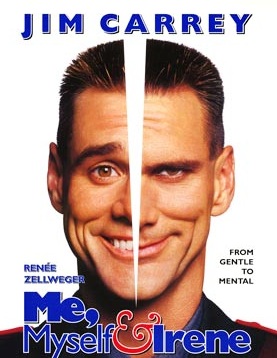
At least Jim Carrey tried to be funny
Image Source

The part where Abt appears to have accepted North Korean propaganda as his own is when he complains on numerous occasions about the havoc that international sanctions have had on North Korea's economy. He mentions that if it just weren't for the sanctions, the North Koreans would have access to state-of-the-art technology that they so richly deserve.

However, he never once mentions why North Korea is the most heavily sanctioned nation in the world. He mentions North Korea's nuclear tests in passing, but never once stops to ponder that the North Korean leadership has no one to blame for the sanctions that have been placed on it but itself.

Throughout the whole book, Abt does not utter a single word about North Korea being the country that instigated the Korean War or the fact that North Korea secretly bought nuclear technology from Pakistan or that it has launched missiles over its neighbors or kidnapped foreign citizens or conducted terrorist attacks against South Korea in the past (here and here).

The only thing that he said that seemed to make any sense was how ineffective the sanctions were. He claimed that, too often, sanctions do not hurt criminals or government officials, but rather ordinary citizens.

So what does he say when sanctions are finally fine-tuned so that it will only specifically hurt the North Korean leadership? He says:

In July 2012, the UN Security Council released a report on sanctions, according to the AP news agency, which wrote: “No violations involving nuclear, chemical, or biological weapons or ballistic missiles were mentioned in the 74-page report to the Security Council committee monitoring sanctions, published Friday.” On the other hand, the document highlighted North Korea's responsibility for illegally imported luxury goods including tobacco, bottles of sake, secondhand pianos, and several secondhand Mercedes Benz cars. It is stunning that these would be considered serious crimes which the Security Council had to urgently address.”

So now that the Security Council has gotten it right, he thinks it's a waste of time.  How very convenient.

Image Source

However, the most outrageous thing that he claims in the book is about the human rights violations in that country, which the world is finally paying some attention to.

Abt admits that anywhere between 120,000 to 200,000 people are being held in prison camps, but then brushes it all aside by saying that that figure “represents less than 1 per cent of the total population.”

He further acts as a North Korea-apologist by comparing that figure to American incarceration rates, because America is “home to the highest documented percentage of prison inmates in the world.” Like as though the conditions of imprisoned Americans could be compared to the North Korean practice of imprisoning three generations of an entire family in gulags for the “political crimes” of one person!

Image Source

But then probably to defend himself, he claims:

“While I clearly disavow any human rights abuses in North Korea and anywhere else in the world, I'm a businessman who has never visited any gulag or prison. I am not a human rights expert.”

Seeing how he admits that he is not a human rights expert, one would think that he would remain silent about this topic from here on out. However, he does not.

To be specific, Abt has some choice words about North Korean defectors who speak ill of North Korean human rights violations. He claims that “as 70 percent of them (North Korean defectors) remain jobless in South Korea, they can make a living by selling dubious information.”

There are approximately 27,000 North Korean defectors currently living in South Korea. And there are thousands more who live elsewhere around the world. You would think that if there was, indeed, a conspiracy among North Korean defectors to sell a grand lie, it would be a matter of time before that lie was punctured. But such logic seems to escape Abt.

Abt also adds that “the intelligence services, academics, book authors, journalists, and human rights and political activists who interview these defectors almost ceaselessly after their arrival in South Korea have an impact on their narrative, too. Those who know the North Korean refugee resettlement process in South Korea are aware of how easily individual accounts evolve over time from mild accounts of hunger or seeking economic opportunities to romantic tales of escape against all odds.”

To add the cherry to his insult against North Korean defectors and their testimony, he adds that “while it is a serious issue, North Korea's foes are equally guilty of using rights rhetoric as a political tool to further isolate and corner the regime.”

Like as though the regime did not isolate and corner itself for decades with its juche and songun policies.

In a different but related issue, Abt also says that throughout his seven years in North Korea, he had never seen a single starving person. To be specific, he claims, “In the mid-2000s, I did not come across starving people, though I did see scores of thin Koreans who looked malnourished.”

I suppose that it's possible that Abt had never seen this young woman or others like her (see here, here, and here). But do they not exist because he had never seen them? In his mind, it seems to be so.


And what does Abt have to say about those videos of North Koreans who are foraging for food? They're not starving! He claims that foraging for food is a traditional pastime. To be specific, he says:

“What many outside North Korea generally ignore is that the much-quoted “foraging for food” is an age-old North and South Korean tradition, a result of the absence of arable land in the North to grow crops. For centuries, Koreans from all over the peninsula have consumed wild mushrooms and edibles – long before the foundation of the DPRK – and they still love to eat them.”

Of course. That must be why so many South Koreans also go out to forage for food everyday. Oh right. They don't.

But just so that Abt makes it clear that there is hunger in North Korea and that the North Korean government is doing its best to “take care of its people,” Abt says “Amazingly, Kim Jong-il was, unlike other Asian leaders, highly enthusiastic about potatoes and soybeans and gave them a role in agricultural development.”

Abt never mentions that it is likely that other Asian leaders were not enthusiastic about potatoes or soybeans for their own countries' agricultural development because they did not have to be.

There are far too many other contradictions that he writes, as well as far too many statements that cannot be taken as anything other than the defense of the North Korean dictatorship. In fact, I dog-eared all the pages that I felt contained such statements. If I mentioned every single instance of this, however, I would have to scan and upload the entire book!

Despite Abt's insistence that he is apolitical, this book is essentially a political book more than anything else; and it is excruciatingly awful. In Abt's narrative, North Korea is not evil in the slightest bit. In fact, there are plenty of other evil regimes in the world, which, therefore, naturally, exonerates North Korea of all its sins. And if it has sinned, Abt never saw any of it! He's just a businessman, for heaven's sake! Nobody is either good or bad. Never mind reality!

Truly “A Capitalist in North Korea” can be called enlightening only by devaluing the term.

Image Source

Throughout this entire book, it is amazing how Abt manages to sustain an oozy, cynical tone, which is the book's most striking feature. Its sheer stupidity is disgusting and without reprieve. Its sense of morality is non-existent. From almost any page of the book, I could hear a hollow, ghostly voice droning on repeatedly “There is no good or evil – it just is.”

Well, I saw evil in the pages of this book. And I saw that evil was impotent, irrational, stupid, vain, and blind.

If anyone chooses to fork over their hard-earned money for this book, I will certainly not try to dissuade them. After all, who knows how to best spend their own money than the individuals themselves? However, if there is anyone who still wishes to purchase this book, might I suggest a cheaper and more practical brand of toilet paper? Charmin, perhaps?

Image Source