Showing posts with label donald trump. Show all posts

Monday, March 13, 2017

Trump's Silence Over China's Bullying Could Resurrect South Korea's Anti-Americanism

Park Geun-hye’s impeachment has brought nine years of conservative governance in Korea to a screeching halt. Now that there isn’t a single conservative candidate who has not been tainted by the Park Geun-hye/Choi Soon-sil scandal to one degree or another, it is all but guaranteed that the next president is going to come from the progressive Minjoo Party. And as I mentioned over the weekend, Moon Jae-in is now the man to beat.

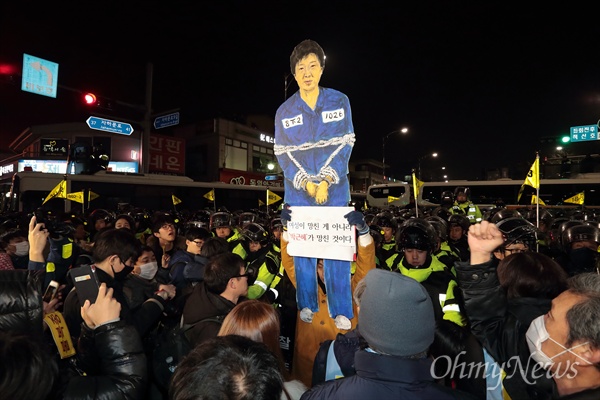
Seeing how he was President Roh Moo-hyun’s former chief of staff, Moon is taking great pains to tell voters (and foreign observers) that he’s not anti-American. However, no matter how much Moon may wish to distance himself from his past, the Korean Left will have a much harder time of doing that. It wasn’t that long ago when Korean protesters were stomping on or burning American flags. Businesses blatantly refused to serve American customers and a good number of American citizens who lived in Korea at the time were assaulted and harassed on a daily basis. Many of them were forced to pretend to be Canadians to avoid harassment.


Image Source

Image Source

Image Source

Image Source

While the conservatives have been in charge, overt anti-Americanism practically disappeared. That is not to say that the conservatives were the only reason that anti-Americanism retreated. To be sure, there were other reasons as well. Today’s young Koreans’ nationalism is based on their identity as South Koreans, which is different from ten to fifteen years ago when minjok was the popular refrain. The KORUS FTA, which has also helped to deepen trade ties between the two countries, also helped to force back anti-Americanism. Ironically, the KORUS FTA was first initiated by President Roh Moo-hyun who
 once rhetorically asked “What’s wrong with being anti-American?”

However, it would be a mistake to think that Korea’s progressives have completely given up on viewing the United States as the enemy. When the first pieces of THAAD’s system arrived at Osan Air Base, the Minjoo Party’s chairperson, Choo Mi-ae falsely claimed that it was done in secret; that it was agreed upon by illegitimate political leaders who hoodwinked the Korean people. She went so far as to say that bringing in those components was a violation of Korea’s sovereignty.

On the other hand, the only thing that Choo Mi-ae has said about China’s bullying and (unofficial) sanctions against South Korea’s economy vis-a-vis the latter’s THAAD deployment was that it was “excessive.”

Choo Mi-ae, who doesn't even know how binoculars work, thinks her opinion on THAAD matters.
Image Source

Especially with the boorish Donald Trump in the White House, the stage is set for anti-Americanism to return with a vengeance. Considering what we already know about Trump and the Korean Left, things could get ugly. When the Korean Left takes over the reins of power, they will have a responsibility to behave like adults. However, they are not in power yet. The ones who are in power and who are in the position to do anything to try to mitigate this are American Republicans. 
God help us all!

Deploying THAAD anti-missile batteries in South Korea has been contentious to say the least. There is a significant portion of the population that believes that it does more harm than good. After all, THAAD will not protect the 20 million or so people who live in Seoul (Seoul will be targeted by short-range rockets and artillery barrages and THAAD was never designed to counter those threats anyway). THAAD’s defensive capabilities are designed to better protect American military personnel and assets as well as the American mainland from long-range North Korean missiles.

The alliance between the United States and Korea is a mutual one. That means that Korea has to come to America’s aid as much as America has to come to Korea’s aid in the event of a military conflict that affects either nation. Especially at a time when “America First” rhetoric (never mind its historical roots) has permeated the American political landscape, it would be ill-advised for the Korean government to confirm what many American voters and government officials already falsely believe - that allies take and take and take but never give anything back.

However, THAAD has put Korea in China’s crosshairs. China’s unofficial sanctions have hurt Korean businesses. From Kpop stars to duty free shops to Lotte to practically any business that relies on the Chinese market, Korean businesses are hurting. A more thorough study would have to be conducted to deduce just how much China’s sanctions are costing Korea
’s economy. But in politics, perception is oftentimes more than enough.

When the average Korean citizen feels he is worse off because of THAAD, which really doesn’t do much to protect Koreans, it would only be natural for more and more Koreans to question its benefits over time. The United States can nip this in the bud. President Trump ought to make a statement that the United States stands firmly with South Korea; that the United States would not sit idly by while China pushes around one of its most important allies. He should say publicly that his administration will look into ways to deepen trade ties between Seoul and Washington in order to alleviate the economic burden that THAAD has thrown onto Koreans’ collective shoulders.

However, the only American official of any real importance to have said anything about China’s bullying of South Korea over THAAD is Senator John McCain. No one in the Trump administration is saying a word to support Korea! This is irresponsible and yet another indication of the Trump administration’s sheer incompetence. In less than sixty days, South Korea is going to have a new government that will be populated by people who have a long history of anti-Americanism. All they need is the right excuse to resurrect it. They’ll be able to say that they stood up to American bullies and helped to improve economic relations with China and they will likely get rewarded by voters.

President Donald Trump and Secretary of State Rex Tillerson ought to be doing everything they can to try their best to avoid that more-than-plausible eventuality. And yet there is nothing but silence from Washington. Never mind that Trump can’t seem to keep quiet about anything else!


If the worst does come to pass and if future American historians ask who lost South Korea, they can look back at this moment now and know without a doubt that President Trump’s silence was where it all started!

Saturday, March 11, 2017

Random Thoughts about Park Geun-hye, Her Impeachment, and What Comes Next

I don’t know which honorific to use to refer to Park Geun-hye anymore. All former presidents, no matter how disgraced they later became, are still referred to as Former President So-and-So. But none of them was successfully impeached. So do we call her Former Saenuri Chairperson Park Geun-hye or do we just call her Park Geun-hye-씨? MBN seems to think that “Former President Park Geun-hye” is still the appropriate honorific, but I am not convinced.

And it turns out that Ms. Park (that sounds about right) has still not left the Blue House. Seeing how she has been stripped from her constitutionally-guaranteed immunity from prosecution, it may yet be possible to see her eventually led out of the Blue House with handcuffs around her wrists.


Ms. Park’s silence since the verdict is a slap in the face to every conservative in the country. Three people - people who protested against her impeachment - have died while protesting the Constitutional Court’s decision. Her supporters also attacked journalists for simply doing their job. She should have issued a statement renouncing violence. She should have urged calm. And she should have publicly announced that she, and everyone else, would accept the Court’s ruling - just like she said President Roh Moo-hyun should accept the Court’s ruling when he was impeached - regardless of the decision. Her silence is a betrayal of her supporters and the rule of law. It is indecent and a perfect example of how a leader ought not to behave. It was her final insult to anyone who had ever voted for her.

Image Source

That being said, unlike many people, I don’t take any joy in her impeachment. All I see is tragedy. Her political career lasted for 18 years and the Queen of Elections had every reason in the world to become a great leader - to exonerate her father’s legacy, to squash once and for all the accusations that she and her cronies are corrupt power-lusters, to prove that conservative values could help to lead Korea into the 21st century. She failed completely. Her impeachment was a victory for justice and Korea’s young democracy. But I take no joy in seeing her downfall.

As expected, Moon Jae-in is the man to beat in the upcoming presidential election. Anyone who has ever read anything that I had to say about him would know that I utterly despise the man. Donald Trump is already in the White House (another man whom I have nothing but contempt for) and Moon Jae-in will most likely be the next occupant of the Blue House. A toxic shit storm is brewing; and Kim Jong Un, the Fat Boy King of the North, laughs.

Seeing how he started out by opposing THAAD’s deployment to becoming ambivalent, to seemingly oppose it again, China is likely laughing, too.

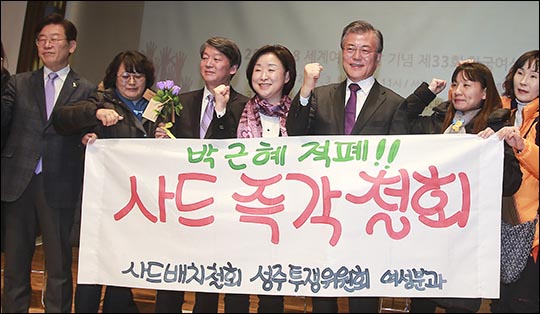
This picture was taken on March 8th 2017. It says "Withdraw THAAD immediately."
Image Source

If Moon becomes president and pledges to withdraw the THAAD anti-missile batteries, China will always remember that all it needs to do to convince the South Korean government to do anything is exert just a little economic pressure and it will cave every single time. South Korea’s sovereignty will effectively belong to China. But Moon Jae-in and Choo Mi-ae will be able to say that they stood up to the United States. Never mind that amid Chinese bullying and North Korean aggression and Japanese rising militarism, South Korea’s only friend is the United States!

In short, South Korea’s dark days are not behind it. Things are going to get much darker yet.

Tuesday, January 24, 2017

South Korea is Marginalized and that is South Korea's Fault

In my latest column for NK News, I talked about how the ROK-US alliance could be severely strained due to the toxic mix of the Trump administration and any progressive-led future government in Seoul.

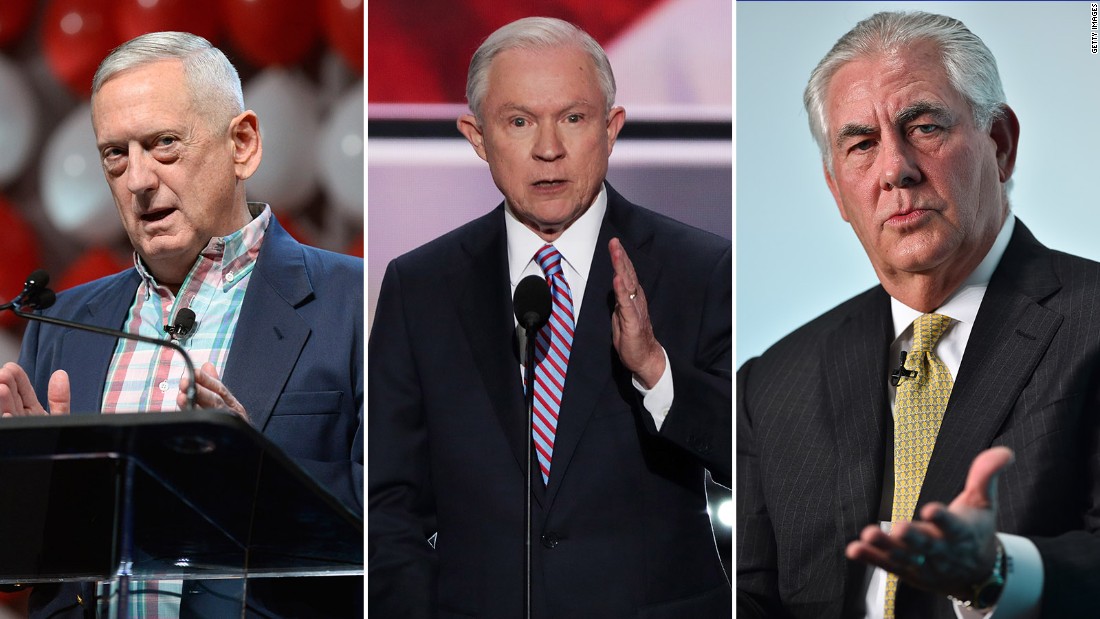
President Trump’s cabinet, while not yet fully formed, is being filled by hawks - particularly embodied by Mattis and Tillerson - and considering how sanctions were the go-to weapon of choice for the hawkish doves in the Obama administration, the hawkish hawks in the Trump administration may prefer to seek stronger means of persuading North Korea to change course.


Image Source

Meanwhile, across the Pacific, when the progressives take over the Blue House after the next presidential election in South Korea (whenever that takes place!), and the next president WILL be a progressive, they will most likely have drastically different ideas about how to deal with North Korea.

Being the kind of man who is obsessed with appearing strong and respected, perhaps even feared, Trump is exactly the kind of person whom Sean Connery’s Captain Marko Ramius would have called “a buckaroo.” We are already seeing this with the kind of rhetoric that the Trump administration has employed toward China - that it would prevent China from taking over territory in the contested South China Sea as well as deny it access to the islands it has built there.

It remains to be seen if the heated political rhetoric between Washington and Beijing (for its part, Beijing has said that the United States would need to “declare war” to block China access to its islands) will develop into something more serious. Both are militarily powerful nations and the two largest economies of the world. But if that is the kind of rhetoric that the new government in Washington has chosen to use against China, then it would be safe to conclude that Kim Jong Un should not be sleeping well.

This will compel South Korea to rethink its threat perception. Should President Trump’s rhetoric and policies lead to a conflict on the Korean Peninsula, the South Korean people would pay the ultimate price. How South Korea chooses to act now that the powers-that-be in Washington has changed is anyone’s guess.

The first approach is to better accommodate Washington. For example, Moon Jae-in, perhaps being able to tell how the wind’s direction has changed, has reversed his stance toward THAAD deployment and has said that it would “go ahead under his administration.”

That being said, one of Moon Jae-in’s criticisms against Ban Ki-moon, his most serious challenger to South Korea’s presidency, is that he’s too pro-U.S.

Opposing the decision to deploy THAAD anti-missile batteries in South Korea could have devastating consequences for the alliance. Trump has said repeatedly that South Korea has been a free rider in its national defense. It is a false claim, but every passing day is showing that facts do not matter nearly as much as what Trump feels. As it is, South Korea should be walking on eggshells.

Image Source

Reversing the decision to deploy THAAD would only exacerbate things. Another theme that Trump has harped on is that the United States 
practically gets nothing” by helping to defend South Korea.

It is yet another factually bereft statement but the fact remains that the ROK-US alliance is, indeed, a mutual defense treaty. Whether or not THAAD anti-missile batteries can actually help to defend South Korea, at this point, is a secondary matter. As far as Washington is concerned, it is convinced that THAAD anti-missile batteries can and will defend the United States from North Korean long-range missiles. If Seoul is unwilling to aid Washington defend itself from North Korea, then Trump would have been proven right - that the United States really does get nothing from defending South Korea.

It is unclear how the Trump administration would react if the next South Korean government decided to pursue détente with North Korea. Whether or not it is a horrible idea (it most certainly is), Seoul will need to better gauge the new government to better understand how Trump would react. But unilaterally deciding to cancel the joint plan to deploy THAAD in Korea would guarantee to elicit a less than cordial response from Washington.

As of this writing, Moon Jae-in is the only progressive presidential contender who has reversed his previous opposition to THAAD.

Image Source

There is a second, and possibly tempting, alternative. Instead of better accommodating the United States, South Korea could choose to return to hedging its alliance with the United States and its economic partnership with China. China is South Korea’s largest trade partner. And China’s bullying and economic sanctions (in all but name) against South Korea for its decision to deploy THAAD anti-missile batteries has been bruising South Korea’s businesses.

By hurting everyone from K-pop stars to duty free shops to bidet manufacturers and air purifier manufacturers, Beijing is hoping that South Korean voters and businesses will apply pressure on their government and force them to change their position on THAAD. It is a solid plan. Hitting people in their wallets where it hurts most is one of the best ways to convince anyone to change.

However, canceling the decision to deploy THAAD, as mentioned earlier, has serious costs associated with it. At the very least, it would create a severe frost in the ROK-US alliance. At most, South Korea would allow itself to be bullied by China to have its sovereignty chipped away by North Korea.

It is important to point out, however, that that is not the same thing as saying that the alliance itself would be ended. The alliance is almost 70 years old. There are far too many entrenched interests in the civilian and military sectors that depend on the alliance for their livelihoods. Something incredibly dramatic needs to take place for an alliance to be terminated. And it is not clear if deciding to reverse course on THAAD is dramatic enough for the alliance to be terminated.

In order to compensate South Korea for its rift with the United States, China would need to offer South Korea certain guarantees. At the very least, China would need to guarantee a resumption of unimpeded trade and improved diplomatic relations. However, South Korea should not get its hopes up and imagine that Beijing would also offer to lean more heavily on North Korea, much less pave the way for reunification. China is satisfied with the status quo vis-à-vis the division of the Korean Peninsula. It will do nothing of the sort to destabilize the North Korean regime.

If South Korea manages to restore diplomatic and trade relations with China and manages to remain a US ally - albeit a marginalized one - the South Korean government, in its most optimistic moments, might be able to imagine itself as the go-to diplomatic broker between the United States and China as both countries appear to be headed toward some level of conflict.

However, this middle-of-the-road approach is probably the worst thing that South Korea could do. South Korea is already paying for it now. To one degree or another, South Korea has taken this approach whenever it could. It resisted being roped into the US missile defense shield program since George W. Bush was the US president. It refused to condemn North Korea for its human rights abuses during its two progressive administrations. It still continues to malign Japan whenever it can and refuses to participate in military exercises that involves Japan.

That is why South Korea is not high on President Trump’s list of priorities in Asia. While ambassadors to Japan and China have been appointed, America
’s embassy in South Korea remains without an ambassador, which is made all the more pointed considering how much Koreans respected Ambassador Mark Lippert. If Korea attempts to be a coy or difficult ally whenever it fits its interests, then there is no reason to believe that other countries will not treat Korea in the same way.

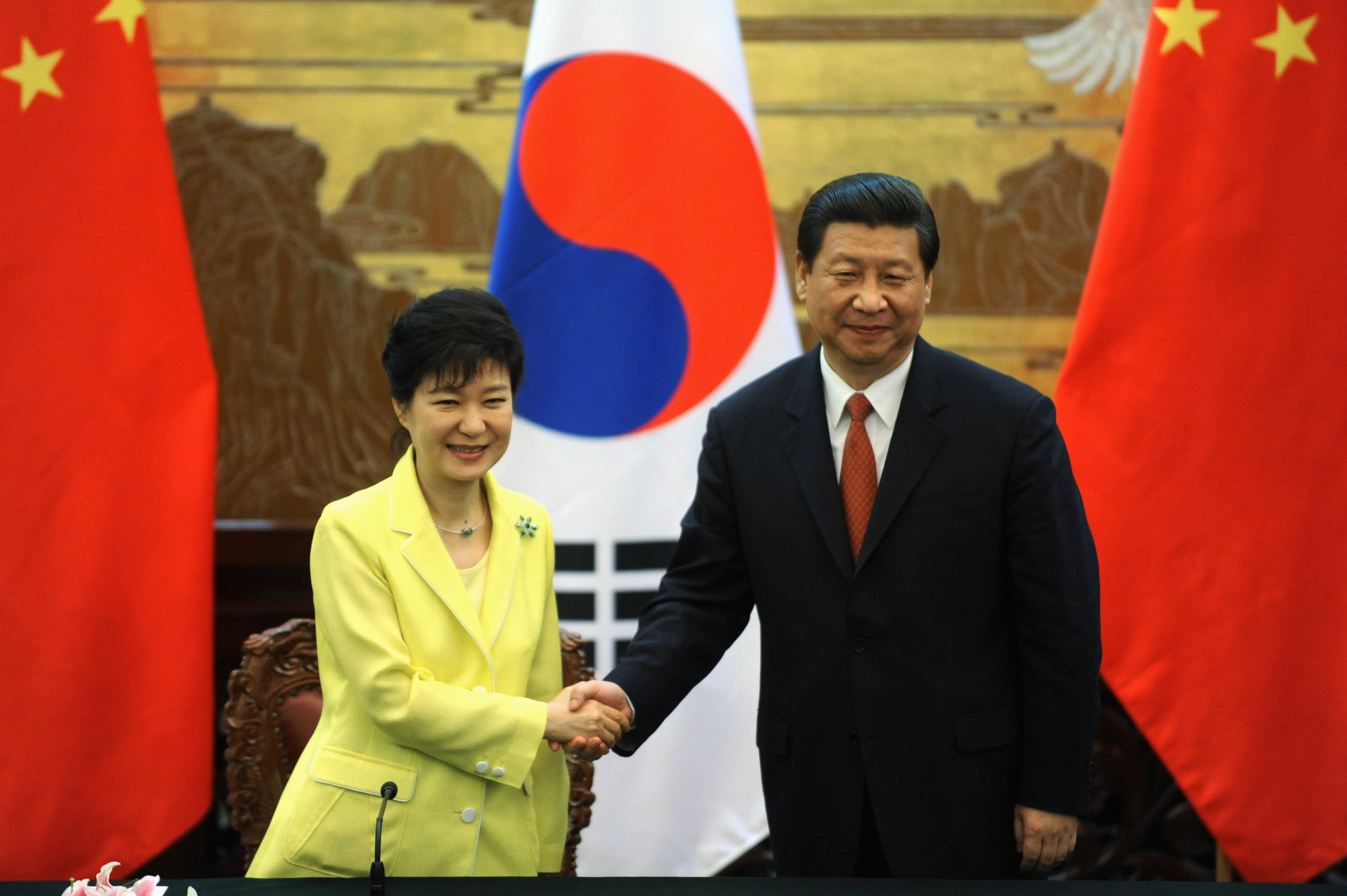
The same goes for China. Much noise was made when President Park Geun-hye was seated so close to Premier Xi Jinping during China’s military parade in 2015 to commemorate the end of the Second World War. Everyone in both Beijing and Seoul sang each others’ praises and it was assumed that both countries were about to grow closer. Chinese netizens loved the fact that Park Geun-hye could speak Mandarin!

Image Source

But at the end of the day, no one in Beijing forgot that South Korea is a US ally. When the North Koreans tested a nuclear weapon only a few months after the parade, Xi Jinping refused to answer the phone when Park Geun-hye decided to call in that favor to put North Korea in its place. When South Korea decided to finally agree to Washington’s calls to install THAAD anti-missile batteries when it became clear that Chinese help was not coming, China showed its true colors and revealed that it sees South Korea as nothing more than another small country that should simply do as it commands.

There is an old saying about how a hunter who chases two rabbits will eventually catch neither. South Korea will need to either fully commit itself to the alliance with the United States or it will need to borrow a page from Rodrigo Duterte and spurn Washington and fully embrace China as its diplomatic, military, and trade partner. It cannot do both. Neither Washington nor Beijing will ever allow South Korea to have its cake and eat it, too.

There are costs and benefits associated with each. But it will need to choose. Failure to choose will guarantee that South Korea forever remains marginalized and will only be able to nostalgically recall its eight years under the sun during the Obama administration as “the good ol
 days.”

Monday, November 14, 2016

South Korea's Progressives Need to Grow Up in the Age of Trump

On November 10, a South Korean lawmaker from the main opposition Minjoo Party, Rep. Yun Ho-jung, said he would seek a dismissal motion against Defense Minister Han Min-koo if South Korea continues to move forward to sign the Security of Military Information Agreement - an agreement with Tokyo to share military intelligence on North Korea.

This came on the heels of the country’s three opposition parties having released a joint statement a day earlier where they expressed their opposition to the agreement claiming that it would escalate geopolitical tension in and around the Korean Peninsula. Today, they reaffirmed that threat.


When one considers the progressives’ position for even a moment, one realizes that the claim makes no sense whatsoever. The need to share intelligence with Tokyo would never have been made an issue if North Korea didn’t pose an existential threat in the first place.

Time and again, whether it is the THAAD deployment or joint US-South Korean military drills or intelligence-sharing with Japan, South Korea’s progressives have consistently voiced their opposition claiming that they would make matters worse while only perfunctorily stating that North Korea should not escalate tensions.

But this should come as no surprise considering the kinds of rhetoric that have come from South Korea’s progressives in the past. Only a month ago when President Park gave a speech calling on North Koreans to abandon their country and defect (a speech that was far less controversial or memorable than Reagan’s “tear-down-this-wall” speech), Rep. Park Jie-won, the floor leader of the People’s Party, accused President Park of making “a declaration of war.” Not to be outdone, Ki Dong-min, a party spokesperson for the Minjoo Party said President Park seemed to have been “on the warpath.”

With rhetoric like this coming from South Korean progressives, who needs the KCNA?

Giving this woman a real run for her money
Image Source

The Left often bristles anytime conservatives refer to them as jongbuk - pro-North Korean sympathizers. However, as much eye-rolling as the conservatives have induced due to their overuse of red-baiting, which has pushed many to compare conservatives to the boy who cried wolf, the accusation is not entirely without merit.

The Choi Soon-sil scandal has rocked the Park Geun-hye administration and with every new reveal, this onion of a scandal is a gift that keeps on giving. The opposition is right to demand that President Park withdraw herself from the day-to-day operations of the government and the protesters are more right still to demand her immediate resignation. However, opposing the Security of Military Information Agreement (GSOMIA) has exposed the opposition for what they always have been - craven reactionaries who seek nothing but their own political goals.

The opposition party has been enjoying growing support in the polls recently as a direct result of the Choi Soon-sil scandal but in their hubris, they seem to think that they can just about do anything. They ought to remember that though ousting the president may be justified, working against the country’s interests is unforgivable.

The progressives will be the new stewards of the country and they had better grow up and do it quickly because the world is changing as we speak.

It is likely that the next South Korean president is going to come from the Minjoo Party and as long as they can maintain their alliance with the other minor parties, it will become the next ruling and majority party. But it is important to bear in mind that the Minjoo Party has long committed itself to opposing the deployment of THAAD missile batteries and that it has a long and sordid history of anti-Americanism. So it’s more than plausible that South Korea’s policy toward North Korea might take a sharp left turn.

That sharp left-turn could mean that the future South Korean government might become more anti-Japanese (not that the conservatives were any help whatsoever in trying to improve ties with Tokyo), less pro-American, and more sympathetic to Pyongyang. After all, although it is unclear if Mayor Park Won-soon might become the next president, his incredibly naive positions such as revamping the Sunshine Policy and building “economic and cultural cooperation with the North” (I wonder what the mayor of Dandong might have to say about that!) are shared widely on the Left.

Good luck with that
Image Source

Newton’s Third Law of Motion states that for every action, there is an equal and opposite reaction. But that’s in the realm of physics. In the realm of politics, however, the reaction is not always equal. And it is quite hard to come up with a better example of that than Donald Trump’s electoral win. The incoming Trump administration could bring immense changes and it is now time for South Korea’s progressives to quickly learn to assess the new political reality.

That is because should South Korean progressives be tempted to return to their old ways and exploit anti-American sentiments again for any reason whatsoever, Trump’s likely braggadocious response would be less genteel than President George W. Bush’s response was while he was in the White House. Overt acts of anti-Americanism aside, one of the things that Trump ran on was for American allies to become more active in their own self-defense and to increase their share of joint-military budgets with the United States. It’s obvious how further South Korean attempts to maintain the status quo or push away Japan, which weakens the trilateral alliance (and we know what Trump thinks about perceptions of weakness), would be perceived in Washington.

It would not be an exaggeration to say that Trump has shown little love for South Korea during the campaign trail. He suggested that South Korea ought to pay 100 percent of the cost of stationing American troops and military hardware in the country. He has also called the South Korea-U.S. Free Trade Agreement a “job-killing deal” that has resulted in trade deficits for the US and his campaign went on record saying that he wants to go back to “ground zero” with regard to the trade deal.

It is true that Trump has repeatedly shown himself to be greatly ignorant of international politics when he expressed a blasé attitude about the possibility of a North Korean attack against South Korea or Japan, America’s staunchest allies in Asia, saying “it would be a terrible thing but if they do, they do.”


However, it would be a mistake to assume that Trump’s ignorance automatically means that the incoming administration will be incompetent. Trump already said months ago that should he win the election, he would consider appointing John Bolton, who should not need any introduction (or his views for that matter) in South Korea, as his Secretary of State. If South Korea’s progressives are not feeling even a little wary about the possible return of this real-life version of Yosemite Sam, then they’re going to be in for a rude awakening.

He’s baaaaack!
Image Source

In order to thrive in the Age of Trump, South Korea is going to have to rethink the way it conducts its foreign policy. It’s going to have to bury hatchets and cooperate closely with Japan, which is also likely to be as nervous about Trump. Consequently, South Korea’s progressives are also going to have to stop and think for a moment about the possible risks and benefits of reestablishing engagement with North Korea. And they are also going to have to act more cautiously in their approach to the US as America’s support can no longer be taken for granted - no matter how much people may want to pretend otherwise. The calculus has fundamentally shifted.

In short, if (more likely when) South Korea’s progressives take over from the conservatives in the next election (or after President Park resigns amid the scandals that are engulfing her administration), they are going to have to grow up and do so quickly. The country’s survival may depend on it.

Saturday, November 12, 2016

Trump's Economic Proposals and How They Might Backfire

When presidential candidates are campaigning for office, they will promise everything from free healthcare to free lawn care if that is what is needed to get the votes they need to win. So when they do get elected, many of them renege on a great number of their campaign pledges. Sometimes, it’s because they never had any serious intention to go through with their pledges. And sometimes, it’s because they just didn’t have enough political capital to do everything they wanted to do.
However, for reasons that experts will be studying for years to come, Donald Trump is not like most politicians. During the 18 months that he campaigned for the presidency, Trump said a great number of things, ridiculous things, that would have permanently tanked any other politician’s career. Who else remembers that back in 2004, Howard Dean’s aspirations for the presidency was destroyed all because of a scream? Simpler times, indeed.

One of his more ridiculous pledges was to enforce a complete and total shutdown of Muslims entering the United States. That pledge has been quietly withdrawn. A year ago, he also said that he would “absolutely” require Muslims to register in a federal database. When he was asked how that would be different from the way Jews had to register with the government in Nazi Germany, he repeatedly answered by saying “You tell me.” Thankfully, that, too, has been withdrawn.

If it quacks like a Nazi...
Image Source

Now it appears that Trump will have to backtrack from his most famous pledge - his pledge to build a “big, beautiful, powerful wall” on the US-Mexico border. Even Newt Gingrich, former Speaker of the House and ardent Trump supporter, admitted that Trump’s promise to get Mexico to to pay for the wall may have just been “a campaign device.”

It has only been a few days since Trump won the presidential election and he is already going back on some of his biggest promises such as punishing corrupt special interests or locking up Hillary Clinton. Many of his supporters are not likely to be happy about Trump’s flip-flopping. This will mean that even before he begins his presidency, he will likely lose a lot of good will from the many people who voted for him.

However, this is not a moment for anyone who opposed Trump to be allowing themselves to enjoy feelings of schadenfreude. That is because Trump will most likely resort to other methods to placate his supporters and the fact of the matter is that Trump is a deal-maker and he will make the kinds of deals that are profitable to him, but not necessarily anyone else.

So among the first things that Trump will do as president is to fulfill his pledge to rip up trade deals. The TPP will be the first casualty. It’s unclear if Trump would actually be able to abolish NAFTA as he said he would. After all, NAFTA has been in place for a long time and there will be many vested interests who would be severely opposed to such a move. On the other hand, the TPP, which is still in its embryonic stage, would be much easier to terminate. The rationale behind it would be to prevent a “job-killing” deal that might cause a trade deficit for the US.

To complement that decision, Trump will likely push to keep another promise, which he also knows will face little to no opposition from the newly elected Republican Congress - his promise to levy a one-time 10 percent tax on all repatriated corporate profits that are currently being held offshore. Added together with the Federal Reserve’s independent plan to gradually raise short-term interest rates in the near term future, there is a good chance that at least within the first few months of Trump’s presidency, the US might see a spike in capital inflows, which could have a large stimulative effect on the US economy.

I'm rich, bitch!
Image Source

Trump is hoping that the repatriated capital would be able to be used to generate US$1 trillion in private sector infrastructure investment over a decade to rebuild the country’s infrastructure. That way, he hopes to create thousands of jobs which would have a cumulative effect on the economy. However, repatriation of corporate profits is a temporary fix. Realistically, to raise the kind of capital needed to overhaul the nation’s infrastructure over the long term, Congress would also need to raise taxes such as the the federal gas tax and tying future increases to inflation. Needless to say, however, raising taxes is not popular and probably won’t be considered.

Unfortunately, the bad news doesn’t end there. The repatriation of corporate profits will come at the expense of other countries around the world and this could particularly hurt Europe. After all, as a result of a US$14 billion penalty from the US Justice department stemming back to the subprime mortgage crisis, Deutsche Bank, one of the largest banks in the world, almost faced a Lehman Brothers-like collapse a few short months ago. Deutsche Bank barely survived but the Eurozone debt crisis and negative interest rates continue to haunt it and other major European banks. A sudden loss of significant US Dollar reserves, which would likely follow such a generous corporate tax and a Federal Reserve interest rate hike, could very well hurl the entire European continent into yet another banking crisis.

Trump might receive less support (in fact, he might face fierce resistance) but another thing that he might attempt to do is fulfill his pledge to impose a 35 percent tariff on all imports coming from Mexico. What is much less certain, however, is his pledge to impose a 45 percent tariff on all imports coming from China. In fact, as unlikely as the former may be, the latter is even more unlikely. An imposition of even minor tariffs can and do lead to economic retaliations, which if left unchecked, could spiral into a vicious trade war. And a trade war could be devastating. It is likely that those sums that Trump suggested were yet another example of “campaign devices.”

So far, that would mean that Trump would have killed a trade deal that was never born in the first place and force corporations to repatriate their profits back to American banks. The first suffers from a bad case of “the seen and the unseen” and the second would be easy for the Democrats and other progressives to ridicule as yet another example of trickle-down economics. In other words, they’re both weak sauce. Trump would need to deliver something much bigger to appease the voters and Congress.

Image Source

So if Trump can’t punish China and Mexico, there are other countries that Trump can punish to show his loyalists that he is “doing something” for them without having to face too severe a backlash. The easiest target will likely be South Korea.

Politically, South Korea would be easy to throw under the bus. Unlike China, it doesn’t have a billion-strong population and it is not the second largest economy in the world. And unlike Mexico, South Korea doesn’t share a long border with the United States that has allowed for centuries of trade, easy immigration (legal and illegal), and cultural exchanges. Furthermore, South Korea is an American ally in an unfriendly far-away neighborhood, which means that South Korea has little choice but to be more cautious (read, timid) in its dealings with the US.

For a deal maker like Trump, South Korea is the perfect negotiation partner - one that he can kick around and squeeze for as much concessions as possible. Trump will twist arms and deploy brinkmanship-esque negotiation tactics with regards to military cost-sharing plans and renegotiating the ROK-US Free Trade Agreement.

Threatening South Korea by stating that he would be willing to walk away from the alliance would certainly be an effective strategy. It would certainly cause initial resentment among South Koreans, but it probably will not change the fundamentals of the partnership. As a result, unless South Korea balks (which is highly unlikely) the alliance will not break.

Whether or not the free trade deal gets renegotiated to Trump’s satisfaction, the renegotiation alone would take years. In the meantime, Trump would be able to tell the voters that he is looking out for their best interests by squeezing more money out from “ungrateful and free-riding allies.”

Trump's preferred means of negotiations
Image Source

However, Trump might not have much room to put too many other Asian countries in a vice grip. That is because now that the TPP is dead, China is wasting no time to push ahead with their version of the TPP - the Regional Comprehensive Economic Partnership (RCEP). Just as the TPP excluded China and Russia (something Trump didn’t know about until it was pointed out to him by Rand Paul) as a way for Washington to set trade rules for the fast-growing Pacific-rim region before Beijing does, the RCEP will exclude the US for the very same reason.

So although Trump might still do away with the TPP, he cannot completely abandon trade deals with Asia.

For its part, as a result of the previously mentioned closer relationship between the US and Russia and a continued (if somewhat sputtering) Asia Pivot, China might think it necessary to continue to accelerate its military modernization program, which would further cause nervousness among China’s smaller neighbors or even compel them to shift allegiance to Beijing.

So if Trump cannot afford to squeeze East Asia too hard, there are two other related areas that he could exploit. The first is to rescind Obama’s policy and allow TransCanada Corp. to re-submit its application for the proposed Keystone XL oil pipeline in return for a larger percentage of profits generated. Furthermore, he could put the Environmental Protection Agency on a much shorter leash (as it had been under the George W. Bush administration) in order to encourage more U.S. energy exports.

Naturally, however, this would lead to a larger glut of supplies, which in turn would lower oil prices and help the US grow its oil market share. Although some individual oil companies will certainly suffer as a result of sustained low prices, in the larger scheme of things, this could nominally help the US. However, not everyone would be celebrating this turn of events. OPEC members and other natural-resources based economies in Africa and Southeast Asia would not be happy.

Even wealthy countries like Saudi Arabia are struggling as a result of low oil prices and facing ever dwindling foreign-exchange reserves. Things have become more desperate among poorer OPEC member states such as Russia and Venezuela (and other smaller Gulf kingdoms, albeit to a lesser extent). Combined with an ongoing Sunni-Shiite proxy war and continued conflict in Syria, it is highly unlikely that anyone in the Middle East is celebrating Trump’s victory.

Speaking of Syria, one thing that Trump would certainly do to great fanfare is to withdraw US forces from that country. Trump is a deal maker and truth be told, for the US, the Syrian conflict is a moral one. And for a deal maker like Trump, intangibles such as morals or loyalty don’t carry any weight. Regardless of how that conflict turns out, the US would not see direct profits from it. However, due to the aforementioned Sunni-Shiite proxy war, that does not mean that a US withdrawal would help to usher in peace in the Middle East.

It should be noted, however, that withdrawal from Syria would not mean that Trump would push for a general withdrawal from the Middle East region altogether. Trump has always projected himself as a strong leader to the point of thuggery. A single terrorist attack would likely compel Trump to retaliate disproportionately, which could very well keep the vicious cycle of US involvement in the Middle East ongoing.

There is, however, one bright side - if it can be called that. An unintended consequence of growing unease in the Middle East as a result of continued drop in oil prices would likely be that Middle Eastern governments are going to seek assurances that they will not be toppled by their own people. The Arab Spring still remains fresh in Middle Easterners’ collective memory as many are still living through its consequences. In order to ensure regime survival from their own people and each other, Middle Eastern governments could very well increase their arms procurement, thus helping America’s arms industry to make even more money than before.

(Although the TPP may be dead, Trump’s policy advisers have said that the military aspect of the Asia Pivot will still continue and that Trump would do so by enlarging the US Navy. This will also help to raise jobs and help the arms industry be more profitable. In the long-term, however, increased defense spending is unlikely to help the US economy.)

Image Source

Thankfully, however, as a result of Trump’s narrow focus on only making deals that are profitable, there is little chance that there will be a war between the US and North Korea. There is no reason to attack North Korea because there is no way that doing so would profit Trump or the US. In fact, it is entirely possible that Trump might wish to pursue engagement with North Korea because he might want to exploit North Korean natural resources. Whether such an endeavor would be fruitful, however, is another matter entirely.

Besides, another reason why there most likely will not be a war with North Korea is that to date, no nation state armed with nuclear weapons has ever been attacked.

The future does not look too bright for Donald Trump. If he pushes through the aforementioned pledges, they will certainly benefit the US. At least in the short run as the country will be awash in capital that will provide an economic stimulus but without the Broken Window effect. However, the negative effects that they would have on developing economies in Asia, Africa, and even in Europe could lead to a prolonged worldwide economic recession. This would have a domino effect and the US would not be spared.

Unless Trump pursues better policies that would help to promote free trade and cooperative partnerships with other countries around the world, there is a very good chance that Trump would end up being a one-term president.

Image Source

Friday, November 11, 2016

Trump Did Not Reverse Himself on Korea

It is being widely reported in news outlets around the world that President-Elect Trump seems to have reversed himself on various topics.

One of the things that Trump seems to be backing away from is his pledge to go through with “a complete and total shutdown of Muslims entering the United States.” The Independent reported that the pledge was quietly removed from Trump’s campaign website.

Another pledge that Trump is being reported to backtrack from is the campaign rhetoric he employed against South Korea. When President Park Geun-hye called Trump to congratulate him on his electoral victory, Trump reportedly assured Park of his commitment to the alliance - promising to maintain the existing security alliance and stating that the US would work with South Korea “until the end.”

The end, indeed.
Image Source

However, it would be a mistake for South Korean leaders to take this to mean that Trump is comfortable with maintaining the status quo.

For one thing, Trump is infamous for flip-flopping far more often than, well, flip flops. He has often denied that he had even said anything contrary to what he is saying now even if he had said it only moments ago and that it had all been caught on tape. He may be feeling magnanimous now. After all, he’s just been elected to the most powerful office in the world. The man is allowed to feel elated. But who is to say how he may feel in the next few days or weeks? For good or for ill, euphoria is ephemeral.

Throughout the campaign, Trump has acted like a 70-year-old man-child and there is little to no evidence that he will ever change regardless of his claim that he’s “gonna be so presidential that you people will be so bored.”

More importantly, however, Trump never once said that he was going to abandon the ROK-US alliance. That was not what he said. What he said was that he was “absolutely prepared” to tell every American ally, South Korea included, that they would be defending themselves unless they agreed to shoulder more of the cost of an American troop presence in their countries. After all, he thinks that the approximately US$900 million that South Korea pays for the stationing of American troops on Korean soil is “peanuts.”

Although he assured Park that he is committed to the alliance, at no point in that phone conversation did anyone mention the words military bases, cost sharing, renegotiation, or troop withdrawal. In other words, there is plenty of room for the Trump administration to seek to renegotiate (via severe arm twisting) to push through with his campaign pledge.

And there is a good chance that this is one of those pledges that he will see through. He may have flip-flopped on many things, but “free-riding allies” is a concept that he had been repeating for years.

The Farkus School of Diplomacy
Image Source

As for the comment that Trump made about South Korea possibly acquiring nuclear weapons, there are two things to consider. The first is what he said.

“At some point we have to say, you know what, we're better off if Japan protects itself against this maniac in North Korea. We're better off, frankly, if South Korea is going to start to protect itself. It (nuclear armament among US allies) is going to happen anyway. It's going to happen anyway. It's only a question of time. They're going to start having them or we have to get rid of them entirely.”

The important words here are “at some point,” “if,” and “we (the US) have to get rid of them (nuclear weapons) entirely.”

That leaves a lot of room for interpretation.

The second thing to consider is the last thing he said - that the US would have to get rid of nuclear weapons entirely. Simply put, that is wishful fantasy. Any South Korean who is jumping for joy at the prospect of South Korea being given the green light to acquire nuclear weapons might want to hold off the celebrations because, frankly, it is not going to happen. At least not anytime soon.

There are many possible reasons why Trump didn’t get into any of those details. The most obvious reasons are that the phone call was just one of many similar phone calls that he was having with leaders from all around the world who are all congratulating him on his electoral victory. There probably was not much time to get into details. Also, it was the first call that he was having with the other world leaders as the President Elect. Maybe it’s possible that there is a part of him that thinks that being tactful and diplomatic is important.

Or maybe it is because he is feeling magnanimous and saying nice things because other world leaders are saying nice things to him and that was all that he ever wanted. Or maybe he is just letting other world leaders let their guard down before he yanks everything from underneath them. Who knows?

Things can change dramatically in the coming days and weeks. This is a unique time when the sitting president and the incoming president have an opportunity to play good-cop-bad-cop with other world leaders (or their own wayward people) to get as much concessions as possible. And seeing how Obama has been the “good cop” (highly debatable) to America's allies during his tenure, Trump can be the “bad cop” and play the role with relish.

It is true that Trump is not the president until the moment he is sworn into office on January 20th. Until the moment he assumes office, he has no official political power. But he does have the ability to bluff, suggest, cajole, and threaten other world leaders. After all, Obama is on the way out and as the Obama administration is relegated to the history books, the rest of the world is going to have to learn to live with the Trump administration.

It is important for South Korean leaders to keep their guard up. Imagining that the Trump administration will keep the alliance and trade partnership unchanged would be a grave mistake.

Everything is supposedly deadly calm in the eye of the storm...
Image Source