However, for reasons that experts will be studying for years to come, Donald Trump is not like most politicians. During the 18 months that he campaigned for the presidency, Trump said a great number of things, ridiculous things, that would have permanently tanked any other politician’s career. Who else remembers that back in 2004, Howard Dean’s aspirations for the presidency was destroyed all because of a scream? Simpler times, indeed.
One of his more ridiculous pledges was to enforce a complete and total shutdown of Muslims entering the United States. That pledge has been quietly withdrawn. A year ago, he also said that he would “absolutely” require Muslims to register in a federal database. When he was asked how that would be different from the way Jews had to register with the government in Nazi Germany, he repeatedly answered by saying “You tell me.” Thankfully, that, too, has been withdrawn.
One of his more ridiculous pledges was to enforce a complete and total shutdown of Muslims entering the United States. That pledge has been quietly withdrawn. A year ago, he also said that he would “absolutely” require Muslims to register in a federal database. When he was asked how that would be different from the way Jews had to register with the government in Nazi Germany, he repeatedly answered by saying “You tell me.” Thankfully, that, too, has been withdrawn.
 |
| If it quacks like a Nazi... Image Source |
Now it appears that Trump will have to backtrack from his most famous pledge - his pledge to build a “big, beautiful, powerful wall” on the US-Mexico border. Even Newt Gingrich, former Speaker of the House and ardent Trump supporter, admitted that Trump’s promise to get Mexico to to pay for the wall may have just been “a campaign device.”
It has only been a few days since Trump won the presidential election and he is already going back on some of his biggest promises such as punishing corrupt special interests or locking up Hillary Clinton. Many of his supporters are not likely to be happy about Trump’s flip-flopping. This will mean that even before he begins his presidency, he will likely lose a lot of good will from the many people who voted for him.
However, this is not a moment for anyone who opposed Trump to be allowing themselves to enjoy feelings of schadenfreude. That is because Trump will most likely resort to other methods to placate his supporters and the fact of the matter is that Trump is a deal-maker and he will make the kinds of deals that are profitable to him, but not necessarily anyone else.
So among the first things that Trump will do as president is to fulfill his pledge to rip up trade deals. The TPP will be the first casualty. It’s unclear if Trump would actually be able to abolish NAFTA as he said he would. After all, NAFTA has been in place for a long time and there will be many vested interests who would be severely opposed to such a move. On the other hand, the TPP, which is still in its embryonic stage, would be much easier to terminate. The rationale behind it would be to prevent a “job-killing” deal that might cause a trade deficit for the US.
To complement that decision, Trump will likely push to keep another promise, which he also knows will face little to no opposition from the newly elected Republican Congress - his promise to levy a one-time 10 percent tax on all repatriated corporate profits that are currently being held offshore. Added together with the Federal Reserve’s independent plan to gradually raise short-term interest rates in the near term future, there is a good chance that at least within the first few months of Trump’s presidency, the US might see a spike in capital inflows, which could have a large stimulative effect on the US economy.
It has only been a few days since Trump won the presidential election and he is already going back on some of his biggest promises such as punishing corrupt special interests or locking up Hillary Clinton. Many of his supporters are not likely to be happy about Trump’s flip-flopping. This will mean that even before he begins his presidency, he will likely lose a lot of good will from the many people who voted for him.
However, this is not a moment for anyone who opposed Trump to be allowing themselves to enjoy feelings of schadenfreude. That is because Trump will most likely resort to other methods to placate his supporters and the fact of the matter is that Trump is a deal-maker and he will make the kinds of deals that are profitable to him, but not necessarily anyone else.
So among the first things that Trump will do as president is to fulfill his pledge to rip up trade deals. The TPP will be the first casualty. It’s unclear if Trump would actually be able to abolish NAFTA as he said he would. After all, NAFTA has been in place for a long time and there will be many vested interests who would be severely opposed to such a move. On the other hand, the TPP, which is still in its embryonic stage, would be much easier to terminate. The rationale behind it would be to prevent a “job-killing” deal that might cause a trade deficit for the US.
To complement that decision, Trump will likely push to keep another promise, which he also knows will face little to no opposition from the newly elected Republican Congress - his promise to levy a one-time 10 percent tax on all repatriated corporate profits that are currently being held offshore. Added together with the Federal Reserve’s independent plan to gradually raise short-term interest rates in the near term future, there is a good chance that at least within the first few months of Trump’s presidency, the US might see a spike in capital inflows, which could have a large stimulative effect on the US economy.
 |
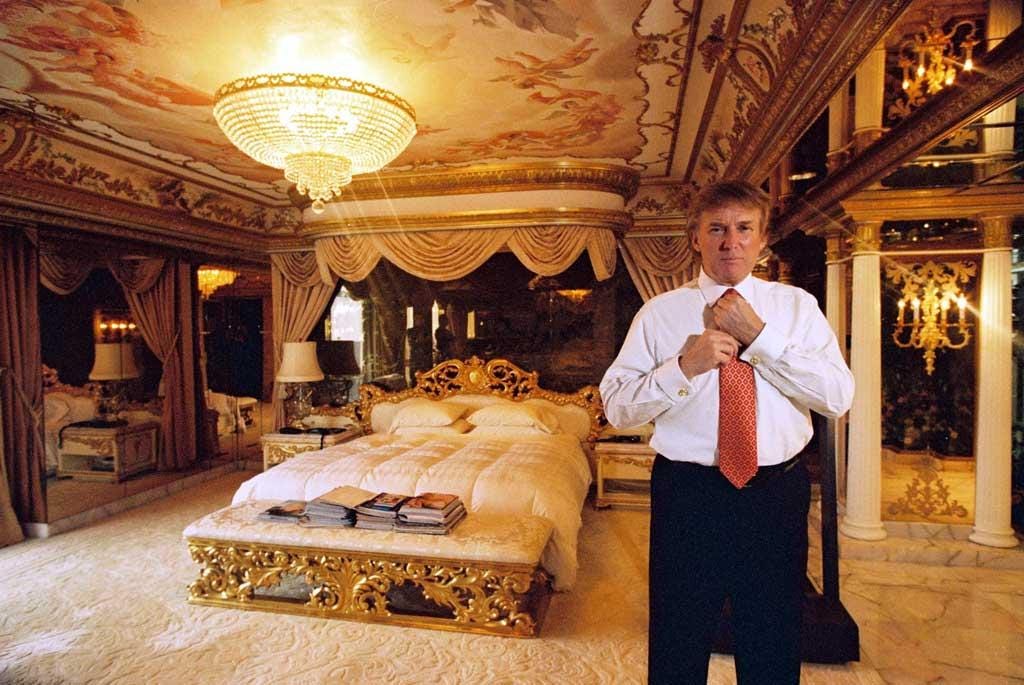
| I'm rich, bitch! Image Source |
Trump is hoping that the repatriated capital would be able to be used to generate US$1 trillion in private sector infrastructure investment over a decade to rebuild the country’s infrastructure. That way, he hopes to create thousands of jobs which would have a cumulative effect on the economy. However, repatriation of corporate profits is a temporary fix. Realistically, to raise the kind of capital needed to overhaul the nation’s infrastructure over the long term, Congress would also need to raise taxes such as the the federal gas tax and tying future increases to inflation. Needless to say, however, raising taxes is not popular and probably won’t be considered.
Unfortunately, the bad news doesn’t end there. The repatriation of corporate profits will come at the expense of other countries around the world and this could particularly hurt Europe. After all, as a result of a US$14 billion penalty from the US Justice department stemming back to the subprime mortgage crisis, Deutsche Bank, one of the largest banks in the world, almost faced a Lehman Brothers-like collapse a few short months ago. Deutsche Bank barely survived but the Eurozone debt crisis and negative interest rates continue to haunt it and other major European banks. A sudden loss of significant US Dollar reserves, which would likely follow such a generous corporate tax and a Federal Reserve interest rate hike, could very well hurl the entire European continent into yet another banking crisis.
Trump might receive less support (in fact, he might face fierce resistance) but another thing that he might attempt to do is fulfill his pledge to impose a 35 percent tariff on all imports coming from Mexico. What is much less certain, however, is his pledge to impose a 45 percent tariff on all imports coming from China. In fact, as unlikely as the former may be, the latter is even more unlikely. An imposition of even minor tariffs can and do lead to economic retaliations, which if left unchecked, could spiral into a vicious trade war. And a trade war could be devastating. It is likely that those sums that Trump suggested were yet another example of “campaign devices.”
So far, that would mean that Trump would have killed a trade deal that was never born in the first place and force corporations to repatriate their profits back to American banks. The first suffers from a bad case of “the seen and the unseen” and the second would be easy for the Democrats and other progressives to ridicule as yet another example of trickle-down economics. In other words, they’re both weak sauce. Trump would need to deliver something much bigger to appease the voters and Congress.
 |
| Image Source |
So if Trump can’t punish China and Mexico, there are other countries that Trump can punish to show his loyalists that he is “doing something” for them without having to face too severe a backlash. The easiest target will likely be South Korea.
Politically, South Korea would be easy to throw under the bus. Unlike China, it doesn’t have a billion-strong population and it is not the second largest economy in the world. And unlike Mexico, South Korea doesn’t share a long border with the United States that has allowed for centuries of trade, easy immigration (legal and illegal), and cultural exchanges. Furthermore, South Korea is an American ally in an unfriendly far-away neighborhood, which means that South Korea has little choice but to be more cautious (read, timid) in its dealings with the US.
For a deal maker like Trump, South Korea is the perfect negotiation partner - one that he can kick around and squeeze for as much concessions as possible. Trump will twist arms and deploy brinkmanship-esque negotiation tactics with regards to military cost-sharing plans and renegotiating the ROK-US Free Trade Agreement.
Threatening South Korea by stating that he would be willing to walk away from the alliance would certainly be an effective strategy. It would certainly cause initial resentment among South Koreans, but it probably will not change the fundamentals of the partnership. As a result, unless South Korea balks (which is highly unlikely) the alliance will not break.
Whether or not the free trade deal gets renegotiated to Trump’s satisfaction, the renegotiation alone would take years. In the meantime, Trump would be able to tell the voters that he is looking out for their best interests by squeezing more money out from “ungrateful and free-riding allies.”
 |
| Trump's preferred means of negotiations Image Source |
However, Trump might not have much room to put too many other Asian countries in a vice grip. That is because now that the TPP is dead, China is wasting no time to push ahead with their version of the TPP - the Regional Comprehensive Economic Partnership (RCEP). Just as the TPP excluded China and Russia (something Trump didn’t know about until it was pointed out to him by Rand Paul) as a way for Washington to set trade rules for the fast-growing Pacific-rim region before Beijing does, the RCEP will exclude the US for the very same reason.
So although Trump might still do away with the TPP, he cannot completely abandon trade deals with Asia.
For its part, as a result of the previously mentioned closer relationship between the US and Russia and a continued (if somewhat sputtering) Asia Pivot, China might think it necessary to continue to accelerate its military modernization program, which would further cause nervousness among China’s smaller neighbors or even compel them to shift allegiance to Beijing.
So if Trump cannot afford to squeeze East Asia too hard, there are two other related areas that he could exploit. The first is to rescind Obama’s policy and allow TransCanada Corp. to re-submit its application for the proposed Keystone XL oil pipeline in return for a larger percentage of profits generated. Furthermore, he could put the Environmental Protection Agency on a much shorter leash (as it had been under the George W. Bush administration) in order to encourage more U.S. energy exports.
Naturally, however, this would lead to a larger glut of supplies, which in turn would lower oil prices and help the US grow its oil market share. Although some individual oil companies will certainly suffer as a result of sustained low prices, in the larger scheme of things, this could nominally help the US. However, not everyone would be celebrating this turn of events. OPEC members and other natural-resources based economies in Africa and Southeast Asia would not be happy.
Even wealthy countries like Saudi Arabia are struggling as a result of low oil prices and facing ever dwindling foreign-exchange reserves. Things have become more desperate among poorer OPEC member states such as Russia and Venezuela (and other smaller Gulf kingdoms, albeit to a lesser extent). Combined with an ongoing Sunni-Shiite proxy war and continued conflict in Syria, it is highly unlikely that anyone in the Middle East is celebrating Trump’s victory.
Speaking of Syria, one thing that Trump would certainly do to great fanfare is to withdraw US forces from that country. Trump is a deal maker and truth be told, for the US, the Syrian conflict is a moral one. And for a deal maker like Trump, intangibles such as morals or loyalty don’t carry any weight. Regardless of how that conflict turns out, the US would not see direct profits from it. However, due to the aforementioned Sunni-Shiite proxy war, that does not mean that a US withdrawal would help to usher in peace in the Middle East.
It should be noted, however, that withdrawal from Syria would not mean that Trump would push for a general withdrawal from the Middle East region altogether. Trump has always projected himself as a strong leader to the point of thuggery. A single terrorist attack would likely compel Trump to retaliate disproportionately, which could very well keep the vicious cycle of US involvement in the Middle East ongoing.
There is, however, one bright side - if it can be called that. An unintended consequence of growing unease in the Middle East as a result of continued drop in oil prices would likely be that Middle Eastern governments are going to seek assurances that they will not be toppled by their own people. The Arab Spring still remains fresh in Middle Easterners’ collective memory as many are still living through its consequences. In order to ensure regime survival from their own people and each other, Middle Eastern governments could very well increase their arms procurement, thus helping America’s arms industry to make even more money than before.
(Although the TPP may be dead, Trump’s policy advisers have said that the military aspect of the Asia Pivot will still continue and that Trump would do so by enlarging the US Navy. This will also help to raise jobs and help the arms industry be more profitable. In the long-term, however, increased defense spending is unlikely to help the US economy.)
 |
| Image Source |
Thankfully, however, as a result of Trump’s narrow focus on only making deals that are profitable, there is little chance that there will be a war between the US and North Korea. There is no reason to attack North Korea because there is no way that doing so would profit Trump or the US. In fact, it is entirely possible that Trump might wish to pursue engagement with North Korea because he might want to exploit North Korean natural resources. Whether such an endeavor would be fruitful, however, is another matter entirely.
Besides, another reason why there most likely will not be a war with North Korea is that to date, no nation state armed with nuclear weapons has ever been attacked.
The future does not look too bright for Donald Trump. If he pushes through the aforementioned pledges, they will certainly benefit the US. At least in the short run as the country will be awash in capital that will provide an economic stimulus but without the Broken Window effect. However, the negative effects that they would have on developing economies in Asia, Africa, and even in Europe could lead to a prolonged worldwide economic recession. This would have a domino effect and the US would not be spared.
Unless Trump pursues better policies that would help to promote free trade and cooperative partnerships with other countries around the world, there is a very good chance that Trump would end up being a one-term president.
 |
| Image Source |