Showing posts with label trade. Show all posts

Tuesday, January 24, 2017

South Korea is Marginalized and that is South Korea's Fault

In my latest column for NK News, I talked about how the ROK-US alliance could be severely strained due to the toxic mix of the Trump administration and any progressive-led future government in Seoul.

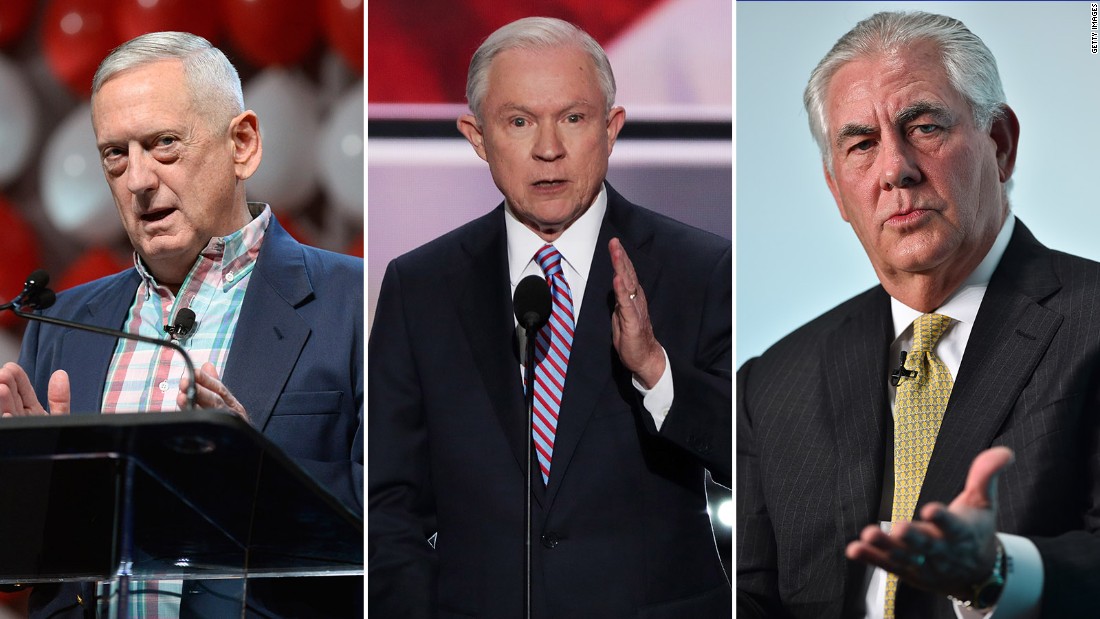
President Trump’s cabinet, while not yet fully formed, is being filled by hawks - particularly embodied by Mattis and Tillerson - and considering how sanctions were the go-to weapon of choice for the hawkish doves in the Obama administration, the hawkish hawks in the Trump administration may prefer to seek stronger means of persuading North Korea to change course.


Image Source

Meanwhile, across the Pacific, when the progressives take over the Blue House after the next presidential election in South Korea (whenever that takes place!), and the next president WILL be a progressive, they will most likely have drastically different ideas about how to deal with North Korea.

Being the kind of man who is obsessed with appearing strong and respected, perhaps even feared, Trump is exactly the kind of person whom Sean Connery’s Captain Marko Ramius would have called “a buckaroo.” We are already seeing this with the kind of rhetoric that the Trump administration has employed toward China - that it would prevent China from taking over territory in the contested South China Sea as well as deny it access to the islands it has built there.

It remains to be seen if the heated political rhetoric between Washington and Beijing (for its part, Beijing has said that the United States would need to “declare war” to block China access to its islands) will develop into something more serious. Both are militarily powerful nations and the two largest economies of the world. But if that is the kind of rhetoric that the new government in Washington has chosen to use against China, then it would be safe to conclude that Kim Jong Un should not be sleeping well.

This will compel South Korea to rethink its threat perception. Should President Trump’s rhetoric and policies lead to a conflict on the Korean Peninsula, the South Korean people would pay the ultimate price. How South Korea chooses to act now that the powers-that-be in Washington has changed is anyone’s guess.

The first approach is to better accommodate Washington. For example, Moon Jae-in, perhaps being able to tell how the wind’s direction has changed, has reversed his stance toward THAAD deployment and has said that it would “go ahead under his administration.”

That being said, one of Moon Jae-in’s criticisms against Ban Ki-moon, his most serious challenger to South Korea’s presidency, is that he’s too pro-U.S.

Opposing the decision to deploy THAAD anti-missile batteries in South Korea could have devastating consequences for the alliance. Trump has said repeatedly that South Korea has been a free rider in its national defense. It is a false claim, but every passing day is showing that facts do not matter nearly as much as what Trump feels. As it is, South Korea should be walking on eggshells.

Image Source

Reversing the decision to deploy THAAD would only exacerbate things. Another theme that Trump has harped on is that the United States 
practically gets nothing” by helping to defend South Korea.

It is yet another factually bereft statement but the fact remains that the ROK-US alliance is, indeed, a mutual defense treaty. Whether or not THAAD anti-missile batteries can actually help to defend South Korea, at this point, is a secondary matter. As far as Washington is concerned, it is convinced that THAAD anti-missile batteries can and will defend the United States from North Korean long-range missiles. If Seoul is unwilling to aid Washington defend itself from North Korea, then Trump would have been proven right - that the United States really does get nothing from defending South Korea.

It is unclear how the Trump administration would react if the next South Korean government decided to pursue détente with North Korea. Whether or not it is a horrible idea (it most certainly is), Seoul will need to better gauge the new government to better understand how Trump would react. But unilaterally deciding to cancel the joint plan to deploy THAAD in Korea would guarantee to elicit a less than cordial response from Washington.

As of this writing, Moon Jae-in is the only progressive presidential contender who has reversed his previous opposition to THAAD.

Image Source

There is a second, and possibly tempting, alternative. Instead of better accommodating the United States, South Korea could choose to return to hedging its alliance with the United States and its economic partnership with China. China is South Korea’s largest trade partner. And China’s bullying and economic sanctions (in all but name) against South Korea for its decision to deploy THAAD anti-missile batteries has been bruising South Korea’s businesses.

By hurting everyone from K-pop stars to duty free shops to bidet manufacturers and air purifier manufacturers, Beijing is hoping that South Korean voters and businesses will apply pressure on their government and force them to change their position on THAAD. It is a solid plan. Hitting people in their wallets where it hurts most is one of the best ways to convince anyone to change.

However, canceling the decision to deploy THAAD, as mentioned earlier, has serious costs associated with it. At the very least, it would create a severe frost in the ROK-US alliance. At most, South Korea would allow itself to be bullied by China to have its sovereignty chipped away by North Korea.

It is important to point out, however, that that is not the same thing as saying that the alliance itself would be ended. The alliance is almost 70 years old. There are far too many entrenched interests in the civilian and military sectors that depend on the alliance for their livelihoods. Something incredibly dramatic needs to take place for an alliance to be terminated. And it is not clear if deciding to reverse course on THAAD is dramatic enough for the alliance to be terminated.

In order to compensate South Korea for its rift with the United States, China would need to offer South Korea certain guarantees. At the very least, China would need to guarantee a resumption of unimpeded trade and improved diplomatic relations. However, South Korea should not get its hopes up and imagine that Beijing would also offer to lean more heavily on North Korea, much less pave the way for reunification. China is satisfied with the status quo vis-à-vis the division of the Korean Peninsula. It will do nothing of the sort to destabilize the North Korean regime.

If South Korea manages to restore diplomatic and trade relations with China and manages to remain a US ally - albeit a marginalized one - the South Korean government, in its most optimistic moments, might be able to imagine itself as the go-to diplomatic broker between the United States and China as both countries appear to be headed toward some level of conflict.

However, this middle-of-the-road approach is probably the worst thing that South Korea could do. South Korea is already paying for it now. To one degree or another, South Korea has taken this approach whenever it could. It resisted being roped into the US missile defense shield program since George W. Bush was the US president. It refused to condemn North Korea for its human rights abuses during its two progressive administrations. It still continues to malign Japan whenever it can and refuses to participate in military exercises that involves Japan.

That is why South Korea is not high on President Trump’s list of priorities in Asia. While ambassadors to Japan and China have been appointed, America
’s embassy in South Korea remains without an ambassador, which is made all the more pointed considering how much Koreans respected Ambassador Mark Lippert. If Korea attempts to be a coy or difficult ally whenever it fits its interests, then there is no reason to believe that other countries will not treat Korea in the same way.

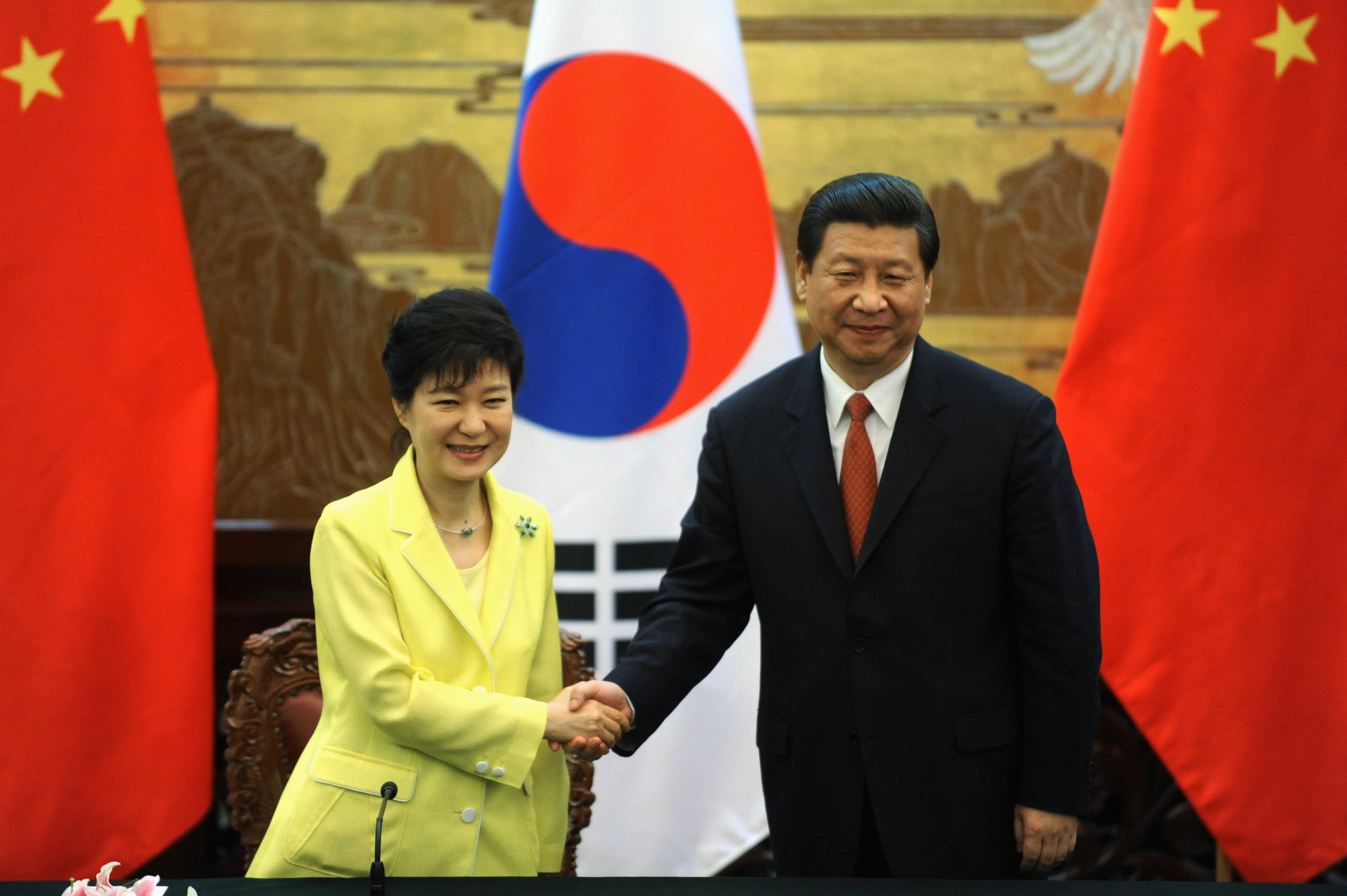
The same goes for China. Much noise was made when President Park Geun-hye was seated so close to Premier Xi Jinping during China’s military parade in 2015 to commemorate the end of the Second World War. Everyone in both Beijing and Seoul sang each others’ praises and it was assumed that both countries were about to grow closer. Chinese netizens loved the fact that Park Geun-hye could speak Mandarin!

Image Source

But at the end of the day, no one in Beijing forgot that South Korea is a US ally. When the North Koreans tested a nuclear weapon only a few months after the parade, Xi Jinping refused to answer the phone when Park Geun-hye decided to call in that favor to put North Korea in its place. When South Korea decided to finally agree to Washington’s calls to install THAAD anti-missile batteries when it became clear that Chinese help was not coming, China showed its true colors and revealed that it sees South Korea as nothing more than another small country that should simply do as it commands.

There is an old saying about how a hunter who chases two rabbits will eventually catch neither. South Korea will need to either fully commit itself to the alliance with the United States or it will need to borrow a page from Rodrigo Duterte and spurn Washington and fully embrace China as its diplomatic, military, and trade partner. It cannot do both. Neither Washington nor Beijing will ever allow South Korea to have its cake and eat it, too.

There are costs and benefits associated with each. But it will need to choose. Failure to choose will guarantee that South Korea forever remains marginalized and will only be able to nostalgically recall its eight years under the sun during the Obama administration as “the good ol
 days.”

Tuesday, September 27, 2016

First Clinton-Trump Debate: Dumb Economic Policy and Even Dumber North Korea Policy

The first presidential debate between Trump and Clinton ended a few hours ago and it was one for the history books for all the wrong reasons. For an hour and a half, hundreds of millions of people around the world got to witness sheer cynicism being masked around as political debate such as moments when Hillary Clinton talked about the importance of cyber security without a hint of irony or self-consciousness and when Trump went on an incoherent spiel about Rosie O’Donnell, Sean Hannity, and Howard Stern.


The Lincoln-Douglas Debate this was not! Not that anyone ever suspected it would be. Political debates are little more than pomp and pageantry where candidates get to flout their well-rehearsed lines and zingers hoping to spring their gotcha-traps for each other. But even when political candidates for the highest office of the land, and possibly the world, are held to such low expectations, it is amazing how they can still trip over those low bars.

I could honestly think of no other television show in history that was done a greater disservice from an absence of a built-in studio laugh track than that so-called debate.

There are many people who already have and will continue to break down the debates and go through them in excruciating detail until the next debate occurs. I wish them the best of luck. It would be akin to being told to look for gold in the Cheonggyecheon stream.

So instead, I will focus on two small portions of the debate that 
matter the most to me - economics and North Korea.


Economics

Economics is a complicated field. It has its own set of experts who have studied the topic their entire lives and those experts bitterly argue with one another with as much intensity as you’d find among those who argue about the Israeli-Palestinian conflict. It truly is a specialized field of its own that can also be divided into its own subgroups that are so disparate that an expert in one field could be completely clueless about the issues that deal with another.

But no layperson could ever be convinced of that when they hear politicians spout their bullshit views about economics when they try their best to dumb down the topic into easily consumable soundbites for the TV-watching audience.

Although many can convincingly argue that Clinton may be more knowledgeable about certain subjects than Trump and that Trump may be better versed in other things than Clinton, the first segment of the debate which dealt with economics clearly showed that neither person knew what the hell they were talking about.

Image Source

What Clinton said about the economy:
  1. I want us (the government) to invest in the people and their future by promoting infrastructure, advanced manufacturing, innovation and technology, clean, renewable energy, and small business, because most of the new jobs will come from small business.
  2. I also want to see more companies do profit-sharing. If you help create the profits, you should be able to share in them, not just the executives at the top.
  3. We have to make the economy fairer by raising the national minimum wage and also guarantee, finally, equal pay for women's work.
  4. We need paid family leave and earned sick days, affordable child care, and debt-free college.
  5. We're going to do it by having the wealthy pay their fair share and close the corporate loopholes.
  6. We also, though, need to have a tax system that rewards work and not just financial transactions. And the kind of plan that Donald has put forth would be trickle-down economics all over again. I call it trumped-up trickle-down. Trickle-down did not work. It got us into the mess we were in, in 2008 and 2009. Slashing taxes on the wealthy hasn't worked.
  7. We had the worst financial crisis, the Great Recession, the worst since the 1930s. That was in large part because of tax policies that slashed taxes on the wealthy, failed to invest in the middle class, took their eyes off of Wall Street, and created a perfect storm.
  8. We can deploy a half a billion more solar panels. We can have enough clean energy to power every home. We can build a new modern electric grid. That's a lot of jobs; that's a lot of new economic activity.
  9. When I was secretary of state, we actually increased American exports globally 30 percent.


My rebuttals to Clinton:
  1. Classic example of Broken Window Fallacy.
  2. The President of the United States does not have the authority to force companies to share their profits “more equitably.”
  3. Raising the minimum wage hurts the most vulnerable members of society - the marginal worker. It will exacerbate wealth inequality, not alleviate it. Also, when is this gender pay gap myth ever going to die?
  4. Ever heard of unintended consequences?
  5. Pray tell, what is fair?
  6. Here’s an old challenge. Please name any economist outside a mental institute who has ever defended or called for trickle down economics.
  7. Please cite evidence that the 2008 financial crisis was a result of low tax rates. Otherwise, please be prepared to be called a bullshit artist.
  8. See rebuttal number 1.
  9. Does the Secretary of State oversee trade?


Well, that was easy. So much for a smart and experienced Hillary Clinton.
Image Source


What Trump said about the economy:
  1. American jobs are fleeing the country.
  2. China is devaluing its currency, and there’s nobody in our government to fight them.
  3. I'll be reducing taxes tremendously, from 35 percent to 15 percent for companies, small and big businesses.
  4. We have to renegotiate our trade deals. Other countries are giving incentives, they're doing things that, frankly, we don't do.
  5. Impose a tax on American companies that manufacture their goods overseas and then sell them in the US.
  6. Bill Clinton approved NAFTA, which is the single worst trade deal ever approved in this country.
  7. I built an unbelievable company. But we’re opening the Old Post Office. Under budget, ahead of schedule, saved tremendous money. I’m a year ahead of schedule. And that's what this country should be doing.


My rebuttals to Trump:
  1. Trump spoke a few times about the employment situation in Ohio and Michigan. So in other words, he is talking about manufacturing jobs. But the reality is that the American manufacturing sector is still robust.
  2. If China is devaluing its currency, then what do people call what the Federal Reserve is doing?
  3. That’s actually a pretty nifty idea. Inversions are one of the most visible signs that the U.S. corporate-tax code is broken. One of the reasons Ireland is a popular destination for corporations looking to move their headquarters out of the United States is the fact its corporate tax rate of 12.5 percent - about one-third of America’s rate. Cutting corporate tax rates could potentially help to create hundreds of thousands of new jobs and it could also lead to a significant increase in real wage. The question is how Trump intends to do that. As per usual, he doesn’t offer any concrete plans.
  4. (i) This will come as a surprise to the TPP’s 12 signatory countries that agreed they would not renegotiate the trade deals that have already been made. Seeing how the US is the major partner in the TPP, reneging on that promise would destroy the TPP and would destroy the Asia Pivot.

    (ii) Trade means increased jobs, but trade also means increased security. Reneging on its trade deals would be comparable to the Ming Dynasty suddenly choosing to become an isolationist hermit kingdom in the mid-15th century, after pursuing oceangoing exploration in the early part of the century. China could have been a superpower hundreds of years before the rise of the West. Is the US willing to become the new Ming China of the 21st century?

    (iii) In regards to complaints about “unfair” subsidies foreign governments grant their corporations, once again, Milton Friedman already provided the best rebuttal to that decades ago.
  5. Is Trump talking about companies with captive offshore operations (the practice of completing work at a non-domestic location, whether by workers at a company’s own offshore subsidiary - often called a “captive” center - or by a third-party or companies that outsource to third-parties based overseas) or is he talking about companies that outsource (the practice of contracting out of goods or services to a third party)? Does he even know the difference?

    This is an important distinction because targeting companies that operate subsidiaries overseas would include, for example, IBM and a good number of non-vendor Fortune 500 companies who maintain a presence abroad, such as GE and Proctor & Gamble, some of which provide their parent companies with IT services.

    On the other hand, if it does not affect US companies that “ship jobs overseas” by hiring an offshore company, then the only offshore outsourcing customers this plan could have any bearing on are those who work with US-based IT services companies like IBM, which then deliver those services offshore. If that is the case, it's unlikely the the average American would have much to benefit.

    Also, how would increasing taxes on those companies persuade businesses to relocate to the US? Taxes are not the only reason companies outsource. There are also lower wages in overseas markets. The likely outcome of increasing taxes on such businesses could be more offshoring, not less, as those corporations use labor arbitrage to offset the bigger tax bill.
  6. NAFTA is NOT the worst trade deal the US has ever had.
  7. The idea that it would be better for the government to be run like a finely operated corporation has always been fancied by those on the political right. For good or for ill, however, a government cannot be run like the way a business is run. See here, here, here, here, here, and here.


Image Source


North Korea


Very little was said about North Korea. So my response will be short, too. Trump said, “China should go into North Korea. You look at North Korea; we are doing nothing there. China should solve that problem for us. China should go into North Korea. China is totally powerful as it relates to North Korea.”

My rebuttal:

Assuming that the US even has the leverage to “let” China do anything, allowing China to install a pro-Chinese regime in Pyongyang would infuriate not only Seoul, but also Tokyo, Moscow, and Hanoi. It would most likely be the best way for the US to actually become what Chinese nationalists have called it for decades - a paper tiger.

It is obvious except to the most deluded that the only place where Trump is a brilliant strategist or a deep thinker of any type whatsoever is in the deep recesses of his own twisted fantasies where he ought to crawl back into.

Image Source


Conclusion

I know that I've said this about politicians many times but I will say it again. A plague o' both their houses!

Wednesday, January 20, 2016

What's conservative or libertarian about Trump?

When I shared a recent op-ed column from the National Review about Sarah Palin's endorsement of Trump's candidacy, which was not particularly kind to either of those public figures, a friend of mine made the suggestion that the National Review seemed to have abandoned its tradition of supporting conservatives and libertarians in their fight against the Republican establishment.

I conceded that he may have been right about the National Review's change but I had to ask my friend what was so conservative or libertarian about Trump. After all, whenever I listened to his stump speeches or debate performances, it mostly seemed to be about how he, through the apparent sheer force of his will, would ban Muslims from entering the US or about how he would get the Mexican government to pay for a giant wall separating the two countries or how he got a lot of flak for talking about these problems and how he's going to continue talking about them.

Everyone loves to pretend/believe that "president" is another word for "emperor," especially during election seasons and no one loves to indulge in that fantasy more than the political candidates themselves. As far as I am concerned, however, Trump and Sanders take the cake. My thoughts on Sanders are well known; as are my thoughts on Trump. As for Trump, I am almost convinced that he is a clown who has somehow accidentally misplaced his makeup kit.

Image Source

My friend persisted, however, and told me that I ought to visit Trump's official website and read his campaign position papers so that I may judge him more objectively. 

I have to admit that I had never bothered to read his campaign position papers. As someone who has often had to tell Ayn Rand-bashers that they ought to actually read Rand's works as opposed to what Salon has to say about her work, I realized that it was hypocritical of me to pass such judgments on Trump without getting the goods straight from the horse's mouth.

After all, considering the grueling nature of cable news cycles and the even more unforgiving beast that is the Twitterverse, it is easy to magnify one moment of stupidity to paint a person as something entirely that he may not be. Can anyone imagine how much more Howard Dean's scream would have damaged him had Twitter existed at the time of his candidacy?

So I went on Trump's website and I saw that there were a total of five campaign position papers. I did not have the time to read all five of them. The topic that I chose to read was the one that matters to me most among the available topics -- the one titled "Reforming the US-China Trade Relationship to Make America Great Again."

And, folks, it was a doozy!


Image Source

Right from the bat, the paper claims that since China's entry into the WTO in 2001, "Americans have witnessed the closure of more than 50,000 factories and the loss of tens of millions of jobs."

Aside from the fact that there is no data to back up that claim, even if that number were true, this is yet another example of post hoc ergo propter hoc. That is because that claim conveniently neglects to mention the effects of the dotcom bubble burst or the Great Recession or the battering effects of high oil prices on the construction industry in the mid-2000s.

So almost from the moment I started reading, I couldn't help but frown and shake my head.

The other theme that Trump's paper continually hammers on is that America needs leadership and strength at the negotiating table with China.

The moment people hear this sort of talk, anyone with any sense whatsoever should begin to ask themselves if that truly is an original thought that no one had before. It's not (see here, here, here, here, here, here, here, and here). Hell, Bill Clinton once called the Chinese government "the butchers of Beijing" before granting China "most-favored-nation" status after he became president.

Outside of the fantasyland called primaries season, neither the United States nor China can afford to be particularly difficult with one another because, whether they like it or not, the two countries share the largest trade relationship in the history of the world. A child might be able to take his toys and go home if he decides that he doesn't like his friend anymore, but that is not the way that effective international policy is made.


Image Source

Trump's other argument is that China's "Great Wall of Protectionism uses unlawful tariff and non-tariff barriers to keep American companies out of China and to tilt the playing field in their favor."

Trump says this unfair playing field puts American businesses and workers at a disadvantage -- that the game is rigged and that the outcome is for Americans to lose.

This is an old political chestnut and a dirty trick that is meant to distract people long enough to forget their own personal interests. This lie was exposed by Milton Friedman in his 1980 PBS documentary, Free to Choose. In the episode Tyranny of Control, Friedman said:


"When anyone complains about unfair competition, consumers beware. That is really a cry for special privilege always at the expense of the consumer. What we need in this country is free competition. As consumers buying in an international market, the more unfair the competition the better. That means lower prices and better quality for us. If foreign governments want to use their taxpayers' money to sell people in the United States goods below cost, why should we complain? Their own taxpayers will complain soon enough and it will not last for very long."


Image Source

Trump also thinks that declaring that China is a currency manipulator will somehow get the Chinese to think seriously about the United States. Currency manipulator! Then what the hell does that make the Federal Reserve?!

Also, the fact that people still believe in the myth of the Chinese government being "a currency manipulator" is a bad thing for the rest of the world just goes to show how desperately the vast majority of people in the world need to study basic economics. This entire myth can be punctured by just asking a few basic questions.


  • How can Beijing artificially devalue the yuan without such devaluation causing the prices of Chinese exports eventually to rise?

  • Even if Beijing could devalue the yuan for a long time, would that not raise Chinese producers’ costs of purchasing the many inputs that they buy on global markets? How could this possibly lead to economic growth?

  • Just like the case with "unfair" subsidies, how does the artificial lowering of the prices of Chinese goods harm consumers from other countries? Don't people typically like it when prices of the goods they buy fall?


In other words, isn't Trump saying that he believes that consumers should be forcefully prevented from spending their money in ways that they judge to be best for them, and instead be forced to spend their money in ways that he judges to be best for the benefit of a select few American corporations?

Image Source

Now it is true that China requires foreign corporations such as Boeing and Intel to transfer proprietary technologies to their Chinese competitors as a condition of entry into the Chinese market. However, Trump goes on to say that this is intellectual property theft.

But one has to wonder -- if Boeing or Intel felt that they were being bamboozled by Beijing, that the costs of such technology transfers were greater than the benefits of being allowed entry into the Chinese market, wouldn't those corporations voluntarily decide to cease all of their operations in China?

In other words, isn't Trump saying that if he is elected president, he will use Big Government to forcefully prevent American corporations from entering into voluntary trade agreements?


And lastly, he says that he will "strengthen the U.S. military and deploy it appropriately in the East and South China Seas."

I believe that is called the Asia Pivot.

So let's recap. Even Trump's trade policy proposals, which are supposed to be the branier arguments that take place away from the camera, are vague and can only be called economically illiterate at best or deceptive at worst. Even if they weren't unrealistic, his policies would require great expansion in the powers of the government, which is decidedly not a conservative or libertarian position.

Republicans do remember this guy, right?
Image Source

I have not read the other four papers on the website. Frankly, reading this one and explaining why it is so horrible has been enough for me. So is he a conservative or a libertarian when it comes to other topics such as immigration or gun control? I can't say. And frankly, I can't bring myself to read any more and I don't give a damn. 
But if this paper was anything to go by, I have some serious doubts about the claim.

Sunday, August 9, 2015

Bernie Sanders: Yet Another Demagogue

I am currently writing my next post for my “What Would Homo Economicus Do?” series but for personal reasons, I have not been able to spend a lot of time writing.

However, just today, a friend posted on his Facebook page an article from Occupy Democrats about a list that Bernie Sanders made. It was a list of corporations that didn't pay income taxes.

Image Source

The first thing that I thought when reading the article was that Occupy Democrats really should learn to date their articles. As Sanders' list was a response to an op-ed piece that was signed by 80 Wall Street CEOs that advocated for austerity spending in the United States, I naturally thought that this was a recent article. I searched all of the Wall Street Journal to find the op-ed piece but couldn't find it.

It was only later when I found the letter in the Journal's archives as the op-ed was published in the Wall Street Journal in 2012, making Sanders' list about three years old too.

The article was titled Bernie Sanders Calls Out 18 Corrupt CEOs For Stealing Trillions, Outsourcing Jobs, and Evading Taxes.

As much as I disagree with Sanders about almost everything, to his credit, he himself did not use the word “steal” when describing the bailouts that corporations were given by the government. Though there were corporations that were screaming to be bailed out, there were also those that didn't want the bailout money but were told to take it anyway

By definition, that cannot be “stealing” and it once again goes to show the intellectual bankruptcy of headlines.

Image Source

However, there were many other things in the article that I thought was nonsensical, misleading, and pure demagoguery. The following is my list of what I found wrong here.


1) “The Wall Street leaders whose recklessness and illegal behavior caused this terrible recession...”

Was the sub-prime mortgage crisis a result of recklessness? Without a doubt. But was it illegal? Hardly.


2) “Before telling us why we should cut Social Security, Medicare and other vitally important programs, these CEOs might want to take a hard look at their responsibility for causing the deficit and this terrible recession.”

The bailout of 2008 was approximately US$700 billion and was given out to a total of 951 recipients. Of those 951 recipients, 123 companies have so far failed to repay the government and resulted in a loss to taxpayers. However, even after including the losses incurred from those 123 companies, taxpayers have made a net profit from the bailout in total. Thus far, taxpayers have profited by US$57.7 billion.

On the other hand, how much does Social Security and Medicare cost? It depends on whom you ask. If you ask the Cato Institute, a libertarian think tank, the War on Poverty has cost US$19 trillion over the past 50 years.

However, the Devil is always in the details. For instance, if you ask Mike Konczal, a fellow at the Roosevelt Institute, a progressive think tank, the federal government spends US$212 billion per year on “what we could reasonably call “welfare.””

Even if we take the Roosevelt Institute's much lower price estimate, whereas the bailout of 2008 was a one-time payment of US$700 billion, which resulted in a US$57.7 billion profit for taxpayers, since 2008, the US government has spent a total of US$1.484 trillion on welfare.

The bailout was hugely problematic for many reasons, and it is something that everyone should have opposed from the beginning. But at the very least, it generated a profit for taxpayers. What has spending on welfare gotten people? Has it lifted people out of poverty? No, it hasn't. But wasn't that the goal of welfare?

Image Source


3) “Our Wall Street friends might also want to show some courage of their own by suggesting that the wealthiest people in this country, like them, start paying their fair share of taxes.”

“Fair” is a tricky word. It can mean different things to different people. That's why Sanders and others like him keep using that word. But let's look at the numbers, shall we?

According to the Pew Research Center, those with adjusted gross incomes of more than US$250,000 paid nearly half of all individual income taxes. In contrast, people whose incomes were less than $50,000 paid just 6.2% of total taxes.

Whether paying nearly half of the income tax is fair or not is open to debate. But people should not pretend or insinuate or otherwise that the less well-off are somehow paying more than the well-off.


4) “...at least a dozen of the companies avoided paying any federal income taxes in recent years, and even received more than $6.4 billion in tax refunds from the IRS since 2008.”

We should get the terminology right. The federal income taxes that corporations pay are called corporate taxes. And it's true that many corporations do not pay corporate taxes. That is because there are two ways to tax a corporation.

The first way is to consider the organisation as a single entity and tax it accordingly, thus taxing any surpluses or profits that the corporation makes at the organizational level. A corporation that chooses to pay its taxes this way is called a C Corporation.

The second way is to tax the individuals who get money from the corporation. A corporation that chooses to pay its taxes this way is called an S Corporation.

This is the Wikipedia entry for the difference between C and S Corporations:

An S corporation, for United States federal income tax purposes, is a corporation that makes a valid election to be taxed under Sub-chapter S of Chapter 1 of the Internal Revenue Code.
In general, S corporations do not pay any federal income taxes. Instead, the corporation’s income or losses are divided among and passed through to its shareholders. The shareholders must then report the income or loss on their own individual income tax returns. This concept is called single taxation; if the corporation is taxed as a C corporation, it will face double taxation, meaning both the corporation’s profits, and the shareholders’ dividends, will be taxed.

So, it is true that many corporations do not pay the federal corporate income tax. But that is because individual shareholders elect to pay the personal income tax on profits, not the corporate one.

Whether or not dividing the tax schemes this way is equitable or efficient is a different topic. However, using the fact that many corporations do not pay organizational corporate taxes to imply that that is some kind of evidence of widespread tax dodging is tantamount to lying.

Image Source


5) “They might work to end the outrageous corporate loopholes...”

The phrase “close the loopholes” is the refuge of the fool. It is easy to say “close the loopholes” and end the debate feeling like a self-righteous 19-year-old Political Science major who has discovered the Holy Grail that would cure all of society's ills. But there is a reason tax loopholes exist.

One of the reasons that corporate taxes are pernicious is that they encourage businesses to use debt finance, rather than equity finance even though debt finance makes companies riskier. That is because payments on debt are tax deductible, and dividends are not. This gives many businesses strong incentive to use debt rather than equity finance.

So why not end the deductibles on corporate debt payments? That is because if that “loophole” was closed, that would put illiquid industrial firms with heavy capital costs at a MASSIVE disadvantage.

If you think Detroit is suffering now, wait and see what would happen if Sanders and his supporters get what they want and all these pesky loopholes get closed. I'll be here with a bucket of popcorn while the Social Justice Warrior types once again claim that this hypothetical future is further evidence that The Man hates black people.

Image Source


6) “Many of the companies also have outsourced hundreds of thousands of American jobs to China and other low wage countries, forcing their workers to receive unemployment insurance and other federal benefits. In other words, these are some of the same people who have significantly caused the deficit to explode over the last four years.”

Firstly, outsourcing jobs is important to ensure that the prices of goods and services remain cheap and that businesses can remain competitive.

If Sanders could get things done his way, the vast majority of American factory workers would still have union-wage jobs because they would still be producing television sets in America. That sounds good except that those television sets would be much more expensive than television sets from, say, Korea or Thailand. American factory workers might earn a bit of coin under Sanders' economic plan, but everyone else not working in factories would see that their money buys them fewer goods and services.

There are two types of Fortress America. The first one is the type proposed by conservatives and neo-cons. A powerful American military that can eliminate threats anywhere in the world and a country that would close its borders to brown-skinned and yellow-skinned people who might want to commit acts of terrorism against Americans. Except that the US' military is already practically uncontested but it still has a difficult time trying to completely defeat illiterate goat-lovers.

The second one is the type proposed by progressives. A rich American workforce that will allow people to live as comfortably(?) as they did under the New Deal and a country that would close its borders to trade with brown-skinned and yellow-skinned people who might be able to sell things more cheaply.

Except that a choice has to be made – pursue inefficient economic policies that lead to meteoric rising prices and economic stagnation OR pursue comparative advantages and creative destruction that lead to cheaper goods and services for as many people as possible and economic productivity, which unfortunately also comes with job insecurity.

You must choose one or the other. You cannot have your cake and eat it, too.

Image Source


7) “These are the names of TRAITORS who have forsaken their people and nation to worship at the altar of greed:”

And THIS is what it comes down to, isn't it? Occupy Democrats, the Occupy Movement in general, Sanders, his supporters, etc. do not understand economics. And even though information is free and open to all, they do not want it. They do not want the facts. After all, facts are so TL;DR.

What they want are enemies to hate and traitors to blame. Anyone to blame for all their problems aside from themselves.

Is Sanders an idiot? I think that it is easy to claim that politicians are idiots. But being able to get voted into office and maintaining an incumbency rate in the high nineties despite dismal popularity rates is not something that any fool can do. So, I think that merely saying that politicians are idiots is intellectually lazy and counterproductive.

But the likes of Occupy Democrats who chant “Go, Bernie, Go!” without actually looking into the facts? They are not nearly as smart as they like to think they are.

If you have read this whole thing and you also happen to support Sanders, believe me when I say that I am not telling you to support Marco Rubio or Rand Paul. God knows that they are lying snakes in the grass, too. I don't expect to change your opinions or your core beliefs.

But, God, I dearly hope that I have given you cause to try to see for yourselves what you are advocating.

I have here in my hand a list...
Image Source