Showing posts with label milton friedman. Show all posts

Monday, March 16, 2015

Trickle-Down Economics Redux

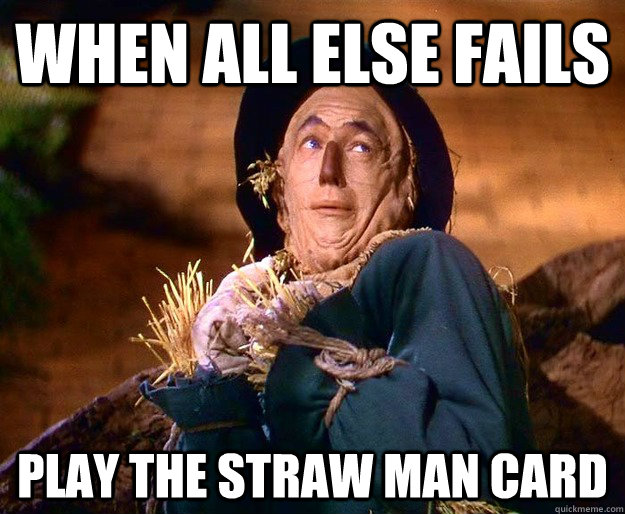
The Straw Man Argument is a type of argument that is used to misrepresent someone else's argument, by way of exaggeration or misrepresentation or complete fabrication, with the intention of making the other person's argument easier to attack. It is a dishonest method that almost always undermines rational debate.

As such, almost everyone hates this form of argument. However, many people still resort to this kind of argument on a daily basis – some deliberately, while others unknowingly. And one of the most prominent Straw Man Arguments that have been used so excessively that many people have come to accept the Straw Man as gospel truth is the concept of Trickle-Down Economics.

Image Source

It is very easy to find arguments against trickle-down economics.


Senator Elizabeth Warren said that trickle-down economics “devastated U.S. workers while propping up the wealthy.”

Pope Francis pontificated against it, calling it a “a crude and naïve trust in the goodness of those wielding economic power and in the sacralized workings of the prevailing economic system.”

(I am not sure if Pope Francis is the right person to talk about naïveté or the idiocy of faith. See here and here.)

Economists have argued against it, too. For example, Paul Krugman said that trickle-down economics is “being nice to the wealthy and cruel to the poor.” And Robert Reich says that it is one of the “big lies” conservatives promise voters.

The OECD released a report that said that “the benefits of growth do not automatically trickle down across society.”

Trickle-down economics has also been attacked and criticized by thinkers, academics, politicians, activists, and journalists in Korea as well (see here, here, here, here, here, and here).

The case against trickle-down economics is clear. It is also clear that it has some very powerful enemies.

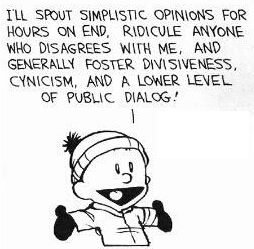
Not a friendly face in sight...
Image Source

But who actually supports trickle-down economics? Who is actually championing giving more to the rich? The answer is “No one.”

As I already said in a previous post:

Trickle-Down Economics does not actually exist. It is a lie. “Trickle-Down Economics” was a phrase that was devised in the United States in the 1980s when the Democratic Party needed a a catchy zinger to attack President Reagan's economic policy. The phrase was a remarkable political slogan as it painted Reagan and other advocates of tax reduction as sycophants who had all been bought and paid for by greedy billionaires at the expense of the poor and the middle class.

One of the most prolific economists of our time, Thomas Sowell, once challenged anybody “to quote any economist outside of an insane asylum who had ever advocated this “trickle-down” theory.”

To date, no one has ever adequately answered that challenge.

Quoting Thomas Sowell again:

Let’s do something completely unexpected: Let's stop and think. Why would anyone advocate that we “give” something to A in hopes that it would trickle down to B? Why in the world would any sane person not give it to B and cut out the middleman? But all this is moot, because there was no trickle-down theory about giving something to anybody in the first place.

Image Source

Those who advocate lower taxes, of which I am one, have never made their case by supporting the idea of transferring wealth from the masses to the rich. Rather, they emphasize the creation of additional wealth and jobs when businesses are not hampered by burdensome regulations and steep taxes.

However, even that is only half of the argument. Those who champion lower taxes do not support lowering taxes only for the rich, but also for everyone else. Crazy as it may sound, no free market capitalist has ever claimed that society would become wealthier because the rich would spend more. Rather, they argue – correctly – that tax cuts in general would stimulate the economy. That is because lowering taxes is based on the idea that if the government lowers taxes, the people – both rich and poor – will have more of their own money and will, therefore, tend to engage in more economic activity.

What is undeniable is that reducing taxes does help the rich more than it helps the poor. However, that is incidental. After all, the rich pay far more than their “fair share” of taxes. Therefore, it becomes all too easy to caricature any tax cut as “tax cuts for the rich.”


Tax cuts might help the rich more, but it also helps the poor. After all, there are only four ways to spend money:

  • Spend your own money on yourself.
  • Spend your own money on somebody else.
  • Spend somebody else’s money on yourself.
  • Spend somebody else’s money on somebody else.


Therefore, the phrases “trickle-down economics” and “tax cuts for the rich” are nothing more than the inventions of a desperate political mind that did not have the ability to debate the merits of an opposing viewpoint. After all, what easier way can there be to “win” a debate than to invent a viewpoint that no one holds, attack that viewpoint, and then claim intellectual victory?

This is not to say that there is no need for a real debate about which policies are needed in order to promote economic growth. With all due respect to Grover Norquist, God knows that lowering marginal tax rates alone is not a panacea (see here and here). That debate is badly needed. Unfortunately, however, demagogues are far too busy trying to slay the imaginary “trickle-down” dragon.

Image Source

Monday, February 9, 2015

Welfare vs. Taxes in Korea: Nobody wants to Pay the Piper

It might appear that Korean politicians are not complete fools after all.

When President Park Geun-hye was campaigning to become president, she promised that she would deliver a lot of goodies, and much more, without ever raising taxes.

Image Source

A few days ago, however, Representative Kim Moo-sung, the chairman of her own party, said, “It is impossible to finance welfare without tax hikes, and it is inappropriate for politicians to deceive the people.”

Representative Kim was not alone in voicing this sentiment.

So do Koreans want a greater welfare state? The answer seems to be “yes and no.”

Image Source

As Steven Denney said in his recent article in the Diplomat, in a poll that was commissioned by JTBC, 46.8 percent of the public favor welfare cuts over a tax increase. 34.5 percent of the public think that a tax increase is needed to pay for welfare; and 18.7 percent didn’t know what to think.

So it might seem that many people do not support expanding the welfare state. However, one always has to remember the old adage about lies and statistics. That is because 52.8 percent of the respondents, a clear majority, supported increasing the corporate tax rate.

What Mr. Denney got absolutely right was when he said “The simple fact of the matter is that South Koreans might not support more welfare, if it means that they have to pay for it.”

(What Mr. Denney got absolutely wrong was that he thinks Korea needs a welfare state.)

Isn't that typical? Everybody wants to go to the party, but nobody wants to pay the piper. Case in point, when salaried workers angrily protested that many of them were likely to pay additional taxes this year instead of receiving a tax rebate, a move that was made by the government in order to help pay for its welfare programs, Finance Minister Choi Kyung-hwan said the government would consider revising tax return regulations.

Image Source

It yet again goes to prove that Frédéric Bastiat was absolutely right when he said, “Government is the great fiction through which everybody endeavors to live at the expense of everybody else.”

So who will be made to pay more taxes? The easy answer seems to be to raise the corporate tax.

After all, Finance Minister Choi said that the government may consider raising corporate taxes and that “the government does not regard corporate tax as too sacred of a realm to enter.”

But will raising corporate taxes come at no cost? I will let the maestro speak for himself.


However, as succinct as Milton Friedman was, this video did not even cover other questions. Could it cause domestic corporations to invest less in order to pay less corporate taxes? Or might it cause them to invest elsewhere? Could it lead to more corporations hiding their money in overseas bank accounts? How much more will it cost taxpayers for the government to investigate and try business owners for tax evasion? Could it dampen foreign investments? If so, by how much?

Assuming that we can even find answers and practical solutions to those questions, then we have to ask the second batch of questions. Will welfare benefits remain constant? Will increasing welfare benefits help to lift the poorest Koreans out of poverty so that they will no longer need to rely on welfare? How will aging and low birth rates affect welfare programs, future taxation, and the national debt?

Image Source

In regards to the Saenuri Party's leadership's dithering about welfare benefits and taxes, Mr. Denney rhetorically asks “Is this strategic dissonance, or does Saneuri simply not know what it wants?”

It is certainly not the latter. All political parties in the world want the same thing. They either want to attain or retain political power. Ipso facto, the correct answer is the former.

However, this dissonance is not limited to the Saenuri Party. It is an ailment that the entire country is suffering from. To use an analogy, all democratic republics in the world act like a mirror; and are, therefore, a reflection of the body politic. And as I said earlier, everybody wants to go to the party, but nobody wants to pay the piper.

Mr. Denney, (and other like-minded people) was wrong then, and assuming that his position has not changed, he is wrong now. Korea does not need a welfare state. If anything, it is the very last thing it needs.

Image Source

Tuesday, June 10, 2014

Another Slogan for the Korea Tourism Organization?

Einstein once defined madness as doing the same thing over and over again and expecting different results. By that definition, the Korea Tourism Organization (KTO) is truly insane.

In a matter of a few years, the KTO has attempted various slogans to get tourists to visit Korea and to spend their money here. This article at The Korea Herald shows at least some of the slogans that the KTO has tried to use in the past:

  • Dynamic Korea: Hub of Asia
  • Korea Sparkling
  • Korea, Be Inspired!

Does anyone remember this little guy?
Image Source

Now, Byun Choo-suk, the KTO president, who was formerly a career ad-man and a former communication design professor, seems to think that the time has come for a new slogan.

Never mind that those slogans, as laughable as they are, usually come at a cost that is seldom laughable. The TV commercials, the newspaper ads, the pamphlets and booklets, the banners, the labor costs, the legal fees, etc., etc. all eventually pile up. It would not be surprising at all to assume that billions (in Korean won, of course) has already been spent over the years.


Has the KTO been successful? It’s dubious.

It is certainly true that the number of tourists that have come to Korea has been increasing since 2004. However, can the KTO truly take credit for this increase? Or is it more plausible that more people have been coming to Korea over the years due to increased awareness of Korea that partly sprang from the financial successes of the K-Pop industry? Whose success, by the by, did not need much help from the Korean government.

Of course, the Korean government has been involved with the entertainment industry to export K-Pop internationally. However, considering how much success (or the absolute lack thereof) that it had with something as benign as food, it’s not hard to imagine the government bungling this one, too.

But then again, Milton Friedman did once say:

If you put the federal government in charge of the Sahara Desert, in five years there'd be a shortage of sand.

Whether you agree with him or not, you have to give credit where it is due.  The man did have a way with words.
Image Source

But that’s neither here nor there, I suppose.

Ah, but it’s another year. And I am sure that they will do a spectacular job this time around!