Showing posts with label moon jae-in. Show all posts

Sunday, May 26, 2019

South Korea's Economy is in Deep Trouble

I am terrified about South Korea’s economic trajectory. As long as the US-China trade war persists and South Korea continues to be ruled by President Moon and his progressive government, I think South Korea’s economy will be ruined.

Firstly, while it’s true that South Korea’s economy has consistently grown over the past two decades, it’s also true that economic disparities are deeply rooted.

South Korea currently has 45 conglomerates that fit the traditional definition of a chaebol. 77% of South Korea’s leading businesses belong to the chaebol. Meanwhile, average South Koreans’ household income has been falling for years. Naturally, household debt has been going up simultaneously.

Image Source

Chaebols and the government have worked with each other for decades because they were designed to improve South Korea’s economy by producing goods and services to export. So, due to economic growth that was enjoyed by the rest of the world, the chaebols did well.

However, the rest of South Korea that didn’t/couldn’t make a living by exporting goods and services didn’t get so rich. In fact, South Korea’s domestic economy’s health (outside of chaebols) has always left much to be desired.

However, even though most small business owners would basically feed on scraps, as long as the chaebols were able to make lots of money, South Korea’s GDP continued to grow. But that’s changing. Now, even the chaebols are in trouble.

The first reason is the US-China trade war. At least for now, the trade war doesn’t look like it will end any time soon. This will impact China’s economic growth. China is South Korea’s largest trading partner. If China’s economy slows down, South Korea’s economy also slows down.

The second reason is US demand for imports is falling. For a long time, the Federal Reserve put interest rates at near 0%. However, since the end of 2015, fearing inflationary pressures, the Fed has gradually increased interest rates and are now at 2.5%.

Considering the fact that the US is at near full employment and its economy is growing, the Fed will not cut interest rates. This will dampen consumer spending. That means fewer exports for South Korea’s chaebols.

For an economy that depends on robust exports for its growth, the US-China trade war and high US interest rates combination spell bad news. Naturally, this will lead to reduced spending and investment by the chaebols. That in turn will lead to more unemployment.

Less spending also means businesses that depend on selling to the chaebols will see less business. As they don’t have much of a safety net, many will shut down. Fewer businesses means that landlords will see less income. Everyone will get affected. And it will be a vicious cycle.

Everywhere you go in South Korea, you can always see this sign, 임대문의.
Image Source

Meanwhile, President Moon Jae-in’s plans to improve the economy have ranged from ineffective to counterproductive. In fact, when 100 economists were asked about Moon’s economic policies, 35 of them gave him a D grade.

Moon’s economic plans can be categorized into three groups. Income-led economic growth, promotion of an equitable economy, and promoting the Fourth Industrial Revolution.

Income-led economic growth is a total bust. By hiking up minimum wage the way he did, small businesses began slashing their number of workers. This was entirely predictable, but Moon ignored common sense advice and pushed through this law at ramming speed.

Promoting the Fourth Industrial Revolution and innovation is nothing more than empty sloganeering. Tech innovation doesn’t necessarily have to mean terraforming Mars. But Kakao can’t even start a carpool service without heavy regulations.

In order for innovation to occur, politicians need to do away with out of date laws and regulations. They need to find ways to help people who fall victim to structural unemployment without hampering innovation. There is no such politician, Left or Right, in Korea.

When taxi drivers protested en masse against Kakao's plan to start a carpool service, the taxi drivers cheered when Liberty Party Korea Floor Leader Na Kyung Won appeared to speak in support of them. The LKP has historically been at odds with unions, but now it supports them. Meanwhile, prior to Na showing up, taxi drivers screamed, insulted, and threw water bottles at members of the ruling Democratic Party for not enthusiastically siding with them against Kakao.
Image Source

Basically, the political climate won’t allow any new businesses to come into existence in South Korea, lest it causes existing industries to suffer. South Korea’s economy was once compared to a dynamo. Not so much anymore.

Promoting an equitable economy means increasing welfare and government handouts. But this necessitates tax hikes. Income and corporate taxes have been raised. Indirect taxes, such as public transportation fares, energy prices, toll booths, etc. have either gone up or will go up.

Moon’s economic policies have not worked. In fact, they’ve backfired so hard that even the New York Times has had to admit that the policies they have favored in implementing in the US are not working.

Korea’s unemployment rates are deeply worrying. April’s jobless rate was the highest in 19 years. But if you dig deeper, those figures are even scarier.

11.5% of young people (from age 15-29), those that the minimum wage hike was meant to help, are unemployed. People in their 30s and 40s, who should be in their prime earning years, also saw spiked unemployment.

Those who did get more jobs were senior citizens (whose incomes are low and whose jobs tend to be boondoggles). The other group who saw more hires were health and social welfare service sectors. Because they’re part of the public sector growth policy Moon has pushed for.

This is bad. Economic growth depends on private sector jobs. Public sector jobs, on the other hand, come at the expense of private sector jobs. They also require tax monies.

All the while South Korea’s economy is going up in flames, the only other solution not yet mentioned that Moon is pushing for is the fantasy of some of kind of confederation between South and North Korea.

As long as North Korea refuses to give up its nuclear weapons, the US will not lift sanctions. That means the trans-Korean railroad project will never start and the chaebols will never spearhead economic development in North Korea.

For investment to happen, a business has to be able to hire, train, pay, and fire workers without excessive outside interference. They’d also need to be able to bring any profits they earn overseas back to their own country.

As long as Kim Jong Un and his regime remain in place, none of that will ever happen. Just ask Orascom.

By investing in North Korea now, all South Korean businesses would be doing is pouring money into a bottomless pit and making themselves hostages by going to North Korea.

South Korea’s economy is in deep trouble, but South Korean leaders don’t seem to have a clue as to what to do. God help us all.

During a press conference at the beginning of the year, a reporter asked President Moon where he got his confidence from when he said that he would not change his economic policies despite the fact that he said he knew that the people were unconvinced by his plans and unsure about their future. President Moon responded to the question by saying "I've already explained my positions for 30 minutes, so I don't think I need to answer that question."

Monday, March 13, 2017

Trump's Silence Over China's Bullying Could Resurrect South Korea's Anti-Americanism

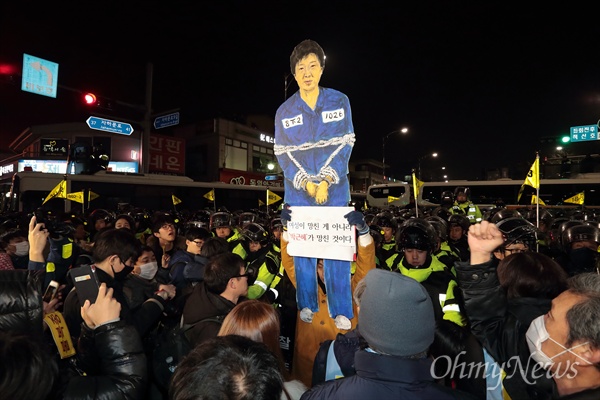
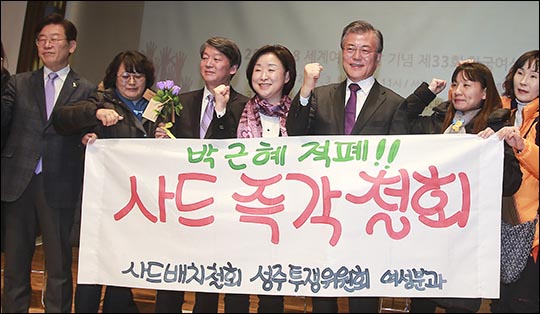
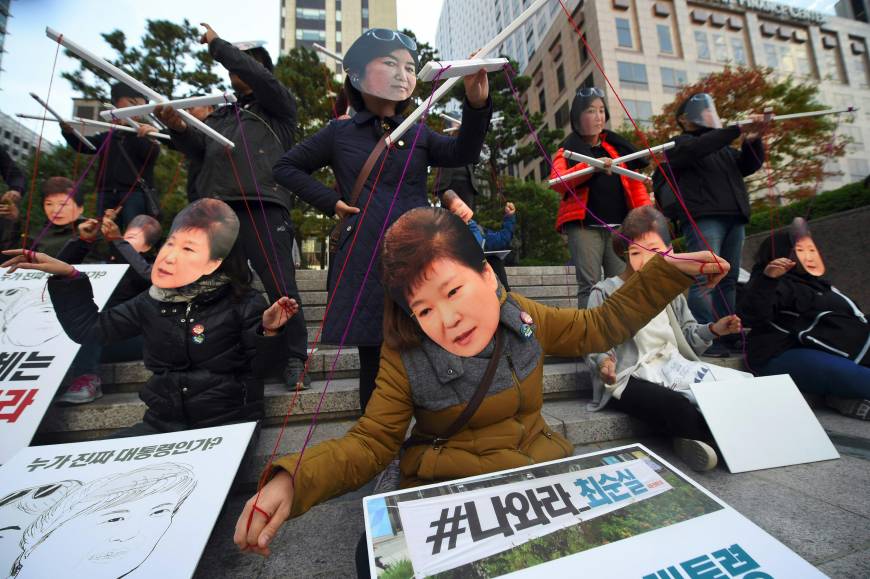
Park Geun-hye’s impeachment has brought nine years of conservative governance in Korea to a screeching halt. Now that there isn’t a single conservative candidate who has not been tainted by the Park Geun-hye/Choi Soon-sil scandal to one degree or another, it is all but guaranteed that the next president is going to come from the progressive Minjoo Party. And as I mentioned over the weekend, Moon Jae-in is now the man to beat.

Seeing how he was President Roh Moo-hyun’s former chief of staff, Moon is taking great pains to tell voters (and foreign observers) that he’s not anti-American. However, no matter how much Moon may wish to distance himself from his past, the Korean Left will have a much harder time of doing that. It wasn’t that long ago when Korean protesters were stomping on or burning American flags. Businesses blatantly refused to serve American customers and a good number of American citizens who lived in Korea at the time were assaulted and harassed on a daily basis. Many of them were forced to pretend to be Canadians to avoid harassment.


Image Source

Image Source

Image Source

Image Source

While the conservatives have been in charge, overt anti-Americanism practically disappeared. That is not to say that the conservatives were the only reason that anti-Americanism retreated. To be sure, there were other reasons as well. Today’s young Koreans’ nationalism is based on their identity as South Koreans, which is different from ten to fifteen years ago when minjok was the popular refrain. The KORUS FTA, which has also helped to deepen trade ties between the two countries, also helped to force back anti-Americanism. Ironically, the KORUS FTA was first initiated by President Roh Moo-hyun who
 once rhetorically asked “What’s wrong with being anti-American?”

However, it would be a mistake to think that Korea’s progressives have completely given up on viewing the United States as the enemy. When the first pieces of THAAD’s system arrived at Osan Air Base, the Minjoo Party’s chairperson, Choo Mi-ae falsely claimed that it was done in secret; that it was agreed upon by illegitimate political leaders who hoodwinked the Korean people. She went so far as to say that bringing in those components was a violation of Korea’s sovereignty.

On the other hand, the only thing that Choo Mi-ae has said about China’s bullying and (unofficial) sanctions against South Korea’s economy vis-a-vis the latter’s THAAD deployment was that it was “excessive.”

Choo Mi-ae, who doesn't even know how binoculars work, thinks her opinion on THAAD matters.
Image Source

Especially with the boorish Donald Trump in the White House, the stage is set for anti-Americanism to return with a vengeance. Considering what we already know about Trump and the Korean Left, things could get ugly. When the Korean Left takes over the reins of power, they will have a responsibility to behave like adults. However, they are not in power yet. The ones who are in power and who are in the position to do anything to try to mitigate this are American Republicans. 
God help us all!

Deploying THAAD anti-missile batteries in South Korea has been contentious to say the least. There is a significant portion of the population that believes that it does more harm than good. After all, THAAD will not protect the 20 million or so people who live in Seoul (Seoul will be targeted by short-range rockets and artillery barrages and THAAD was never designed to counter those threats anyway). THAAD’s defensive capabilities are designed to better protect American military personnel and assets as well as the American mainland from long-range North Korean missiles.

The alliance between the United States and Korea is a mutual one. That means that Korea has to come to America’s aid as much as America has to come to Korea’s aid in the event of a military conflict that affects either nation. Especially at a time when “America First” rhetoric (never mind its historical roots) has permeated the American political landscape, it would be ill-advised for the Korean government to confirm what many American voters and government officials already falsely believe - that allies take and take and take but never give anything back.

However, THAAD has put Korea in China’s crosshairs. China’s unofficial sanctions have hurt Korean businesses. From Kpop stars to duty free shops to Lotte to practically any business that relies on the Chinese market, Korean businesses are hurting. A more thorough study would have to be conducted to deduce just how much China’s sanctions are costing Korea
’s economy. But in politics, perception is oftentimes more than enough.

When the average Korean citizen feels he is worse off because of THAAD, which really doesn’t do much to protect Koreans, it would only be natural for more and more Koreans to question its benefits over time. The United States can nip this in the bud. President Trump ought to make a statement that the United States stands firmly with South Korea; that the United States would not sit idly by while China pushes around one of its most important allies. He should say publicly that his administration will look into ways to deepen trade ties between Seoul and Washington in order to alleviate the economic burden that THAAD has thrown onto Koreans’ collective shoulders.

However, the only American official of any real importance to have said anything about China’s bullying of South Korea over THAAD is Senator John McCain. No one in the Trump administration is saying a word to support Korea! This is irresponsible and yet another indication of the Trump administration’s sheer incompetence. In less than sixty days, South Korea is going to have a new government that will be populated by people who have a long history of anti-Americanism. All they need is the right excuse to resurrect it. They’ll be able to say that they stood up to American bullies and helped to improve economic relations with China and they will likely get rewarded by voters.

President Donald Trump and Secretary of State Rex Tillerson ought to be doing everything they can to try their best to avoid that more-than-plausible eventuality. And yet there is nothing but silence from Washington. Never mind that Trump can’t seem to keep quiet about anything else!


If the worst does come to pass and if future American historians ask who lost South Korea, they can look back at this moment now and know without a doubt that President Trump’s silence was where it all started!

Saturday, March 11, 2017

Random Thoughts about Park Geun-hye, Her Impeachment, and What Comes Next

I don’t know which honorific to use to refer to Park Geun-hye anymore. All former presidents, no matter how disgraced they later became, are still referred to as Former President So-and-So. But none of them was successfully impeached. So do we call her Former Saenuri Chairperson Park Geun-hye or do we just call her Park Geun-hye-씨? MBN seems to think that “Former President Park Geun-hye” is still the appropriate honorific, but I am not convinced.

And it turns out that Ms. Park (that sounds about right) has still not left the Blue House. Seeing how she has been stripped from her constitutionally-guaranteed immunity from prosecution, it may yet be possible to see her eventually led out of the Blue House with handcuffs around her wrists.


Ms. Park’s silence since the verdict is a slap in the face to every conservative in the country. Three people - people who protested against her impeachment - have died while protesting the Constitutional Court’s decision. Her supporters also attacked journalists for simply doing their job. She should have issued a statement renouncing violence. She should have urged calm. And she should have publicly announced that she, and everyone else, would accept the Court’s ruling - just like she said President Roh Moo-hyun should accept the Court’s ruling when he was impeached - regardless of the decision. Her silence is a betrayal of her supporters and the rule of law. It is indecent and a perfect example of how a leader ought not to behave. It was her final insult to anyone who had ever voted for her.

Image Source

That being said, unlike many people, I don’t take any joy in her impeachment. All I see is tragedy. Her political career lasted for 18 years and the Queen of Elections had every reason in the world to become a great leader - to exonerate her father’s legacy, to squash once and for all the accusations that she and her cronies are corrupt power-lusters, to prove that conservative values could help to lead Korea into the 21st century. She failed completely. Her impeachment was a victory for justice and Korea’s young democracy. But I take no joy in seeing her downfall.

As expected, Moon Jae-in is the man to beat in the upcoming presidential election. Anyone who has ever read anything that I had to say about him would know that I utterly despise the man. Donald Trump is already in the White House (another man whom I have nothing but contempt for) and Moon Jae-in will most likely be the next occupant of the Blue House. A toxic shit storm is brewing; and Kim Jong Un, the Fat Boy King of the North, laughs.

Seeing how he started out by opposing THAAD’s deployment to becoming ambivalent, to seemingly oppose it again, China is likely laughing, too.

This picture was taken on March 8th 2017. It says "Withdraw THAAD immediately."
Image Source

If Moon becomes president and pledges to withdraw the THAAD anti-missile batteries, China will always remember that all it needs to do to convince the South Korean government to do anything is exert just a little economic pressure and it will cave every single time. South Korea’s sovereignty will effectively belong to China. But Moon Jae-in and Choo Mi-ae will be able to say that they stood up to the United States. Never mind that amid Chinese bullying and North Korean aggression and Japanese rising militarism, South Korea’s only friend is the United States!

In short, South Korea’s dark days are not behind it. Things are going to get much darker yet.

Friday, December 2, 2016

Populism and Nostalgia: Now it's the Progressives' Turn

Considering President Park Geun-hye’s dismal approval ratings, her electoral win for the presidency back in 2012 seems like more than a distant memory. However, in order to understand how her successor is going to become the next president, it is important to understand how she won in the first place.

We cannot discount the facts. There were many things that favored her victory in 2012. The two biggest factors that favored her were that South Korea is a conservative country and also an aging one. The latter is easy to explain. Older voters tend to prefer conservative leaders. The former can be gleaned from the fact that since 1987, four out of the six presidents were conservatives.

However, those factors alone may not have been enough to have guaranteed Park’s victory. In fact, Park, who for all intents and purposes led a less than remarkable life during her years in “exile” since her father’s assassination, may never have even been able to return to politics in 1998 had she not ridden a wave of nostalgia from older voters. Her repeated invocations of “the second Miracle of the Han River” and “the new Saemaul Movement” during the campaign were deliberate attempts to stoke this sense of nostalgia for a time when rapid economic growth and dizzying changes were the norm - never mind the dictatorship!


As for the claims that she would be a dictator (laughable as they are now seeing how she turned out to be grossly incompetent rather than anything so respectable as a dictator) she was able to brush it off with two simple words - economic democratization. Her presidency was supposed to be the start of a new type of conservatism - one that continued to focus on economic growth as set forth by President Lee Myung-bak while at the same time hijacking the progressives’ most important rallying call of social and economic justice. Compassionate conservatism, if you will. Whether or not her campaign promises were at all realistic is another matter entirely.

In short, populism and nostalgia for a whitewashed past are what helped to propel Park Geun-hye into the Blue House.

“Dictatorship? What dictatorship? Accentuate the positive, eliminate the negative!
Image Source

With Park’s recent statements about her willingness to resign if the National Assembly “minimizes the confusion and vacuum in state affairs and ensure a stable transfer of power,” it seems all but certain that one way or another, she will not be able to complete her single five-year term as originally scheduled. Due to the unprecedented levels of disapproval that she is currently facing from the general public, despite the fact that South Korea is a conservative and aging society, it seems that there is a very good chance that the progressives can retake the Blue House in the next presidential election.

However, the progressives cannot take anything for granted. Should Ban Ki-moon return from the United Nations next year and run for president (possibly after establishing a new party seeing how tainted the Saenuri brand is), they may fail to capture the Blue House yet again. For that very reason, just like Park Geun-hye won the election four years ago by riding on a dual wave of populism and nostalgia, the progressives are going to try to do the same but with their own twist.

But just as nostalgia that propelled Park Geun-hye into the Blue House was based on whitewashed history, the nostalgia that the progressives will ride will be based on whitewashed history, too, as it will carefully steer away from remembering the incompetence of Roh Moo-hyun’s presidency. However, there is no better time to cherry-pick memories of President Roh. That is because as ineffective as Roh Moo-hyun was as president, he was an entirely different beast as a campaigner and much of the rhetoric that he employed back then would be more than welcomed by many voters today.

For instance, not long after getting elected president, Roh Moo-hyun said:


“My fellow citizens, it is said that if everyone shares the same dream, that dream becomes a reality. A society that is run on common sense and where everyone plays by the same rules. A society where each person’s station in life will be determined by the sweat of his own brow. That is the new Republic of Korea that we all dream of. Let us work together to make that dream a reality.”

Whereas Roh gave the people a sense of hope for a society where everyone plays by the same rules, Chung Yoo-ra, Choi Soon-sil’s daughter, became modern-day Korea’s Marie Antoinette when she said something quite different. She said to her peers:


“If you are dissatisfied with your station in life, try blaming your parents instead of demanding that those with rich parents give you whatever you want. Having money is a skill, too. If you don’t like where you are in life, change it. But seeing how you’re so busy trying to tear down others, how do you expect to succeed in anything you do?”

Never mind Ms. Chung was able to live a life of luxury thanks to her mother’s money. There is nothing wrong with inheriting anything. However, the fact remains that the money that allowed her to live the way she pleased was not earned honestly, but was looted by her mother who used her political connections to become a racketeer of near-legendary proportions. In an age of unbridled and unapologetic cronyism and nepotism, nothing sounds so sweet as Roh Moo-hyun’s call for justice and equality.

The man who could do no wrong...
Image Source

A skilled orator who never shied away from addressing the public directly, Roh was the very opposite of an aloof and authoritarian leader - what Park Geun-hye is often (and justifiably) accused of being. So much so that during the height of his unpopularity, he proposed to hold a national referendum - a vote of no confidence - on himself to see just how much the public trusted him! What political leader holds votes of no confidence against himself?

Not to mention that he was an outright populist who imposed a “tax bomb” on homeowners. Although his tax policies, which were later declared to have been unconstitutional, did no favors whatsoever to help to grow the economy, in today’s political climate where many Koreans speak of noblesse oblige like as though it were some kind of religious dogma, any contemporary politician who promises to go after “the rich” will likely be cheered as a hero.

At a time when many are openly calling Saenuri lawmakers accomplices in the Park Geun-hye/Choi Soon-sil scandal and are demanding they resign en masse along with President Park, Roh Moo-hyun
’s rhetoric would once again be welcomed with open arms. During his time in office, he refused to compromise with the Saenuri Party (or the Grand National Party as it was called back then). He was also a gifted orator who never hesitated to abandon protocol to speak directly to the people and a firebrand who promised to work toward building a more just society.

However, it has to be remembered that he was an ineffective leader and many have called his presidency a failure.

At a time when the public’s anti-American sentiments were threatening to tear up the US-ROK alliance, instead of trying to calm things down, Roh once famously asked a rhetorical question - “What’s wrong with being anti-American?”


Furthermore, he went on to say that the United States, South Korea’s most important ally, was the biggest threat to peace in Northeast Asia.

When he wasn’t abusing this most vital of alliances like an unwanted child, he was making a fool of himself by proposing to the Japanese government that the Sea of Japan be renamed the Sea of Peace. Or he was telling Kim Jong Il that he would be willing to redraw South Korea’s western maritime border aka the Northern Limit Line according to North Korea’s wishes in order to “draw a peace and economics map to replace the security and military one,” which would have been capitulation in all but name.

Finally, the greatest flaw of his presidency was the fact that this supposedly moral and upright man eventually felt compelled to kill himself when his family was investigated by state prosecutors on corruption charges.

...turned out to have done a lot of wrong.
Image Source

However, none of these facts are important. At least not for those who seek to exploit his memory for their own political purposes. Yes, Roh Moo-hyun’s presidency was a failure in so many ways, but it is easy to paper over his flaws. For one thing, the amount of money that Roh was investigated for, about US$5 million, is a paltry sum of money compared to the amounts of money that were pilfered by other former presidents/shadow president. Yes, he deliberately jeopardized the alliance with the United States at every opportunity he got but he was the one who initiated talks with Washington to create the US-Korea Free Trade Agreement, which turned out to be America’s second largest FTA deal. And the Hankyoreh has already been pathetically defending Roh’s attempt to surrender the NLL for years.

But it might not even be necessary to defend Roh’s record seeing how extremely unpopular Park Geun-hye has become. All that the progressives may need to do is to echo his words and rhetorical flair, his style, sing that old song about a just society, and most importantly, repeat ad nauseum that they are not Park Geun-hye. Never mind that Roh was unable to deliver on many of his promises and much of it was due to his own incompetence.

The next South Korean president is going to be a progressive. Even if Ban Ki-moon runs for president and wins, he is not exactly known for being a conservative. And especially considering how the conservatives were willing to take a left turn on economic policy back in 2012 (not to mention Trump’s populism that helped him to win the US presidential election), it’s clear that conservative economic principles as they were set forth by Reagan and Thatcher are no longer sacrosanct for conservative politicians. So there is more than a plausible chance that there will be a marked increase in populist rhetoric and campaign pledges regardless of the political party that the candidates will hail from.

As for nostalgia, the conservatives do not have any left to exploit. Park Geun-hye squandered what little good will that people had for her father, Lee Myung-bak remains a polarizing figure, Kim Young-sam left office with higher approval ratings than Park Geun-hye currently enjoys but that’s not saying much, and the rest were thieving autocrats. But the progressives can and they will.

Moon Jae-in is already doing whatever he can to get ahead of the pack. So is Ahn Cheol-soo. Others will soon follow suit. As the race gets more heated, one should not be surprised to see the ghost of Roh Moo-hyun hovering around wherever they go.

Thursday, November 3, 2016

President Park Geun-hye Should Resign

The more details about the Choi Soon-sil scandal are revealed, the more bizarre the story seems to get. From stories of shamanistic priests to corporate malfeasance to unlawfully accessing classified information to prosecutorial ineptitude to familial favoritism to allegations about sacrificial rituals during the Sewol ferry disaster to questions about whether Choi had used the Blue House as a sleepover camp, one can’t help but be reminded of Mark Twain’s quote about how the truth is often stranger than fiction.

Like The Korean said in his blog post, the scandal has put the entire corporate-government symbiotic relationship into the Tyson Zone where every allegation and rumor, no matter how insane, now seems entirely plausible.

It is important to point out that there has yet to be a trial, much less a conviction. Until that takes place, every allegation is just that - an allegation. However, there is absolutely no doubt that as a direct result of this scandal and the eye roll-inducing manner in which she has attempted to contain it, it would be a gross understatement to claim that President Park is now a lame duck president.


In fact, this goes well beyond a lame duck presidency. Due to the far-reaching influence that Choi Soon-sil seems to have had over the president, government ministries, and various corporations, it may be safe to say that the Park administration has fundamentally collapsed.

I doubt this is what James & Bobby Purify had in mind
Image Source

(As of this writing, Kim Byong-joon, whom President Park has nominated to become the next prime minister, is currently giving a press conference stating that President Park has agreed that, upon confirmation to his post, Kim would take over all domestic affairs while President Park will only oversee foreign policy. He has also said that it may be possible for prosecutors to investigate President Park, albeit “prudently.” However, it is still unclear if the opposition parties will agree to President Park’s unilateral appointment.)

Considering the fact that South Korea currently faces wave after wave of economic and security challenges, this scandal could not have come at a worse time.

Samsung Electronics, which had to cancel its Galaxy Note 7, is currently on shaky ground, which in turn has led to increased calls for the government to push through corporate reform. Korea’s largest container shipping company, Hanjin, went into receivership a few months ago and the company still has stranded crew members out at sea who are running out of rations. Falling exports, rising household debt, and a looming interest rate hike by the US Federal Reserve could seriously threaten economic growth. The government still needs to curb the chaebols’ excesses, push for more deregulation and a more flexible labor market, and help to boost startup businesses. More urgently, the National Assembly still needs to approve the government’s ₩400.7 trillion budget for next year.

On the security side of things, sensing an opportunity, China is once again looking for ways to force South Korea to abandon its plans to deploy THAAD missile batteries. North Korea still poses an existential threat to South Korea. In order to properly combat the North Korean menace, South Korea needs to pursue careful diplomacy, strong sanctions, and meticulous alliance management. Although the Obama administration has said that the ROK-US alliance is still “strong and durable,” there is no doubt concern about South Korea’s current state of political paralysis. Furthermore, US officials are all too aware that support for the alliance and/or the US’ interests are not unanimous in South Korea.

The duties and responsibilities that weigh on the president’s shoulders require Herculean leadership. It is needed even during the best of times and it is absolutely paramount during times of trouble. But the Choi Soon-sil scandal has derailed everything.

As it is now apparent that President Park can no longer lead the country or regain the trust of those whom she is supposed to govern, it is now abundantly clear that she ought to resign.

The fact that the majority of Saenuri and Minjoo lawmakers have thus far refused to call for her resignation shows that even now they are placing their own interests above that of the country’s. They have refused to do so because if President Park resigns immediately, as per the Republic of Korea Constitution, a new election has to take place in sixty days whereby a new president would be able to begin a new five-year term.

Seeing how the scandal has not only tarnished President Park’s reputation but also that of the Saenuri Party itself, it is clear why Saenuri lawmakers would be opposed to a sudden resignation. They would have the most to lose. Furthermore, the Saenuri Party’s most likely nominee, Ban Ki-moon, would be ineligible to run as he is still serving as the UN’s Secretary General.

(Assuming that Ban Ki-moon still plans to run for president and he doesn’t choose to be another party’s standard bearer, he may need to rename the Saenuri Party, again, and purge the party off Park Geun-hye’s most loyal supporters.)

The same goes for the Minjoo Party. Prior to the Choi Soon-sil scandal, it appeared that it was the Minjoo Party that would be engulfed in flames when former Foreign Minister Song Min-soon mentioned in his memoir, A Glacier Inevitably Moves, that Moon Jae-in had given the green light in 2007 to ask Pyongyang for its opinion on the UN resolution on North Korean human rights violations, a charge that Moon has yet to deny.


(Personally, I think this ought to disqualify Moon Jae-in from being elected dog catcher, much less president.)

The Minjoo Party may be enjoying higher approval ratings than the Saenuri Party, but that’s not saying very much. Should the presidential election take place today, there is no guarantee that Moon would be elected president. Until recently, Moon was operating under the assumption that he would have more than a year to campaign for the presidency. It is likely that he would rather not deviate from the plan.

The two major political figures who are openly calling for President Park’s resignation, Ahn Cheol-soo and Park Won-soon, were facing steep uphill battles of their own against Moon Jae-in to become the progressives’ nominee for president. But if President Park resigns, seeing how Moon is facing his own political scandal, they would have a much better chance of sealing the nomination for themselves. Although they are both right to demand President Park’s immediate resignation, their naked ambition and lust for power are not very subtle.

The show must go on!
Image Source

Readers of this blog already know my biases. Although President Park has shown herself to be an unremarkable, underwhelming, and disappointing leader in more ways than one, I have felt nothing but unadulterated admiration for her hawkish policy toward North Korea and her dogged pursuance of free trade deals with as many countries and trading blocs as possible. Conversely, I find many of South Korea’s progressives’ willingness to appease Pyongyang and their slavish devotion to unions and (even more than conservatives’) nativist outlook on trade despicable.

Should President Park resign immediately, there is a very good chance that I would find the next president’s views on trade, tax policy, welfare reform, labor reform, economic regulation, and foreign policy deplorable and downright dangerous for the country’s future. But the fact remains that through no one else’s fault other than her own, President Park has lost the trust of the people and turned her administration into an international laughing stock. You know you’re a joke when North Korea pokes fun at you. Irony truly is dead and President Park’s fingerprints are all over the murder weapon.

South Korea survived ten years of Kim Dae-jung and Roh Moo-hyun. It survived Lee Myung-bak and it has thus far survived Park Geun-hye and it will survive the next fifteen months should she choose not to step down. South Korea will also survive the next president whoever he or she may be.

But whether or not South Korea will be able to survive the long-term consequences of her refusal to step down is less clear.

If President Park refuses to step down, she will also bring the Saenuri Party down with her. For all of its faults, and they are legion, a Saenuri collapse could lead effectively to a one-party state and God knows that far too many progressive politicians appear to live in a world that is very remote from reality - full of fantasy and whimsy. Despite its many flaws, for a healthy and vibrant republic to exist, there has to be at least two opposing political parties.

For the sake of the country’s future, President Park should resign.

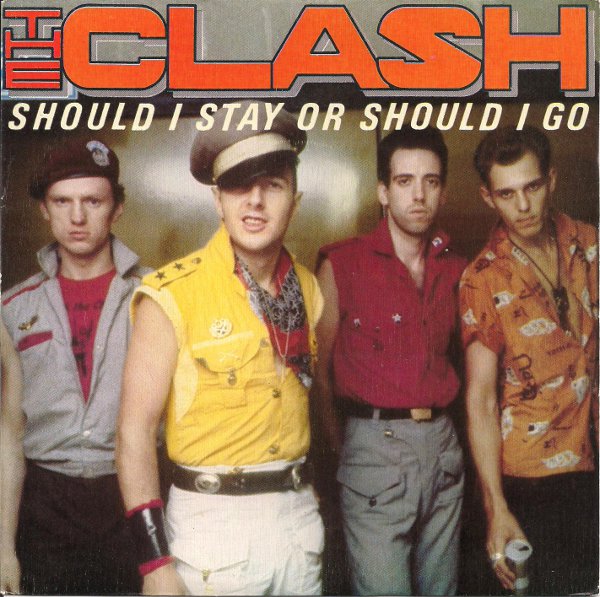
Go. Definitely go.
Image Source