Showing posts with label ahn cheol-soo. Show all posts

Friday, December 2, 2016

Populism and Nostalgia: Now it's the Progressives' Turn

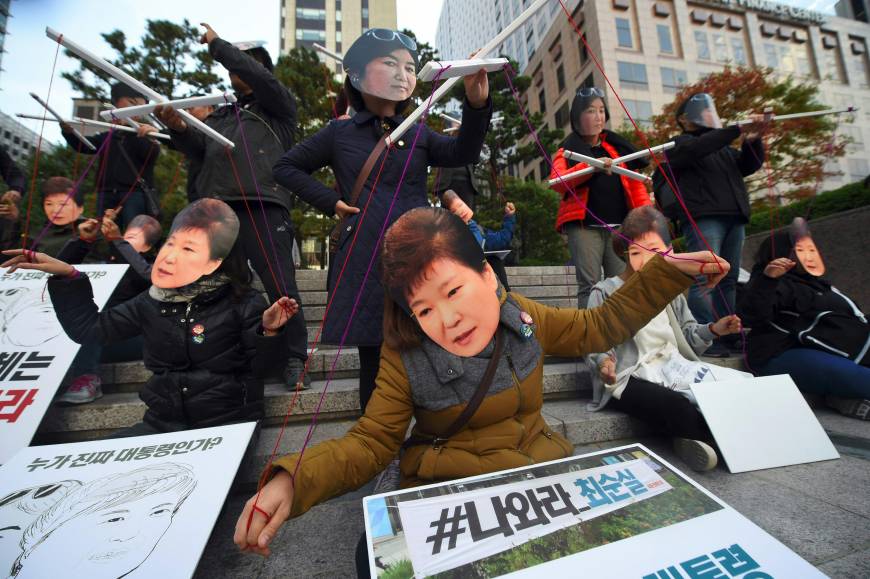
Considering President Park Geun-hye’s dismal approval ratings, her electoral win for the presidency back in 2012 seems like more than a distant memory. However, in order to understand how her successor is going to become the next president, it is important to understand how she won in the first place.

We cannot discount the facts. There were many things that favored her victory in 2012. The two biggest factors that favored her were that South Korea is a conservative country and also an aging one. The latter is easy to explain. Older voters tend to prefer conservative leaders. The former can be gleaned from the fact that since 1987, four out of the six presidents were conservatives.

However, those factors alone may not have been enough to have guaranteed Park’s victory. In fact, Park, who for all intents and purposes led a less than remarkable life during her years in “exile” since her father’s assassination, may never have even been able to return to politics in 1998 had she not ridden a wave of nostalgia from older voters. Her repeated invocations of “the second Miracle of the Han River” and “the new Saemaul Movement” during the campaign were deliberate attempts to stoke this sense of nostalgia for a time when rapid economic growth and dizzying changes were the norm - never mind the dictatorship!


As for the claims that she would be a dictator (laughable as they are now seeing how she turned out to be grossly incompetent rather than anything so respectable as a dictator) she was able to brush it off with two simple words - economic democratization. Her presidency was supposed to be the start of a new type of conservatism - one that continued to focus on economic growth as set forth by President Lee Myung-bak while at the same time hijacking the progressives’ most important rallying call of social and economic justice. Compassionate conservatism, if you will. Whether or not her campaign promises were at all realistic is another matter entirely.

In short, populism and nostalgia for a whitewashed past are what helped to propel Park Geun-hye into the Blue House.

“Dictatorship? What dictatorship? Accentuate the positive, eliminate the negative!”
Image Source

With Park’s recent statements about her willingness to resign if the National Assembly “minimizes the confusion and vacuum in state affairs and ensure a stable transfer of power,” it seems all but certain that one way or another, she will not be able to complete her single five-year term as originally scheduled. Due to the unprecedented levels of disapproval that she is currently facing from the general public, despite the fact that South Korea is a conservative and aging society, it seems that there is a very good chance that the progressives can retake the Blue House in the next presidential election.

However, the progressives cannot take anything for granted. Should Ban Ki-moon return from the United Nations next year and run for president (possibly after establishing a new party seeing how tainted the Saenuri brand is), they may fail to capture the Blue House yet again. For that very reason, just like Park Geun-hye won the election four years ago by riding on a dual wave of populism and nostalgia, the progressives are going to try to do the same but with their own twist.

But just as nostalgia that propelled Park Geun-hye into the Blue House was based on whitewashed history, the nostalgia that the progressives will ride will be based on whitewashed history, too, as it will carefully steer away from remembering the incompetence of Roh Moo-hyun’s presidency. However, there is no better time to cherry-pick memories of President Roh. That is because as ineffective as Roh Moo-hyun was as president, he was an entirely different beast as a campaigner and much of the rhetoric that he employed back then would be more than welcomed by many voters today.

For instance, not long after getting elected president, Roh Moo-hyun said:


“My fellow citizens, it is said that if everyone shares the same dream, that dream becomes a reality. A society that is run on common sense and where everyone plays by the same rules. A society where each person’s station in life will be determined by the sweat of his own brow. That is the new Republic of Korea that we all dream of. Let us work together to make that dream a reality.”

Whereas Roh gave the people a sense of hope for a society where everyone plays by the same rules, Chung Yoo-ra, Choi Soon-sil’s daughter, became modern-day Korea’s Marie Antoinette when she said something quite different. She said to her peers:


“If you are dissatisfied with your station in life, try blaming your parents instead of demanding that those with rich parents give you whatever you want. Having money is a skill, too. If you don’t like where you are in life, change it. But seeing how you’re so busy trying to tear down others, how do you expect to succeed in anything you do?”

Never mind Ms. Chung was able to live a life of luxury thanks to her mother’s money. There is nothing wrong with inheriting anything. However, the fact remains that the money that allowed her to live the way she pleased was not earned honestly, but was looted by her mother who used her political connections to become a racketeer of near-legendary proportions. In an age of unbridled and unapologetic cronyism and nepotism, nothing sounds so sweet as Roh Moo-hyun’s call for justice and equality.

The man who could do no wrong...
Image Source

A skilled orator who never shied away from addressing the public directly, Roh was the very opposite of an aloof and authoritarian leader - what Park Geun-hye is often (and justifiably) accused of being. So much so that during the height of his unpopularity, he proposed to hold a national referendum - a vote of no confidence - on himself to see just how much the public trusted him! What political leader holds votes of no confidence against himself?

Not to mention that he was an outright populist who imposed a “tax bomb” on homeowners. Although his tax policies, which were later declared to have been unconstitutional, did no favors whatsoever to help to grow the economy, in today’s political climate where many Koreans speak of noblesse oblige like as though it were some kind of religious dogma, any contemporary politician who promises to go after “the rich” will likely be cheered as a hero.

At a time when many are openly calling Saenuri lawmakers accomplices in the Park Geun-hye/Choi Soon-sil scandal and are demanding they resign en masse along with President Park, Roh Moo-hyun
’s rhetoric would once again be welcomed with open arms. During his time in office, he refused to compromise with the Saenuri Party (or the Grand National Party as it was called back then). He was also a gifted orator who never hesitated to abandon protocol to speak directly to the people and a firebrand who promised to work toward building a more just society.

However, it has to be remembered that he was an ineffective leader and many have called his presidency a failure.

At a time when the public’s anti-American sentiments were threatening to tear up the US-ROK alliance, instead of trying to calm things down, Roh once famously asked a rhetorical question - “What’s wrong with being anti-American?”


Furthermore, he went on to say that the United States, South Korea’s most important ally, was the biggest threat to peace in Northeast Asia.

When he wasn’t abusing this most vital of alliances like an unwanted child, he was making a fool of himself by proposing to the Japanese government that the Sea of Japan be renamed the Sea of Peace. Or he was telling Kim Jong Il that he would be willing to redraw South Korea’s western maritime border aka the Northern Limit Line according to North Korea’s wishes in order to “draw a peace and economics map to replace the security and military one,” which would have been capitulation in all but name.

Finally, the greatest flaw of his presidency was the fact that this supposedly moral and upright man eventually felt compelled to kill himself when his family was investigated by state prosecutors on corruption charges.

...turned out to have done a lot of wrong.
Image Source

However, none of these facts are important. At least not for those who seek to exploit his memory for their own political purposes. Yes, Roh Moo-hyun’s presidency was a failure in so many ways, but it is easy to paper over his flaws. For one thing, the amount of money that Roh was investigated for, about US$5 million, is a paltry sum of money compared to the amounts of money that were pilfered by other former presidents/shadow president. Yes, he deliberately jeopardized the alliance with the United States at every opportunity he got but he was the one who initiated talks with Washington to create the US-Korea Free Trade Agreement, which turned out to be America’s second largest FTA deal. And the Hankyoreh has already been pathetically defending Roh’s attempt to surrender the NLL for years.

But it might not even be necessary to defend Roh’s record seeing how extremely unpopular Park Geun-hye has become. All that the progressives may need to do is to echo his words and rhetorical flair, his style, sing that old song about a just society, and most importantly, repeat ad nauseum that they are not Park Geun-hye. Never mind that Roh was unable to deliver on many of his promises and much of it was due to his own incompetence.

The next South Korean president is going to be a progressive. Even if Ban Ki-moon runs for president and wins, he is not exactly known for being a conservative. And especially considering how the conservatives were willing to take a left turn on economic policy back in 2012 (not to mention Trump’s populism that helped him to win the US presidential election), it’s clear that conservative economic principles as they were set forth by Reagan and Thatcher are no longer sacrosanct for conservative politicians. So there is more than a plausible chance that there will be a marked increase in populist rhetoric and campaign pledges regardless of the political party that the candidates will hail from.

As for nostalgia, the conservatives do not have any left to exploit. Park Geun-hye squandered what little good will that people had for her father, Lee Myung-bak remains a polarizing figure, Kim Young-sam left office with higher approval ratings than Park Geun-hye currently enjoys but that’s not saying much, and the rest were thieving autocrats. But the progressives can and they will.

Moon Jae-in is already doing whatever he can to get ahead of the pack. So is Ahn Cheol-soo. Others will soon follow suit. As the race gets more heated, one should not be surprised to see the ghost of Roh Moo-hyun hovering around wherever they go.

Thursday, November 3, 2016

President Park Geun-hye Should Resign

The more details about the Choi Soon-sil scandal are revealed, the more bizarre the story seems to get. From stories of shamanistic priests to corporate malfeasance to unlawfully accessing classified information to prosecutorial ineptitude to familial favoritism to allegations about sacrificial rituals during the Sewol ferry disaster to questions about whether Choi had used the Blue House as a sleepover camp, one can’t help but be reminded of Mark Twain’s quote about how the truth is often stranger than fiction.

Like The Korean said in his blog post, the scandal has put the entire corporate-government symbiotic relationship into the Tyson Zone where every allegation and rumor, no matter how insane, now seems entirely plausible.

It is important to point out that there has yet to be a trial, much less a conviction. Until that takes place, every allegation is just that - an allegation. However, there is absolutely no doubt that as a direct result of this scandal and the eye roll-inducing manner in which she has attempted to contain it, it would be a gross understatement to claim that President Park is now a lame duck president.


In fact, this goes well beyond a lame duck presidency. Due to the far-reaching influence that Choi Soon-sil seems to have had over the president, government ministries, and various corporations, it may be safe to say that the Park administration has fundamentally collapsed.

I doubt this is what James & Bobby Purify had in mind
Image Source

(As of this writing, Kim Byong-joon, whom President Park has nominated to become the next prime minister, is currently giving a press conference stating that President Park has agreed that, upon confirmation to his post, Kim would take over all domestic affairs while President Park will only oversee foreign policy. He has also said that it may be possible for prosecutors to investigate President Park, albeit “prudently.” However, it is still unclear if the opposition parties will agree to President Park’s unilateral appointment.)

Considering the fact that South Korea currently faces wave after wave of economic and security challenges, this scandal could not have come at a worse time.

Samsung Electronics, which had to cancel its Galaxy Note 7, is currently on shaky ground, which in turn has led to increased calls for the government to push through corporate reform. Korea’s largest container shipping company, Hanjin, went into receivership a few months ago and the company still has stranded crew members out at sea who are running out of rations. Falling exports, rising household debt, and a looming interest rate hike by the US Federal Reserve could seriously threaten economic growth. The government still needs to curb the chaebols’ excesses, push for more deregulation and a more flexible labor market, and help to boost startup businesses. More urgently, the National Assembly still needs to approve the government’s ₩400.7 trillion budget for next year.

On the security side of things, sensing an opportunity, China is once again looking for ways to force South Korea to abandon its plans to deploy THAAD missile batteries. North Korea still poses an existential threat to South Korea. In order to properly combat the North Korean menace, South Korea needs to pursue careful diplomacy, strong sanctions, and meticulous alliance management. Although the Obama administration has said that the ROK-US alliance is still “strong and durable,” there is no doubt concern about South Korea’s current state of political paralysis. Furthermore, US officials are all too aware that support for the alliance and/or the US’ interests are not unanimous in South Korea.

The duties and responsibilities that weigh on the president’s shoulders require Herculean leadership. It is needed even during the best of times and it is absolutely paramount during times of trouble. But the Choi Soon-sil scandal has derailed everything.

As it is now apparent that President Park can no longer lead the country or regain the trust of those whom she is supposed to govern, it is now abundantly clear that she ought to resign.

The fact that the majority of Saenuri and Minjoo lawmakers have thus far refused to call for her resignation shows that even now they are placing their own interests above that of the country’s. They have refused to do so because if President Park resigns immediately, as per the Republic of Korea Constitution, a new election has to take place in sixty days whereby a new president would be able to begin a new five-year term.

Seeing how the scandal has not only tarnished President Park’s reputation but also that of the Saenuri Party itself, it is clear why Saenuri lawmakers would be opposed to a sudden resignation. They would have the most to lose. Furthermore, the Saenuri Party’s most likely nominee, Ban Ki-moon, would be ineligible to run as he is still serving as the UN’s Secretary General.

(Assuming that Ban Ki-moon still plans to run for president and he doesn’t choose to be another party’s standard bearer, he may need to rename the Saenuri Party, again, and purge the party off Park Geun-hye’s most loyal supporters.)

The same goes for the Minjoo Party. Prior to the Choi Soon-sil scandal, it appeared that it was the Minjoo Party that would be engulfed in flames when former Foreign Minister Song Min-soon mentioned in his memoir, A Glacier Inevitably Moves, that Moon Jae-in had given the green light in 2007 to ask Pyongyang for its opinion on the UN resolution on North Korean human rights violations, a charge that Moon has yet to deny.


(Personally, I think this ought to disqualify Moon Jae-in from being elected dog catcher, much less president.)

The Minjoo Party may be enjoying higher approval ratings than the Saenuri Party, but that’s not saying very much. Should the presidential election take place today, there is no guarantee that Moon would be elected president. Until recently, Moon was operating under the assumption that he would have more than a year to campaign for the presidency. It is likely that he would rather not deviate from the plan.

The two major political figures who are openly calling for President Park’s resignation, Ahn Cheol-soo and Park Won-soon, were facing steep uphill battles of their own against Moon Jae-in to become the progressives’ nominee for president. But if President Park resigns, seeing how Moon is facing his own political scandal, they would have a much better chance of sealing the nomination for themselves. Although they are both right to demand President Park’s immediate resignation, their naked ambition and lust for power are not very subtle.

The show must go on!
Image Source

Readers of this blog already know my biases. Although President Park has shown herself to be an unremarkable, underwhelming, and disappointing leader in more ways than one, I have felt nothing but unadulterated admiration for her hawkish policy toward North Korea and her dogged pursuance of free trade deals with as many countries and trading blocs as possible. Conversely, I find many of South Korea’s progressives’ willingness to appease Pyongyang and their slavish devotion to unions and (even more than conservatives’) nativist outlook on trade despicable.

Should President Park resign immediately, there is a very good chance that I would find the next president’s views on trade, tax policy, welfare reform, labor reform, economic regulation, and foreign policy deplorable and downright dangerous for the country’s future. But the fact remains that through no one else’s fault other than her own, President Park has lost the trust of the people and turned her administration into an international laughing stock. You know you’re a joke when North Korea pokes fun at you. Irony truly is dead and President Park’s fingerprints are all over the murder weapon.

South Korea survived ten years of Kim Dae-jung and Roh Moo-hyun. It survived Lee Myung-bak and it has thus far survived Park Geun-hye and it will survive the next fifteen months should she choose not to step down. South Korea will also survive the next president whoever he or she may be.

But whether or not South Korea will be able to survive the long-term consequences of her refusal to step down is less clear.

If President Park refuses to step down, she will also bring the Saenuri Party down with her. For all of its faults, and they are legion, a Saenuri collapse could lead effectively to a one-party state and God knows that far too many progressive politicians appear to live in a world that is very remote from reality - full of fantasy and whimsy. Despite its many flaws, for a healthy and vibrant republic to exist, there has to be at least two opposing political parties.

For the sake of the country’s future, President Park should resign.

Go. Definitely go.
Image Source

Thursday, October 13, 2016

Private Think Tanks Are NOT Ruining Policy-Making in South Korea

Yesterday, Emanuel Pastreich published a column/op-ed in Korea Exposé, which was titled “Tanks of Destruction: Private Think Tanks Are Ruining Policy-Making in South Korea.”

I don’t know if Pastreich came up with the title himself, or if it was created by the site’s editor and founder, Se-Woong Koo. Either way, it was a catchy title and it caught my attention. And not for the first time, I disagreed with yet another op-ed that was posted on that website.


Basically, Pastreich’s point was that a lot of think tanks in Korea, particularly the mainstream ones, are not worthy of the prestige they possess. The following are a summary of Pastreich’s main complaints regarding think tanks:
  • Much of the content produced by think tanks are banal, dishonest, superficial and ritualistic.
  • Think tanks are ranked according to the amount of funding received, but such funding means they are not independent as think tanks cannot risk upsetting their patrons.
  • Think tanks are not accessible to the public and they represent the interests of a small group who fund the think tanks.
  • Think tanks seek to privatize the work that should be carried out by a government official, a staff member of a government research institute or a professor at a university and set long-term national agenda. But think tanks’ purposes are short-terms gains.
Rubbish Thinking
Image Source

One could say that Pastreich may be throwing stones while living in a glass house. After all, he is the director of The Asia Institute, which is also a think tank. However, I must confess that I am not at all familiar with The Asia Institute or the work that it has produced. So that’s neither here nor there.

Regardless of that fact, however, the fact that he is the director of a different think tank and the other think tanks that he excoriated are basically his competitors is, I think, the weakest rebuttal that can be summoned against Pastreich’s points.

My first point of contention after reading Pastreich’s op-ed was that think tanks are supposed to be exclusive. They are supposed to represent the opinions, thoughts, and research by the elites who have spent a long time studying those subjects they pontificate on.

Back in early 2014, right about the time when Ahn Cheol-soo had just started to seriously begin his foray into politics, one of the first things he did was to establish his own think tank - the oddly-named Policy Network Tomorrow (정책네트워크 내일). I looked at his think tank’s mission statement and it sounded a lot like the kind of think tank that Pastreich is looking for (at least in think tanks that he is not a part of) - a think tank that is accessible to the public and one that doesn’t put too much focus on the “banal and dishonest” experts, but rather, in the words of Policy Network Tomorrow, on “the problems that the people face in their lives.”

I wrote about Ahn Cheol-soo’s think tank before and the unfortunate reality seems to be that if Pastreich’s suggestions regarding accessibility is given serious consideration, it would lead to think tanks that don’t do a lot of thinking.

Pastreich is not wrong when he argued that the opinions and research data that think tanks advocate can be (and often are) hijacked by people with vested interests. That is not in dispute. But the notion that think tanks are supposed to be open to the public or somehow responsive to what the public thinks is wrong. For one thing, all you need to do is speak to one of the unwashed masses who has never thought much about a given topic to know that you shouldn't pay attention to everyone. After all, the direct result of paying too much attention to the opinions of the masses is the rise of Donald Trump!

Besides, if we are looking for people who will better reflect the wishes of the public, those people already exist. They
’re called elected officials. I won’t hold my breath waiting for people to shower them with glory and praise.

Obligatory mention of the fact that he also said “Democracy is the worst form of government, except for all the others.”
Image Source


Another point that I strongly disagreed with Pastreich was his opinion that massive corporate funding makes a think tank less trustworthy and reliable.

There was a think tank that I really liked. It was Freedom Factory, a libertarian think tank that advocated limited government and free market solutions to many of society’s ills.

(Disclaimer: I was never formally employed by Freedom Factory, but I did a number of freelance work for them - mostly Korean-to-English translation services. I also edited their English-language biweekly online news magazine, Freedom Voice.)

Did you notice the use of past tense? That
’s because Freedom Factory went out of business a couple of months ago. I recognize that “capitalism” is often used as an epithet and there are even fewer fans of libertarianism. So I understand that some of you may disagree with what Freedom Factory stood for and argue til you’re blue in the face that it was evil or throw whatever epithets you can think of. I won’t argue; this post is not meant to serve as a defense of libertarianism.

(And in case any of you are wondering, no, I have never thought of myself as a libertarian. I think of myself as an ally to libertarians, but never one of them.)

However, no matter what kinds of clever curses you can throw at it, it doesn
’t change the fact that Freedom Factory produced a good number of studies, surveys, op-ed pieces, translations, media appearances, and helped to spread awareness of the problems of over-regulating businesses and the history of the South Korean economy to the masses. It was a great think tank that saw a great vision for itself. But it went out of business because it couldn’t turn a profit.

Pastreich can argue that corporate funding makes think tanks less independent, but not having enough money means that you go out of business. I wish Freedom Factory had the luxury of worrying about a lack of independence. It never even got that chance.

Though I don’t know for certain, I imagine there are many think tanks of various political affiliations that have met and will continue to meet a similar fate.


Regardless of how much people think of the corrupting nature of money, it doesn’t change the fact that corporate funding helps think tanks to do their work. It may not be a perfect solution, but it’s the best there is. Why is it the best? It’s the best because, going back to my earlier point, the vast majority of the unwashed masses have never even heard of many of the subjects a lot of think tanks and their employees have dedicated themselves to studying; and they don’t care for them.

If you think money is the root of all evil, try not having enough of it.
Image Source

The last thing about Pastreich’s op-ed I disagreed with was his argument that think tanks undermine the work that is better done by government officials, government research institutes, and professors at universities. He says that unlike government institutions, think tanks seek short-term gains and this is particularly dangerous when we think about long-term problems such as North Korea.

It
’s a wonderful thought that government leaders and bureaucrats are more dedicated to long-term goals than think tanks. Unfortunately, however, reality says otherwise. Case in point, South Korea’s policy toward North Korea has changed from administration to administration. Whereas Kim Dae-jung (and Roh Moo-hyun) sought engagement with the North via the Sunshine Policy, Lee Myung-bak immediately pursued a hawkish policy. Park Geun-hye wasn’t nearly as hawkish as Lee Myung-bak (at least initially) or as dovish as Kim Dae-jung as she was an advocate of “trustpolitik” during the early days of her administration and she only became hawkish after North Korea’s fifth nuclear test.

If you read any of my columns at NK News, it won’t take you long to know what I think is the proper way of dealing with North Korea. Again, however, this post is not meant to defend or attack one idea or another. The point is that the notion that government officials are somehow more dedicated to pursuing long-term goals than people in the private sector is utter nonsense. It is a praise that government officials and their research institutes clearly do not deserve.

(Whether this is a virtue or a vice of the democratic process is another matter entirely.)

In fact, the only things that the government has insisted on taking the long-term view, regardless of who has been 
in charge, are looking out for their own interests. Even the country’s progressive leaders never abolished the National Security Law or hesitated from using defamation laws to silence their critics in the media.

Also, is there anyone who can say with a straight face that professors are any more virtuous than those who work at think tanks? At the end of the day, to one degree or another, everyone is a whore. The only thing that’s different is whom he sells his soul to and for how much and how happily he does so.

One thing that Pastreich does get right is his comparison of think tanks to hagwons, though certainly not for the reasons he stated. The comparison is valid because, like the hagwon industry, the ideas that are espoused by many think tanks do not seem that different from each other and there does appear to be a strong herd mentality that is defined by an unhealthy dose of 
“follow the leader” mentality. There does need to be an infusion of new ideas (not that being new by itself is a virtue) and healthy debate among think tanks and universities and government research institutes. That is how we make sure that we do not fall victims to our own filth.

So, yes, there is a feeling of staleness when it comes to private think tanks in Korea. But are they ruining policy-making? That hardly seems to be the case. Although some of Pastreich’s criticisms may be valid, he does not seem to have really thought through on the subject of private think tanks as much as he seems to think he has.

Monday, August 11, 2014

What is “The Will of the People?”

What is this thing that politicians call “will of the people?”

I had earlier predicted that the ruling Saenuri Party would lose the July-30 by-elections. Ruling parties almost never win in by-elections. However, the Saenuri Party has surprised everyone by having won a super-majority in the National Assembly, including a seat in the South Jeolla province, which has been a liberal stronghold for decades. The Saenuri Party now holds 158 out of 300 seats in Korea's unicameral legislature.

Image Source

But does this electoral win mean that President Park or Saenuri lawmakers have gained a mandate of some sort? Only 32.9 percent of eligible voters turned out to vote in the by-elections.

To quote a line from a TV show that I like, it's true that decisions are made by those who show up. And to the victor goes the spoils. But a mandate? To put it mildly, that seems like a stretch.

As for the New Politics Alliance for Democracy (NPAD) Party, with its two co-chairmen Kim Han-gil and Ahn Cheol-soo having all but officially given up their roles as party leaders, the party leadership has fallen onto the shoulders of Park Young-sun. Due to her party's diminishing popularity, in her very first press conference as de facto party chief, she pledged “to do her utmost to rebuild the largest opposition party by winning the hearts and minds of the people, saying that the NPAD 'failed to honor their will.'”

However, what neither Saenuri nor NPAD lawmakers seems to understand is that there is no such thing as “the People.” As much as politicians may wish to simplify everything into quantifiable polls, it does not change the fact that though there are millions of individuals who all have different wants, needs, and priorities; this ridiculous concept of a single blob-like People is actually non-existent.

So what the hell do politicians mean when they talk about “the will of the People?”

Start small and local.
Image Source

However, let's say for the sake of argument that there is such a thing as “the People” and let's say that they have Borg-like characteristics and all have a collective mind.

Is it a good idea to obey their every whim? Yes, one of the central tenets of democratic republicanism is majority rule. But has no one in the National Assembly ever even heard of Tocqueville? His book “Democracy in America,” details the perils of democracy by pointing out the dangers of majoritarianism and mediocrity, and that the people in their ignorance tend to meekly obey despots that are disguised as democratically elected leaders.

Or have they read Tocqueville but decided to embrace all the things that he warned against?

More than majority rule, the most important thing about a stable democratic republic is the absolute importance of the rule of law. And the rule of law requires principles. It requires sober and rational thought. It requires a system of morals and ethics.

What it most certainly does not require is gross and unthinking populism.

Image Source

Monday, January 27, 2014

Ahn Cheol-soo: The Great Demagogue

With the upcoming provincial elections about to held in June, Ahn Cheol-soo has begun to take bigger steps into making his mark in politics. His most recent move was finally naming his political party, albeit a tentative name – The New Politics Party.

Considering his dithering “will he, won’t he run” and capitulations in past political campaigns, the fact that he gave his party a name, even a tentative one, is a rather big deal.

But what is Ahn bringing to this age old game of thrones (insert Cersei Lannister’s quote here) that is so new? Rather unsurprisingly, not very much.


Image Source

He has very few problems with attacking the current political framework and the ruling party; accusing it of abandoning the concerns of the lives of the people. Verbally attacking the ruling party for throwing the people under the bus is not entirely impressive. It’s what every member of the opposition has done since the invention of politics, some under harsher threat of punishment than others.

However, when it comes to providing specific ideas about what he would like to see implemented, as is the nature of almost every politician, he says as much as possible to say as little as possible.

In fact, the closest thing to a concrete statement that Ahn made was when he accused the existing parties (Saenuri and Democratic Parties) of engaging in factional politics and that those who achieved the country’s democratization and industrialization should go hand in hand. Whatever the hell that means.

One needs to look no further than the (as yet not fully developed) website for his oddly-named think tank – “Policy Network Tomorrow” (정책네트워크 내일).

The thing that ought to catch the attention of those who visit this website is the section about the think tank’s “three promises,” which can be found here.

Image Source

The following is a translation of Policy Network Tomorrow’s three promises. I translated this to the best of my abilities and any error in the translation is strictly mine and mine alone.


정첵네트워크 내일은 국민 여러분께 세가지를 약속 드립니다. 
Policy Network Tomorrow makes three promises to the people.


하나
정첵네트워크 내일의 연구과제는 국민들의 삶의 문재입니다. 모든 정책은 전문가의 머리에서가 아니라 국민의 삶에서 나온다는 믿음을 잊지 않겠습니다.
One
Policy Network Tomorrow’s focus will be on the problems that the people face in their lives. We will not forget the belief that all of our policy proposals will come from the people’s lives, and not the minds of experts.


둘
우리 사회의 약자를 먼저 생각 하겠습니다. 아이들과 장애인, 노약자들을 대변하겠습니다. 중소기업, 자영업, 청년실업, 비정규직 끌어안는 따뜻한 변화를 만들어 가겠습니다.
Two
We will put the concerns of society’s weakest members first above all else. We will represent the children, the handicapped, and the elderly. We will pursue compassionate changes that relate to small businesses, the self-employed, youth unemployment, and temporary workers.


셋
국민 모두에게 열린 수평적 네트워크가 되겠습니다. 수직적 일방적 공간이 아닙니다. 정첵네트워크 내일은 머리가 아니라 가슴으로 생각할 수 있는 소통의 장을 마련하겠습니다.
Three
We will be a balanced and open network that will be open to everyone in the general public. This is not a space for vertical hierarchies or unilateral decision-making. Policy Network Tomorrow will provide a space where people can think -- not with their minds, but with their hearts.


It was stated not once, but twice that the people in this think tank will think not with their minds, but rather their hearts. Because, as we all know, pursuing ad-hoc goals that can change at the drop of a hat while discarding rationale, knowledge, and experience has never led to anything bad in the history of mankind!

In other words, Policy Network Tomorrow is a think tank that refuses to think. A think tank that thinks that gut-thinking is the way to go!

Image Source

Our emotions are not the same as that of our minds. Our emotions are not tools of cognition. If we fail to differentiate between our thoughts and our emotions, we might as well jump into the rabbit hole. Without a ruthlessly honest commitment to introspection, we can never truly understand whether our feeling is an appropriate response to the facts of reality, or a mistaken response, or a vicious illusion produced by years of self-deception.

So why would Ahn, a man who was once a doctor, a computer programmer, a successful businessman, the youngest man to have ever served as a dean at Seoul National University, and an elected member of the National Assembly, be so averse to thinking?

Credit has to be given where it is due.  He has a resume worth killing for.
Image Source

In order to answer that question, we have to understand Ahn’s supporters, who seem primarily to be people who are disappointed with the current status quo, rather than those who agree with his principles or ideological goals.

In other words, Ahn’s supporters are the kind of people whose political views are tainted with aversion to party politics, rather than a goal. Considering that Ahn has been vague on how to accomplish any of his goals of bringing about an age of “new politics” or economic justice or concrete solutions to the country's structural economic problems, that is the only conclusion that makes any sense.

And of course, this is most likely Ahn’s strategy to retain his (increasing) popularity. Prior to his election, then Senator Obama was also very loose and vague with his promises and political vision as he relied more on flowery rhetoric such as “hope and change.” The more vague a political candidate is, the more his supporters can fill in the blanks with their projections of what they hope that the candidate will represent.


Image Source

In this case, as far as his supporters are concerned, Ahn represents change. But what kinds of change? How will those changes come about? What will be the results, intended and unintended? They have no answers. At least none that doesn’t reek of spiked Kool-Aid. The fact of the matter is that many of Ahn’s supporters, who tend to be younger people, are more driven by existentialist angst than by ideology.

They support Ahn for “speaking-truth-to-power” while doing their utmost to find a job in Chaebol companies that they purportedly hate. They support government-administered welfare programs all the while simultaneously disdaining having to pay the necessary taxes for the welfare programs that they want. They support raising the minimum wage while failing to understand why their employment prospects are not improving. All this goes to show just how muddled the minds of Ahn’s supporters are.


Ahn’s supporters are just a spark away from becoming a violent and angry mob; young people who refuse to or cannot look beyond their immediate desires who have no way of knowing whose long-range goals they are serving. These are the people that Ahn is courting.

And what is Ahn’s goal? Well, considering how much the man has turned obfuscation into an art form, it is likely that his immediate goal is simply to take over and then worry about everything else later.

Ahn’s think tank itself states rather blatantly:

We will not forget the belief that all of our policy proposals will come from the people’s lives, and not the minds of experts.

As far as Ahn is concerned, these young college students serve as nothing more than a trial balloon. They are not an electoral base whom he respects and treats as thinking adults, but rather as a barometer, a microcosm of the entire electorate, to see how much nonsense he can spout and get away with it.

“It’s about being pragmatic,” Ahn and his supporters may counter. But considering the impracticability of their goals, they aren’t being pragmatic but merely pursuing an anti-ideological ideology. It is a shameful prelude to mob rule where ideas must give way to numerical superiority.

Korea’s young people have been had and deserve a political leader who will treat them like adults. Ahn Cheol-soo is not that man. However, before young Koreans can legitimately demand such a leader, they must first begin to think for themselves.


Image Source