Showing posts with label minjoo. Show all posts

Monday, November 14, 2016

South Korea's Progressives Need to Grow Up in the Age of Trump

On November 10, a South Korean lawmaker from the main opposition Minjoo Party, Rep. Yun Ho-jung, said he would seek a dismissal motion against Defense Minister Han Min-koo if South Korea continues to move forward to sign the Security of Military Information Agreement - an agreement with Tokyo to share military intelligence on North Korea.

This came on the heels of the country’s three opposition parties having released a joint statement a day earlier where they expressed their opposition to the agreement claiming that it would escalate geopolitical tension in and around the Korean Peninsula. Today, they reaffirmed that threat.


When one considers the progressives’ position for even a moment, one realizes that the claim makes no sense whatsoever. The need to share intelligence with Tokyo would never have been made an issue if North Korea didn’t pose an existential threat in the first place.

Time and again, whether it is the THAAD deployment or joint US-South Korean military drills or intelligence-sharing with Japan, South Korea’s progressives have consistently voiced their opposition claiming that they would make matters worse while only perfunctorily stating that North Korea should not escalate tensions.

But this should come as no surprise considering the kinds of rhetoric that have come from South Korea’s progressives in the past. Only a month ago when President Park gave a speech calling on North Koreans to abandon their country and defect (a speech that was far less controversial or memorable than Reagan’s “tear-down-this-wall” speech), Rep. Park Jie-won, the floor leader of the People’s Party, accused President Park of making “a declaration of war.” Not to be outdone, Ki Dong-min, a party spokesperson for the Minjoo Party said President Park seemed to have been “on the warpath.”

With rhetoric like this coming from South Korean progressives, who needs the KCNA?

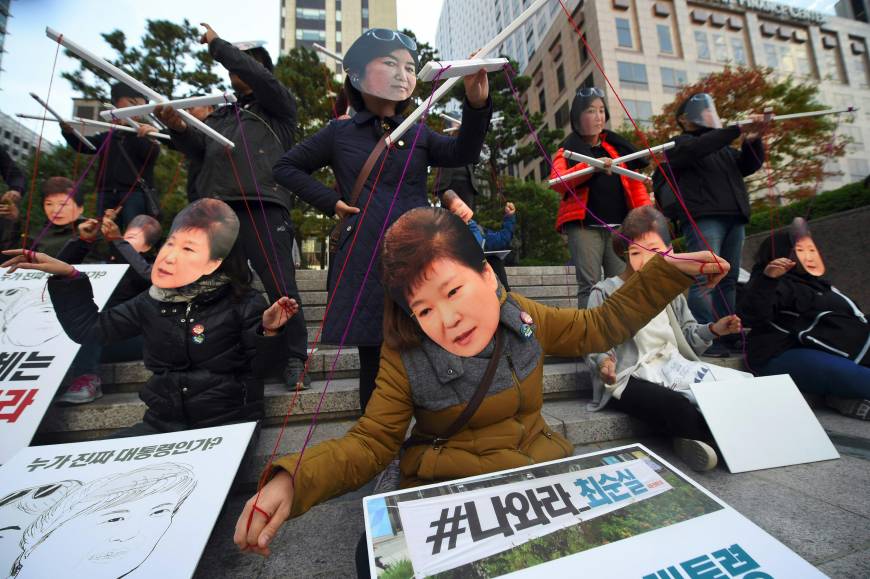
Giving this woman a real run for her money
Image Source

The Left often bristles anytime conservatives refer to them as jongbuk - pro-North Korean sympathizers. However, as much eye-rolling as the conservatives have induced due to their overuse of red-baiting, which has pushed many to compare conservatives to the boy who cried wolf, the accusation is not entirely without merit.

The Choi Soon-sil scandal has rocked the Park Geun-hye administration and with every new reveal, this onion of a scandal is a gift that keeps on giving. The opposition is right to demand that President Park withdraw herself from the day-to-day operations of the government and the protesters are more right still to demand her immediate resignation. However, opposing the Security of Military Information Agreement (GSOMIA) has exposed the opposition for what they always have been - craven reactionaries who seek nothing but their own political goals.

The opposition party has been enjoying growing support in the polls recently as a direct result of the Choi Soon-sil scandal but in their hubris, they seem to think that they can just about do anything. They ought to remember that though ousting the president may be justified, working against the country’s interests is unforgivable.

The progressives will be the new stewards of the country and they had better grow up and do it quickly because the world is changing as we speak.

It is likely that the next South Korean president is going to come from the Minjoo Party and as long as they can maintain their alliance with the other minor parties, it will become the next ruling and majority party. But it is important to bear in mind that the Minjoo Party has long committed itself to opposing the deployment of THAAD missile batteries and that it has a long and sordid history of anti-Americanism. So it’s more than plausible that South Korea’s policy toward North Korea might take a sharp left turn.

That sharp left-turn could mean that the future South Korean government might become more anti-Japanese (not that the conservatives were any help whatsoever in trying to improve ties with Tokyo), less pro-American, and more sympathetic to Pyongyang. After all, although it is unclear if Mayor Park Won-soon might become the next president, his incredibly naive positions such as revamping the Sunshine Policy and building “economic and cultural cooperation with the North” (I wonder what the mayor of Dandong might have to say about that!) are shared widely on the Left.

Good luck with that
Image Source

Newton’s Third Law of Motion states that for every action, there is an equal and opposite reaction. But that’s in the realm of physics. In the realm of politics, however, the reaction is not always equal. And it is quite hard to come up with a better example of that than Donald Trump’s electoral win. The incoming Trump administration could bring immense changes and it is now time for South Korea’s progressives to quickly learn to assess the new political reality.

That is because should South Korean progressives be tempted to return to their old ways and exploit anti-American sentiments again for any reason whatsoever, Trump’s likely braggadocious response would be less genteel than President George W. Bush’s response was while he was in the White House. Overt acts of anti-Americanism aside, one of the things that Trump ran on was for American allies to become more active in their own self-defense and to increase their share of joint-military budgets with the United States. It’s obvious how further South Korean attempts to maintain the status quo or push away Japan, which weakens the trilateral alliance (and we know what Trump thinks about perceptions of weakness), would be perceived in Washington.

It would not be an exaggeration to say that Trump has shown little love for South Korea during the campaign trail. He suggested that South Korea ought to pay 100 percent of the cost of stationing American troops and military hardware in the country. He has also called the South Korea-U.S. Free Trade Agreement a “job-killing deal” that has resulted in trade deficits for the US and his campaign went on record saying that he wants to go back to “ground zero” with regard to the trade deal.

It is true that Trump has repeatedly shown himself to be greatly ignorant of international politics when he expressed a blasé attitude about the possibility of a North Korean attack against South Korea or Japan, America’s staunchest allies in Asia, saying “it would be a terrible thing but if they do, they do.”


However, it would be a mistake to assume that Trump’s ignorance automatically means that the incoming administration will be incompetent. Trump already said months ago that should he win the election, he would consider appointing John Bolton, who should not need any introduction (or his views for that matter) in South Korea, as his Secretary of State. If South Korea’s progressives are not feeling even a little wary about the possible return of this real-life version of Yosemite Sam, then they’re going to be in for a rude awakening.

He’s baaaaack!
Image Source

In order to thrive in the Age of Trump, South Korea is going to have to rethink the way it conducts its foreign policy. It’s going to have to bury hatchets and cooperate closely with Japan, which is also likely to be as nervous about Trump. Consequently, South Korea’s progressives are also going to have to stop and think for a moment about the possible risks and benefits of reestablishing engagement with North Korea. And they are also going to have to act more cautiously in their approach to the US as America’s support can no longer be taken for granted - no matter how much people may want to pretend otherwise. The calculus has fundamentally shifted.

In short, if (more likely when) South Korea’s progressives take over from the conservatives in the next election (or after President Park resigns amid the scandals that are engulfing her administration), they are going to have to grow up and do so quickly. The country’s survival may depend on it.

Wednesday, November 9, 2016

A Trump Presidency and What It Might Mean for Korea

“May you live in interesting times.”

And what an interesting year 2016 has been. A number of beloved celebrities have died, Brangelina has split up, the Chicago Cubs won the World Series, and Donald J. Trump, the tweeting orange who’d date his own daughter if she weren’t his daughter, seems set to be the next president of the United States.

Many journalists, pundits, writers, bloggers, thinkers, philosophers, and anyone with an opinion is going to talk about this election for years. What everyone did wrong, where they went right, what caused what, how things will turn out, etc.

Old political alliances that died eight years ago are going to reemerge. Progressives who argued that President Obama needed more power to do the things he wanted to do and who lauded his use of executive orders are now going to side with libertarians in arguing for a weaker executive.

(Welcome back, progressives. How’ve you been?)


But not all old alliances will be rediscovered. Conservatives and Neo-conservatives might not rekindle their old relationship. But then again, knowing how many times Trump has changed his positions on any given topic within a matter of minutes, I suppose it would be foolish to write off anything.

But what does a Trump presidency mean for inter-Korean relations? What would it mean for the ROK-US alliance? What about the KOR-US Free Trade Agreement?

In short, all bets are off.

Trump has long said that he would put all options on the table in regards to negotiating with “free-riding” allies. Never mind that Korea is not a free-riding ally. But inherent in that position is the willingness to withdraw American troops from the Korean Peninsula unless South Korea pays more for the alliance’s costs.

(I do believe he once asked why South Korea wasn’t paying 100 percent of the costs during one of his stump speeches.)

Let’s assume that, unlike Jimmy Carter, he will refuse to bend to foreign policy and military experts and simply do as he wishes. If that happens, it is likely that the US might seek to quickly transfer wartime control of the South Korean military to Seoul as soon as possible. As worrisome as that might be considering the fact that South Korea might have been controlled by a shadowy cult over the past few years, what’s even more worrisome is that this may give the pro-nuclear armament voices in South Korea the boost that they have been seeking, which could lead to all sorts of gargantuan problems.

Would an American withdrawal from Korea, and possibly Japan, mean that Seoul and Tokyo might have the incentive to finally push aside old fights and seek a closer partnership with one another to seek a common defense against North Korea? Or would it remove the one common denominator that had nominally united Seoul and Tokyo in a fractured trilateral alliance?

Park Geun-hye is now a lame duck president and it appears that the next South Korean president might come from the Minjoo Party, which has a history of strong anti-American elements. Combine that with a Trump presidency that eschews foreign policy and what would that do to inter-Korean relations?

Trump has gone on record and said that China ought to do more to contain the North Korean threat. But China has never cared to put North Korea in its place. And assuming that Trump withdraws American troops from Korea and/or transfers wartime control to Seoul, how would China’s perception of the Korean Peninsula change?

Furthermore, Trump has also suggested that China ought to invade North Korea. As unlikely as it is for China to take up on that offer, regardless of which political party governs South Korea now and in the future, that is yet something else that will likely fray the ROK-US alliance.

Would an emboldened North Korea continue to pursue further nuclear armament? Will sanctions continue to be enforced against North Korea or will they be put in the backseat, thus destroying any progress (limited as they have been) that have been made over the past eight to ten years?

As mentioned earlier, the next South Korean president might come from the Minjoo Party. Would the Minjoo Party reintroduce the Sunshine Policy, thus killing sanctions programs before they have a real chance to succeed? What about the deployment of THAAD missile batteries? Will that be canceled?

How would the free trade agreement that was signed between Korea and the US change? Trump has been vague about this. Will it be scrapped? If so, how would that affect the Korean economy? The Korean economy has been experiencing slumping exports and rising household debt. A looming interest rate hike by the US Federal Reserve has been seriously threatening Korea’s economic growth. Any possible renegotiation or hint of scrapping the free trade deal could send the Korean economy plummeting.

I have to point out that the election is not yet over. Nothing is ever over until the fat lady sings. But pundits are saying the word 
“unlikely” with growing frequency in regards to a Clinton victory.

We have to remember that politicians have a tendency to renege on many of their campaign pledges once having won an election. So whether or not Trump follows through with his pledges is up in the air. Maybe he will. Or maybe he’ll plate the White House in gold and play golf in Scotland with Duterte and Putin while Mike Pence and Paul Ryan do the real work of governing the US.

Regardless of how things turn out, the next four years are going to be incredibly interesting.

For now, however, the whole world might have to get used to saying “President Donald J. Trump.”

God help us all.

Image Source

Thursday, November 3, 2016

President Park Geun-hye Should Resign

The more details about the Choi Soon-sil scandal are revealed, the more bizarre the story seems to get. From stories of shamanistic priests to corporate malfeasance to unlawfully accessing classified information to prosecutorial ineptitude to familial favoritism to allegations about sacrificial rituals during the Sewol ferry disaster to questions about whether Choi had used the Blue House as a sleepover camp, one can’t help but be reminded of Mark Twain’s quote about how the truth is often stranger than fiction.

Like The Korean said in his blog post, the scandal has put the entire corporate-government symbiotic relationship into the Tyson Zone where every allegation and rumor, no matter how insane, now seems entirely plausible.

It is important to point out that there has yet to be a trial, much less a conviction. Until that takes place, every allegation is just that - an allegation. However, there is absolutely no doubt that as a direct result of this scandal and the eye roll-inducing manner in which she has attempted to contain it, it would be a gross understatement to claim that President Park is now a lame duck president.


In fact, this goes well beyond a lame duck presidency. Due to the far-reaching influence that Choi Soon-sil seems to have had over the president, government ministries, and various corporations, it may be safe to say that the Park administration has fundamentally collapsed.

I doubt this is what James & Bobby Purify had in mind
Image Source

(As of this writing, Kim Byong-joon, whom President Park has nominated to become the next prime minister, is currently giving a press conference stating that President Park has agreed that, upon confirmation to his post, Kim would take over all domestic affairs while President Park will only oversee foreign policy. He has also said that it may be possible for prosecutors to investigate President Park, albeit “prudently.” However, it is still unclear if the opposition parties will agree to President Park’s unilateral appointment.)

Considering the fact that South Korea currently faces wave after wave of economic and security challenges, this scandal could not have come at a worse time.

Samsung Electronics, which had to cancel its Galaxy Note 7, is currently on shaky ground, which in turn has led to increased calls for the government to push through corporate reform. Korea’s largest container shipping company, Hanjin, went into receivership a few months ago and the company still has stranded crew members out at sea who are running out of rations. Falling exports, rising household debt, and a looming interest rate hike by the US Federal Reserve could seriously threaten economic growth. The government still needs to curb the chaebols’ excesses, push for more deregulation and a more flexible labor market, and help to boost startup businesses. More urgently, the National Assembly still needs to approve the government’s ₩400.7 trillion budget for next year.

On the security side of things, sensing an opportunity, China is once again looking for ways to force South Korea to abandon its plans to deploy THAAD missile batteries. North Korea still poses an existential threat to South Korea. In order to properly combat the North Korean menace, South Korea needs to pursue careful diplomacy, strong sanctions, and meticulous alliance management. Although the Obama administration has said that the ROK-US alliance is still “strong and durable,” there is no doubt concern about South Korea’s current state of political paralysis. Furthermore, US officials are all too aware that support for the alliance and/or the US’ interests are not unanimous in South Korea.

The duties and responsibilities that weigh on the president’s shoulders require Herculean leadership. It is needed even during the best of times and it is absolutely paramount during times of trouble. But the Choi Soon-sil scandal has derailed everything.

As it is now apparent that President Park can no longer lead the country or regain the trust of those whom she is supposed to govern, it is now abundantly clear that she ought to resign.

The fact that the majority of Saenuri and Minjoo lawmakers have thus far refused to call for her resignation shows that even now they are placing their own interests above that of the country’s. They have refused to do so because if President Park resigns immediately, as per the Republic of Korea Constitution, a new election has to take place in sixty days whereby a new president would be able to begin a new five-year term.

Seeing how the scandal has not only tarnished President Park’s reputation but also that of the Saenuri Party itself, it is clear why Saenuri lawmakers would be opposed to a sudden resignation. They would have the most to lose. Furthermore, the Saenuri Party’s most likely nominee, Ban Ki-moon, would be ineligible to run as he is still serving as the UN’s Secretary General.

(Assuming that Ban Ki-moon still plans to run for president and he doesn’t choose to be another party’s standard bearer, he may need to rename the Saenuri Party, again, and purge the party off Park Geun-hye’s most loyal supporters.)

The same goes for the Minjoo Party. Prior to the Choi Soon-sil scandal, it appeared that it was the Minjoo Party that would be engulfed in flames when former Foreign Minister Song Min-soon mentioned in his memoir, A Glacier Inevitably Moves, that Moon Jae-in had given the green light in 2007 to ask Pyongyang for its opinion on the UN resolution on North Korean human rights violations, a charge that Moon has yet to deny.


(Personally, I think this ought to disqualify Moon Jae-in from being elected dog catcher, much less president.)

The Minjoo Party may be enjoying higher approval ratings than the Saenuri Party, but that’s not saying very much. Should the presidential election take place today, there is no guarantee that Moon would be elected president. Until recently, Moon was operating under the assumption that he would have more than a year to campaign for the presidency. It is likely that he would rather not deviate from the plan.

The two major political figures who are openly calling for President Park’s resignation, Ahn Cheol-soo and Park Won-soon, were facing steep uphill battles of their own against Moon Jae-in to become the progressives’ nominee for president. But if President Park resigns, seeing how Moon is facing his own political scandal, they would have a much better chance of sealing the nomination for themselves. Although they are both right to demand President Park’s immediate resignation, their naked ambition and lust for power are not very subtle.

The show must go on!
Image Source

Readers of this blog already know my biases. Although President Park has shown herself to be an unremarkable, underwhelming, and disappointing leader in more ways than one, I have felt nothing but unadulterated admiration for her hawkish policy toward North Korea and her dogged pursuance of free trade deals with as many countries and trading blocs as possible. Conversely, I find many of South Korea’s progressives’ willingness to appease Pyongyang and their slavish devotion to unions and (even more than conservatives’) nativist outlook on trade despicable.

Should President Park resign immediately, there is a very good chance that I would find the next president’s views on trade, tax policy, welfare reform, labor reform, economic regulation, and foreign policy deplorable and downright dangerous for the country’s future. But the fact remains that through no one else’s fault other than her own, President Park has lost the trust of the people and turned her administration into an international laughing stock. You know you’re a joke when North Korea pokes fun at you. Irony truly is dead and President Park’s fingerprints are all over the murder weapon.

South Korea survived ten years of Kim Dae-jung and Roh Moo-hyun. It survived Lee Myung-bak and it has thus far survived Park Geun-hye and it will survive the next fifteen months should she choose not to step down. South Korea will also survive the next president whoever he or she may be.

But whether or not South Korea will be able to survive the long-term consequences of her refusal to step down is less clear.

If President Park refuses to step down, she will also bring the Saenuri Party down with her. For all of its faults, and they are legion, a Saenuri collapse could lead effectively to a one-party state and God knows that far too many progressive politicians appear to live in a world that is very remote from reality - full of fantasy and whimsy. Despite its many flaws, for a healthy and vibrant republic to exist, there has to be at least two opposing political parties.

For the sake of the country’s future, President Park should resign.

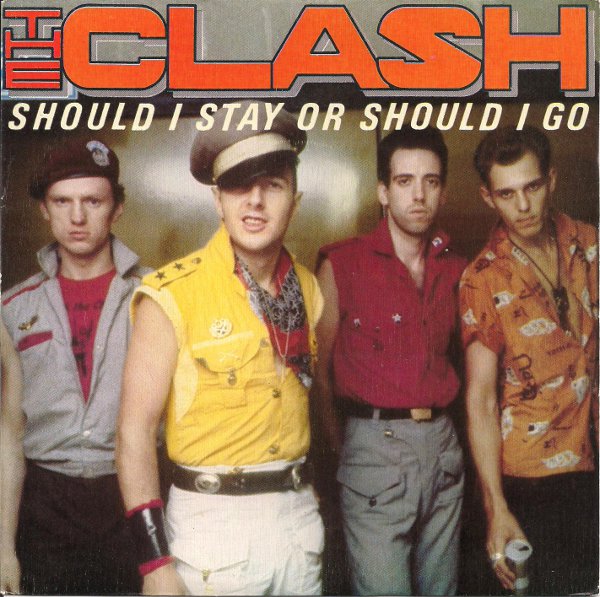
Go. Definitely go.
Image Source